The Agra issue
Two Days in Agra That Don't Revolve Around the Taj
A realistic two-day plan for Agra built around the fort, the north bank, the old city lanes and the food worth queueing for.

By Matteo FerraroAgra is a Mughal city, not a single monument
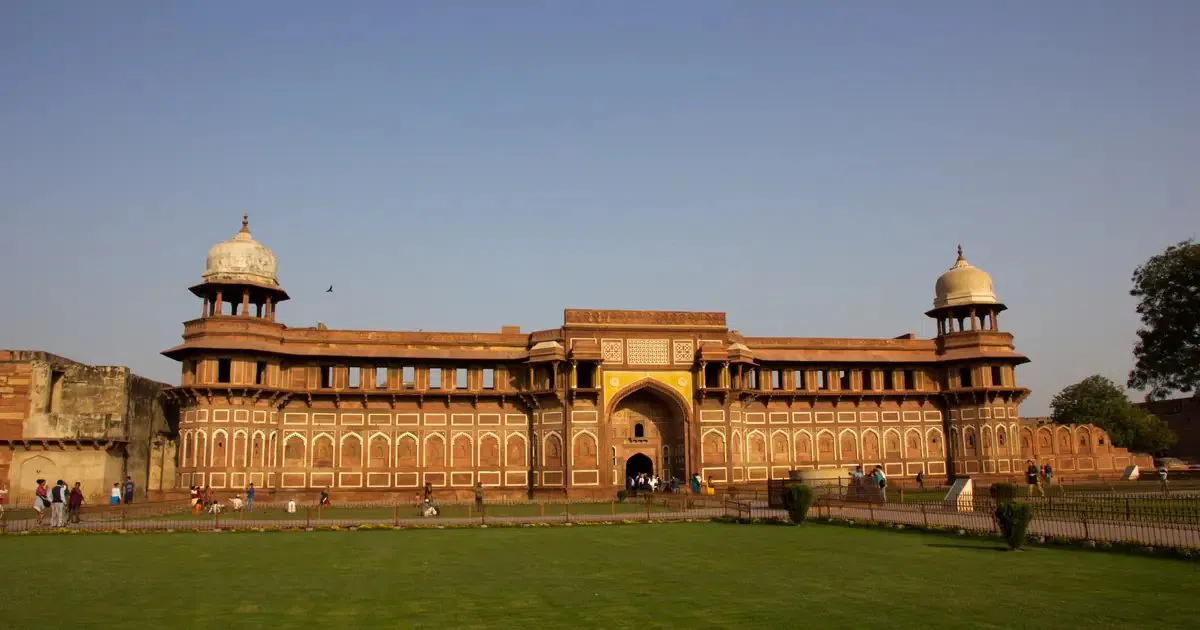
Agra is a small city carrying an outsized monument, and the two useful days here are the ones spent in the gap around it. Almost everything worth your time sits within a few kilometres of the Yamuna: a fort on the south bank, a run of tombs and a working village on the north, and an old city of narrow lanes in between that most visitors never enter because their driver has already decided where the day is going. Two days is enough to do the place properly, provided you accept early that you cannot fit every half-day trip into them.
The shape of two days
Day one stays inside the city. The fort in the morning while it is cool and the coach parties have not landed, the old city through late morning and lunch, a marble workshop when the heat peaks and being indoors is the point, then the river at sunset. Day two crosses to the north bank on foot and then goes out of town for a single half-day trip rather than three. Whatever you decide about the Taj Mahal itself, it works as a first-light hour bolted onto either morning; this plan assumes that is handled and deals with what fills the other forty-odd hours.
Distances are short and the traffic is the variable, not the mileage. Fort to old city is fifteen minutes in an auto-rickshaw and a good deal longer at school-run hours. The north-bank cluster of village, ruined tomb and garden is a single loop you can walk between stops. Most ASI monuments here run on sunrise-to-sunset hours, which in practice means you get more done before ten in the morning than between two and four in the afternoon. For where the districts sit relative to each other and how the gates connect, the Agra guide fills in the map.
Plan your Agra trip
Live prices from our booking partners.
Free cancellation on many rooms. We may earn a commission when you book.
Breakfast first, then Agra Fort
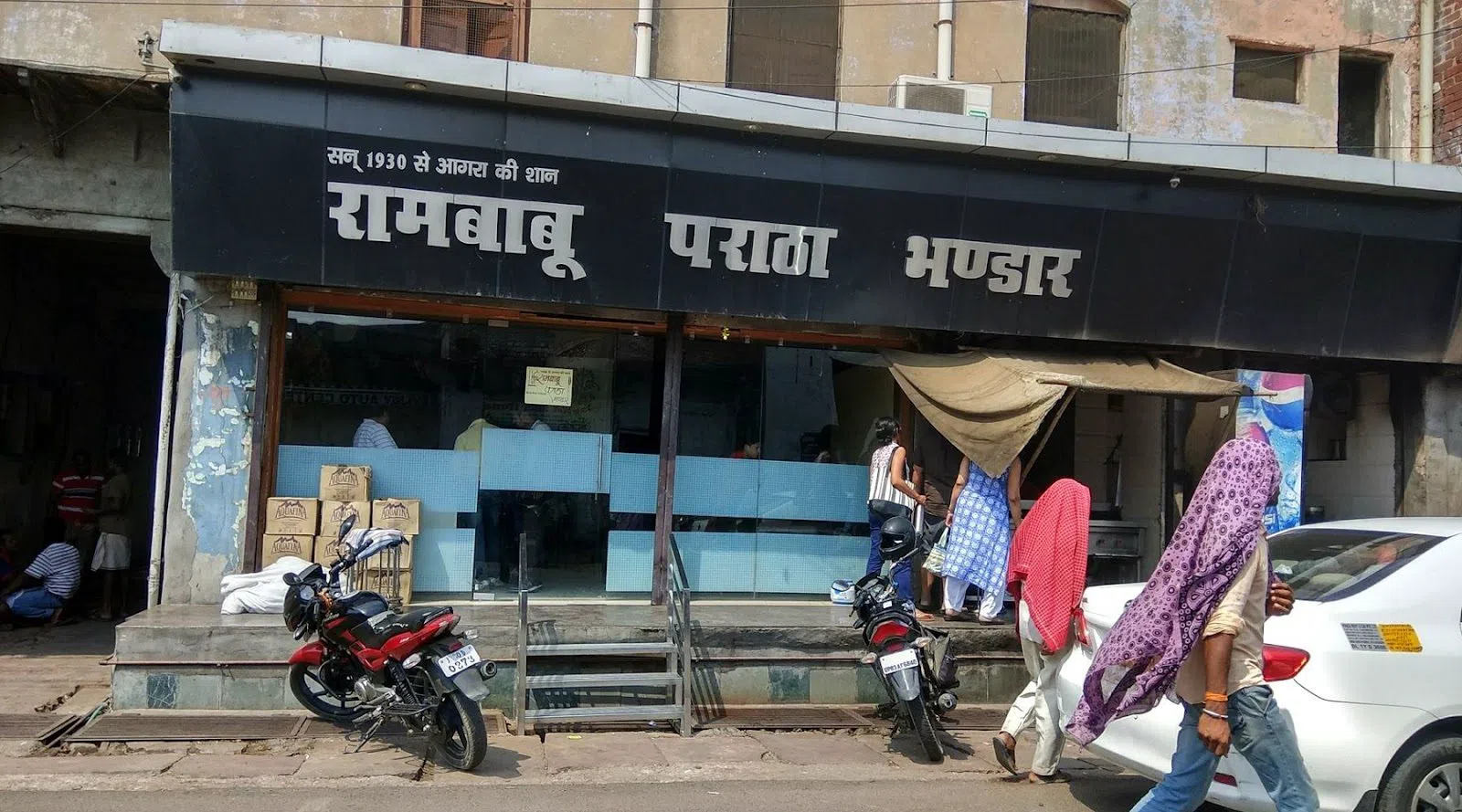
Ram Babu Paratha Bhandar (several family-run branches across the city) has been serving parathas since 1930 and is pure vegetarian. The standard Agra breakfast is one of those parathas with aloo sabzi, ₹120-300 a head, eaten before the monuments open. It is loud, the turnover is fast, and there is no booking. A group of eight will be seated and fed without ceremony, which is what you want at seven in the morning.
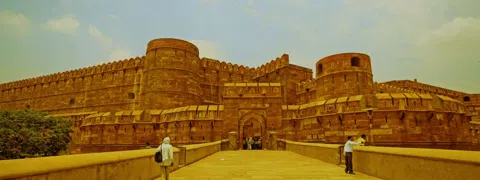
Agra Fort (Rakabganj, on the south bank) is the city's other UNESCO site and the obvious anchor for day one. Entry is ₹50 for Indian nationals and around ₹650 for foreign nationals, roughly USD 11. Give it two hours minimum. The section open to visitors is the residential palace end rather than the whole military complex. Shah Jahan spent his final years imprisoned inside it, looking downriver at the tomb he had built for his wife, and standing where he did makes the geography of the city legible.
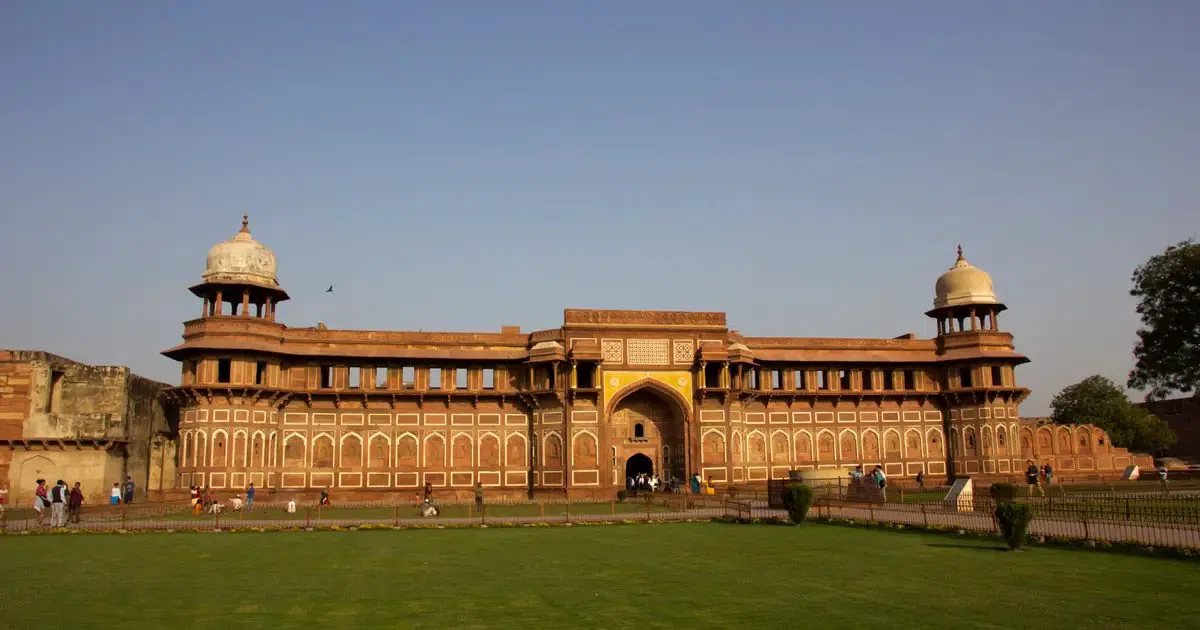
There is no door policy and groups are fine, but licensed guides tout hard at the gate and the scrum is genuinely unpleasant if you arrive undecided. Book a licensed guide the day before through your hotel, or walk in having already resolved that you are not hiring one. Either works; hesitating in the middle is what gets you followed across the courtyard.
Kinari Bazaar and the lanes below Jama Masjid
Kinari Bazaar (old city, in the lanes beneath Jama Masjid) is the market the city actually uses: zardozi embroidery and gold trim by the metre, spice stalls, hardware, and chaat sold from counters that have been in the same doorway for generations. Browsing is free, snacks run ₹30-150. Timing decides the visit more than anything else. Most shops are shut on Tuesdays, and those that open on other days rarely raise their shutters before about eleven. Arriving at nine on a Tuesday buys you an empty lane and a wasted morning.
The lanes are narrow and busy with cycle-rickshaws and delivery handcarts. Couples and solo travellers move through easily. A group of ten will string out over fifty metres and lose people, so keep it tight and agree on a meeting point before you go in.
If you would rather have the market read to you than guess at it, Soul Walks (old city and citywide routes) is the strongest walking operator in Agra. It rebranded from Agra Heritage Walks (same guides, same routes, new booking system), and the artisan-family and old-city routes are the ones to ask for. Expect ₹1,500-3,500 per person, private or small group, with larger parties by arrangement. Book ahead rather than turning up.
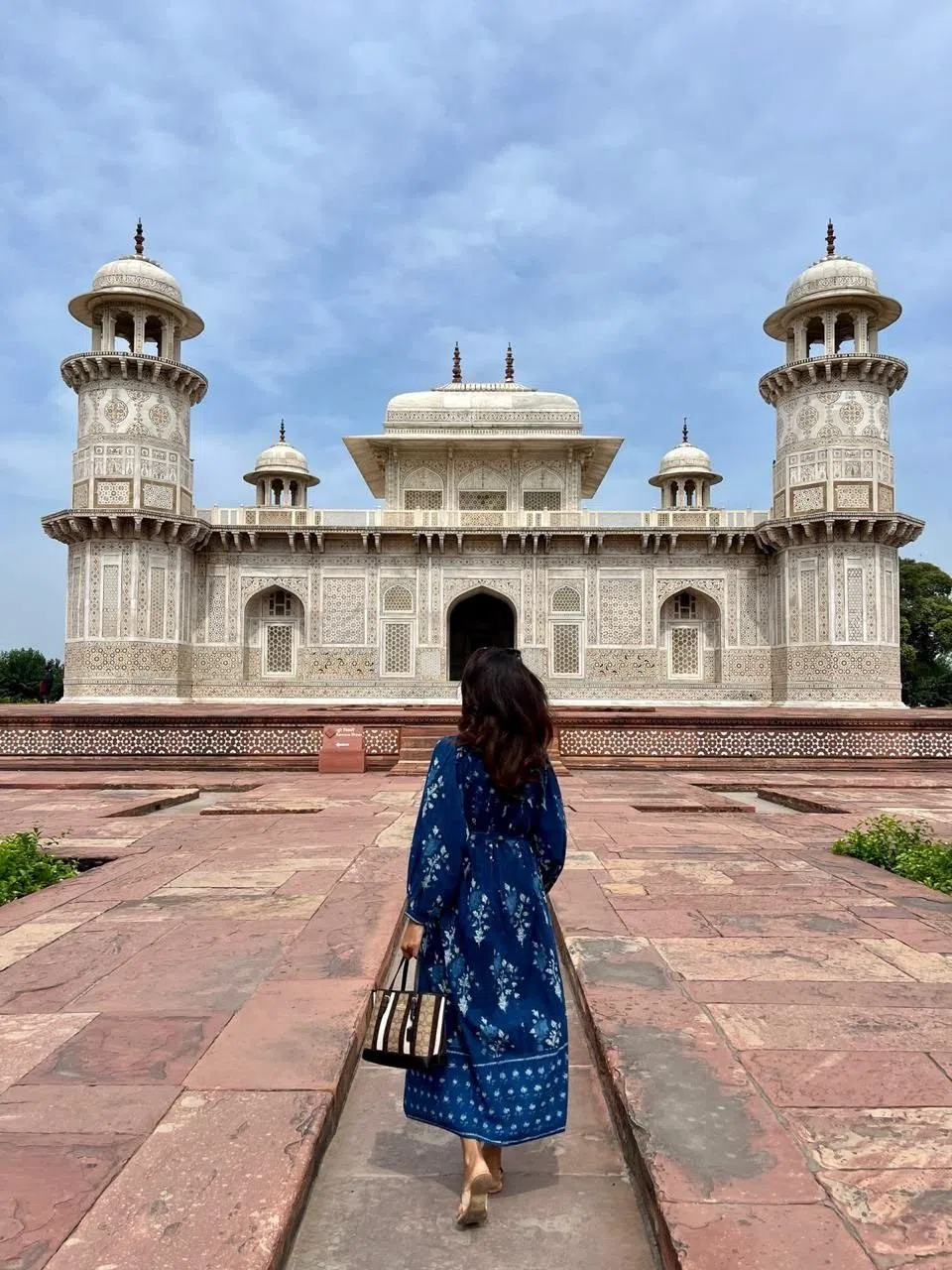
Marble inlay without the commission racket
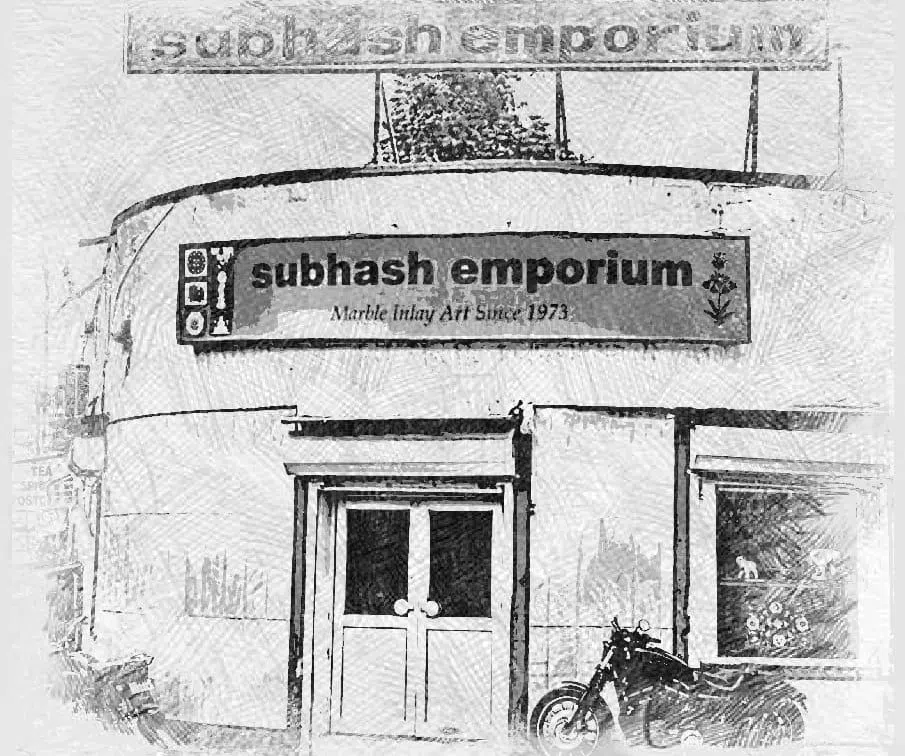
Every driver in Agra has a marble showroom that pays them a cut, and the cut is built into your price. Subhash Emporium (on the Gwalior Road side of town) is the exception people who live here keep naming. Established in 1973, it does live demonstrations of pietra dura, the technique of cutting semi-precious stone into marble that was scaled up across the Taj, and there is no hard sell afterwards. Watching costs nothing. Pieces run from a few thousand rupees for a small coaster or bowl up to lakhs for a tabletop.
Go in the early afternoon when the light is flat and standing outdoors has stopped being enjoyable. Groups are welcome and the demonstration works well for them. If your driver suggests somewhere else on the way, say the name again and hold it; that redirection is the whole business model.
Sunset at Mehtab Bagh, then dinner in Sadar
Mehtab Bagh (north bank, directly across the river from the Taj) is the one place you see the tomb's rear elevation from the water line, with the garden's own geometry running down to the riverbank wall. Entry is ₹30 for Indian nationals, ₹300 for foreign nationals. Two things govern the visit. The gate closes at 6pm, which for much of the year falls at or after the point where the light goes soft, so the window is narrower than the guidebooks imply. Sunset is also the pinch point, so arrive a full hour early if you want space at the riverbank wall rather than a shoulder-height gap between two tripods.
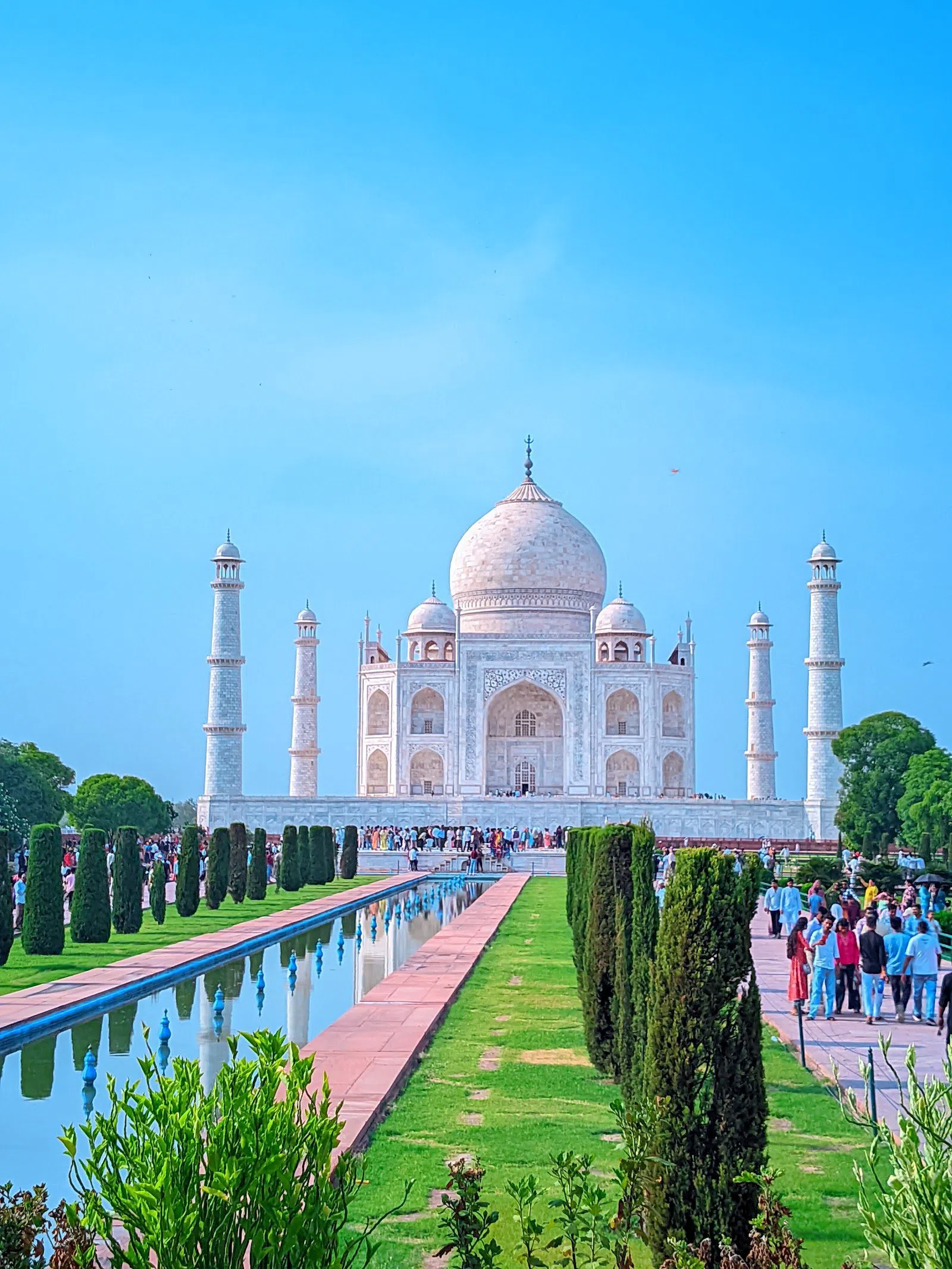
Dinner afterwards belongs in Sadar. Mama Chicken Mama Franky House (Sadar) is the late-evening grill everyone in Agra can direct you to: franky rolls, seekh kebab, butter chicken with rumali roti, ₹150-400 a head. It is walk-in only, there are no bookings, and at peak evening hours you will stand and wait with everyone else. Carry cash. Groups are fine as long as nobody in the party needs to sit down immediately.

Day two starts in Kachhpura
Start the second day on the north bank with the Mughal Heritage Walk (Kachhpura village, north bank). It is a one-kilometre route led by trained villagers, taking in the lanes, the water systems and the small monuments that sit between the big ones, and it finishes at the Mehtab Bagh viewpoint. Rates run ₹600-1,500 per person depending on operator and inclusions, and the money stays in the village. Book a day ahead. Guides handle two to twelve people comfortably; beyond that it stops being a conversation.
Do it in the morning. The walk is unshaded in stretches, and finishing before the middle of the day leaves the rest of the north bank open in front of you.
Chini ka Rauza and the Baby Taj
Chini ka Rauza (north bank, a few minutes from the Baby Taj) is the only Persian-style glazed-tile mausoleum in India, half-ruined and almost entirely unvisited. It is free, unticketed and unstaffed on most days, which means no queue and also no water, no toilet and no one to explain what you are looking at. Bring your own bottle and ten minutes. What remains of the blue and turquoise tilework on the exterior is enough to show you what the whole thing once was.
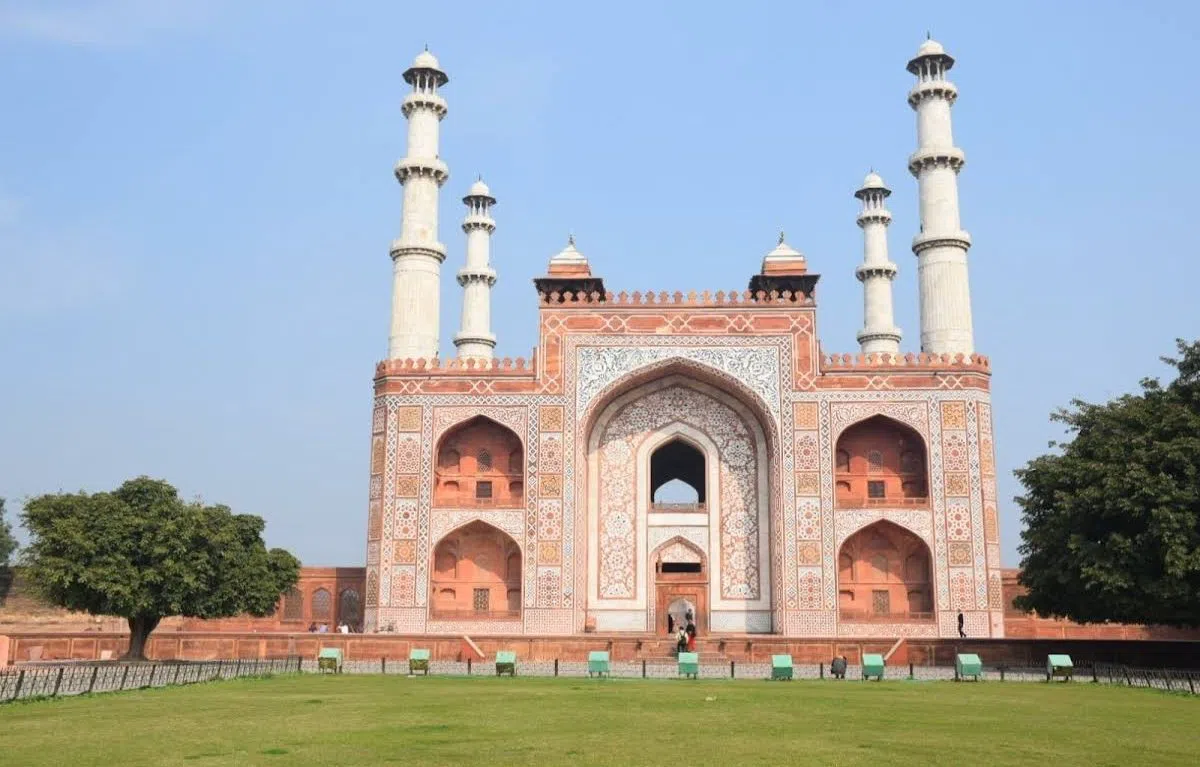
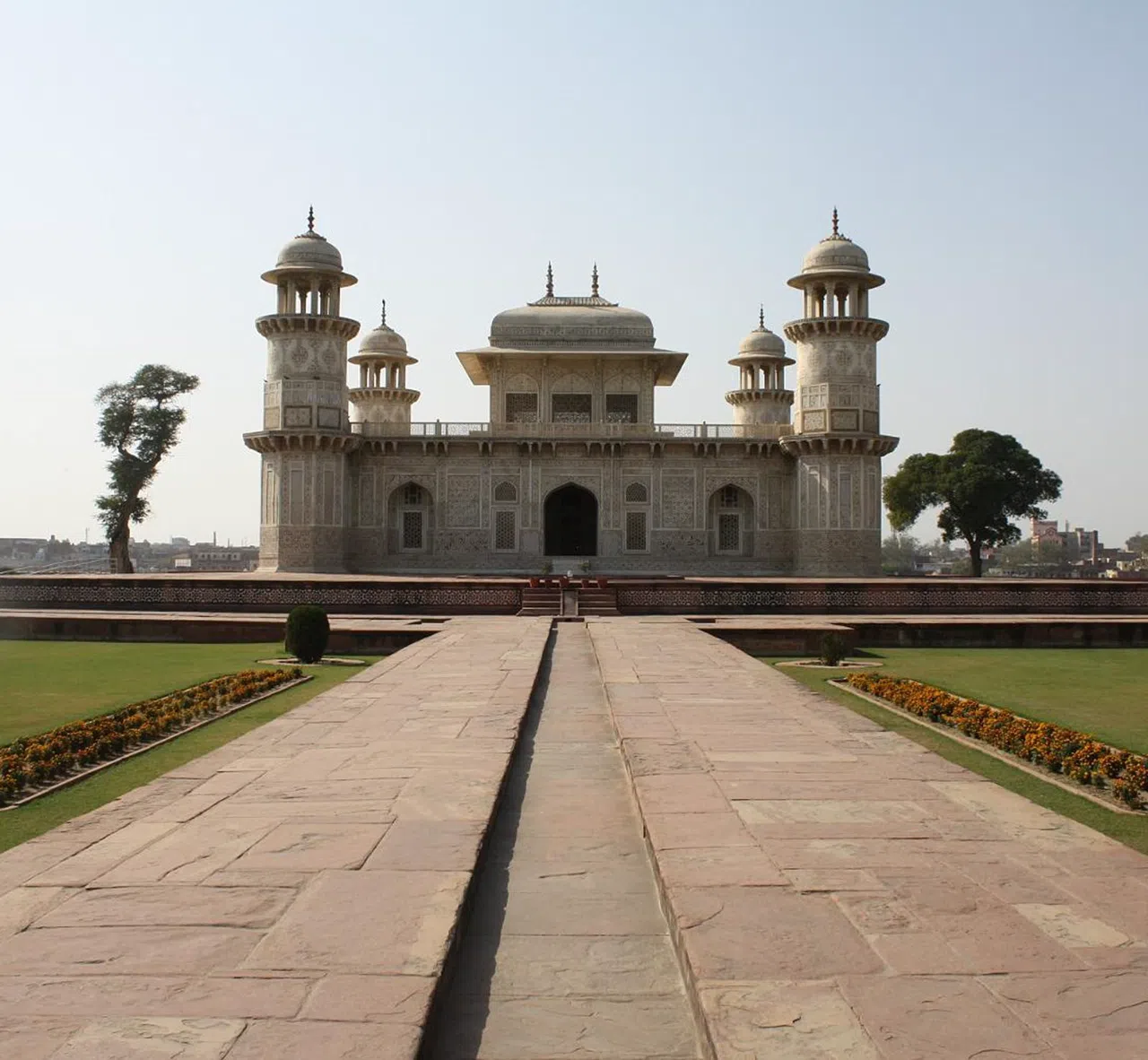
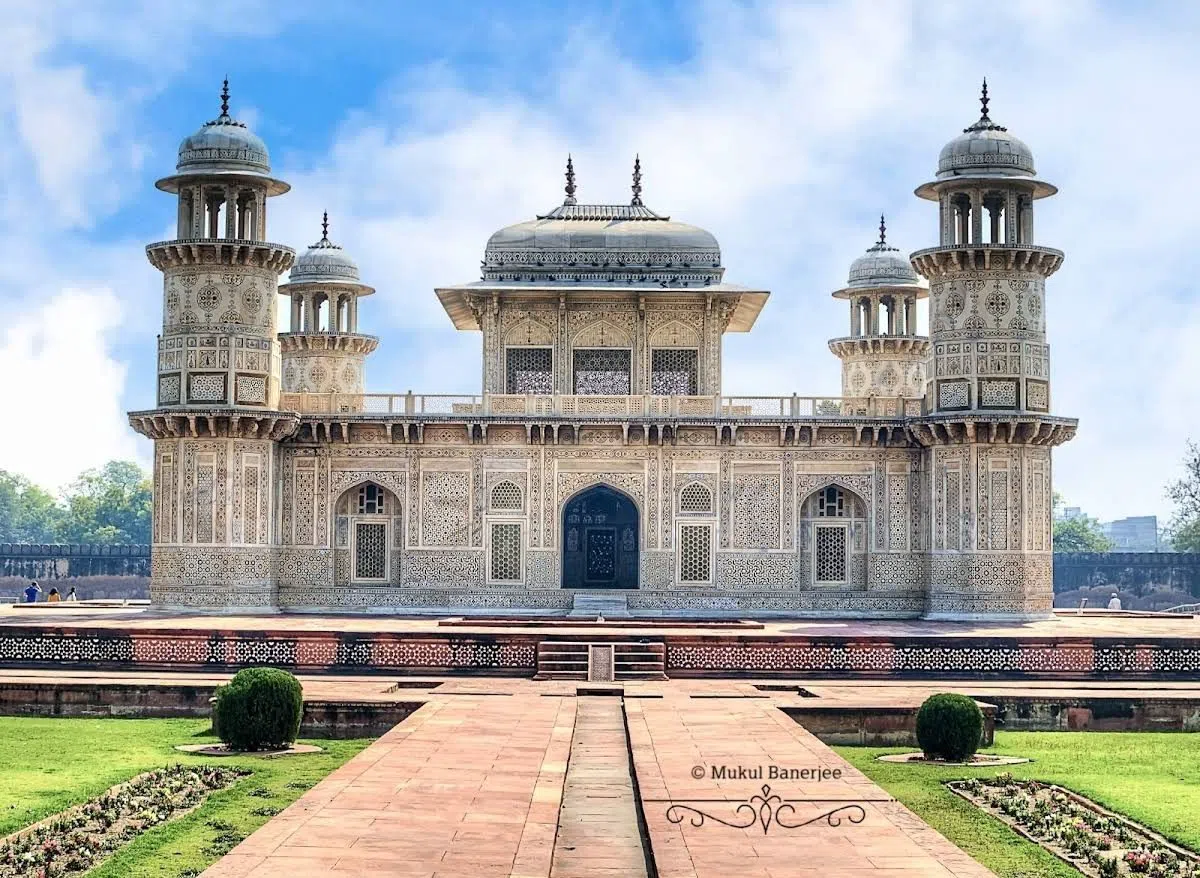
From there it is a short walk or a two-minute ride to the Tomb of Itimad-ud-Daulah (Moti Bagh, north bank), which everyone calls the Baby Taj. Nur Jahan built it for her father between 1622 and 1628, and it is the inlay prototype that the Taj Mahal was later scaled up from, using the same white marble and the same stone inlay at a size you can actually take in. Entry is ₹40 for Indian nationals, ₹550 for foreign nationals, and under-15s go free. It is far quieter than the river's other bank, so a small group moves through the chamber without queueing and you can usually have the upper terrace to yourself.
Choosing one half-day out of town
The afternoon of day two is a choice, and pretending otherwise is how people end up rushing all three.
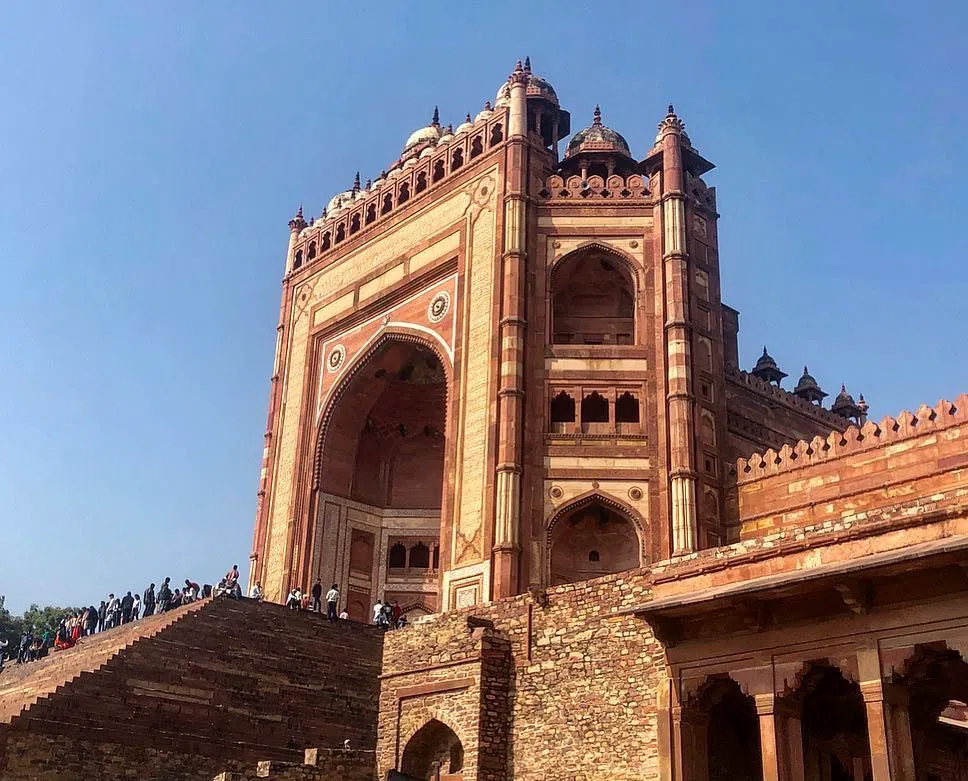
Fatehpur Sikri (40km west) is the strongest option for a first visit. Akbar built it as his capital and abandoned it after barely fourteen years, and what survives is a complete court complex in red sandstone with almost no later building over it. Entry is ₹50 for Indian nationals and ₹610 for foreign nationals, plus transport from about ₹2,200 for a car. Allow five hours door to door. Hire an ASI-licensed guide at the ticket office and firmly decline the unofficial guides at the mosque who will tell you their services are compulsory. They are not. The mosque complex itself is free to enter, and that is where the touting is heaviest.
Wildlife SOS Elephant Conservation and Care Centre (about an hour north-west of the city) is the better call if you are travelling with children, or if you have had enough sandstone. Visits are pre-booked and guided, strictly observation: no riding, no bathing, no photo-with-elephant transactions. The cost is a ₹50 Indian / ₹500 foreign national forest department fee plus a requested donation. A sister sloth-bear rescue facility sits fifteen minutes away if you want to make a longer afternoon of it. It works as an education visit rather than an attraction, and it is worth going in with that expectation.
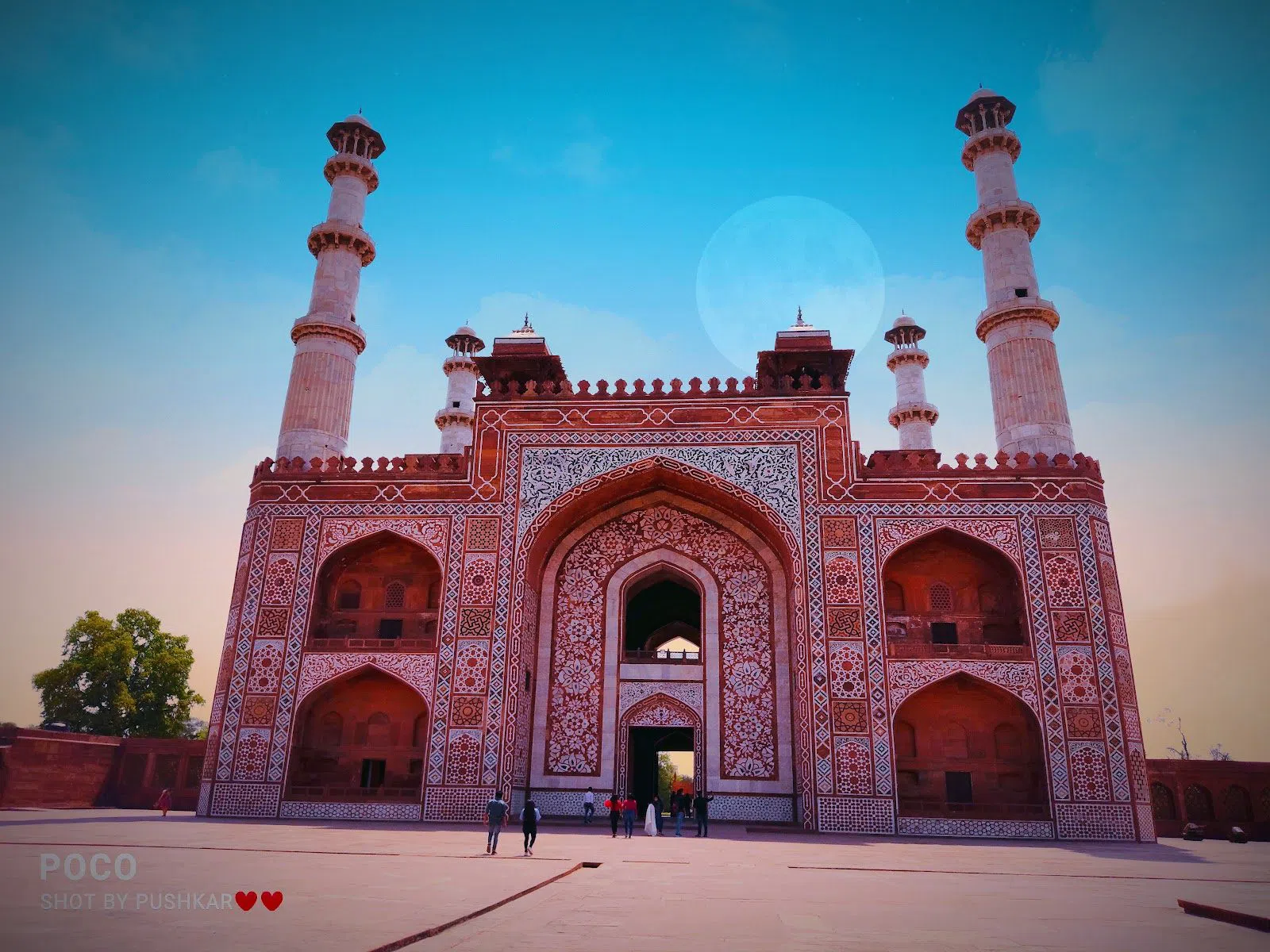
Akbar's Tomb, Sikandra (on the northern road out of the city) does not need a dedicated slot. Akbar designed the tomb himself and the surrounding deer park still holds wildlife; the grounds are large enough to absorb coach parties without feeling crowded. Entry is ₹30 Indian, ₹310 foreign nationals. Fold it into your arrival or your departure and it costs you forty-five minutes.
Eating well, and what to take home

Sheroes Hangout (a ten-minute walk from the Taj's east gate) is run by acid attack survivors through the Chhanv Foundation, and profits fund reconstructive surgery and legal aid. It is open 10am to 7pm and works on contributions rather than a menu price, with most people leaving ₹200-500. The room is small, so up to about ten is comfortable and anything larger needs a call ahead. Go for the coffee and the conversation, and do not treat it as a photo stop.
If the budget stretches to one serious meal, it is Esphahan at The Oberoi Amarvilas (Taj East Gate area), the only genuinely fine-dining room in the city, built on royal-kitchen recipes. Reservations are essential, there are two sittings at 7pm and 9.30pm, and parties over eight must call the hotel directly. Smart casual, children eight and over. Budget ₹6,000-9,000 per head, and arrive early for the terrace view before you sit down, since that view is half of what you are paying for.
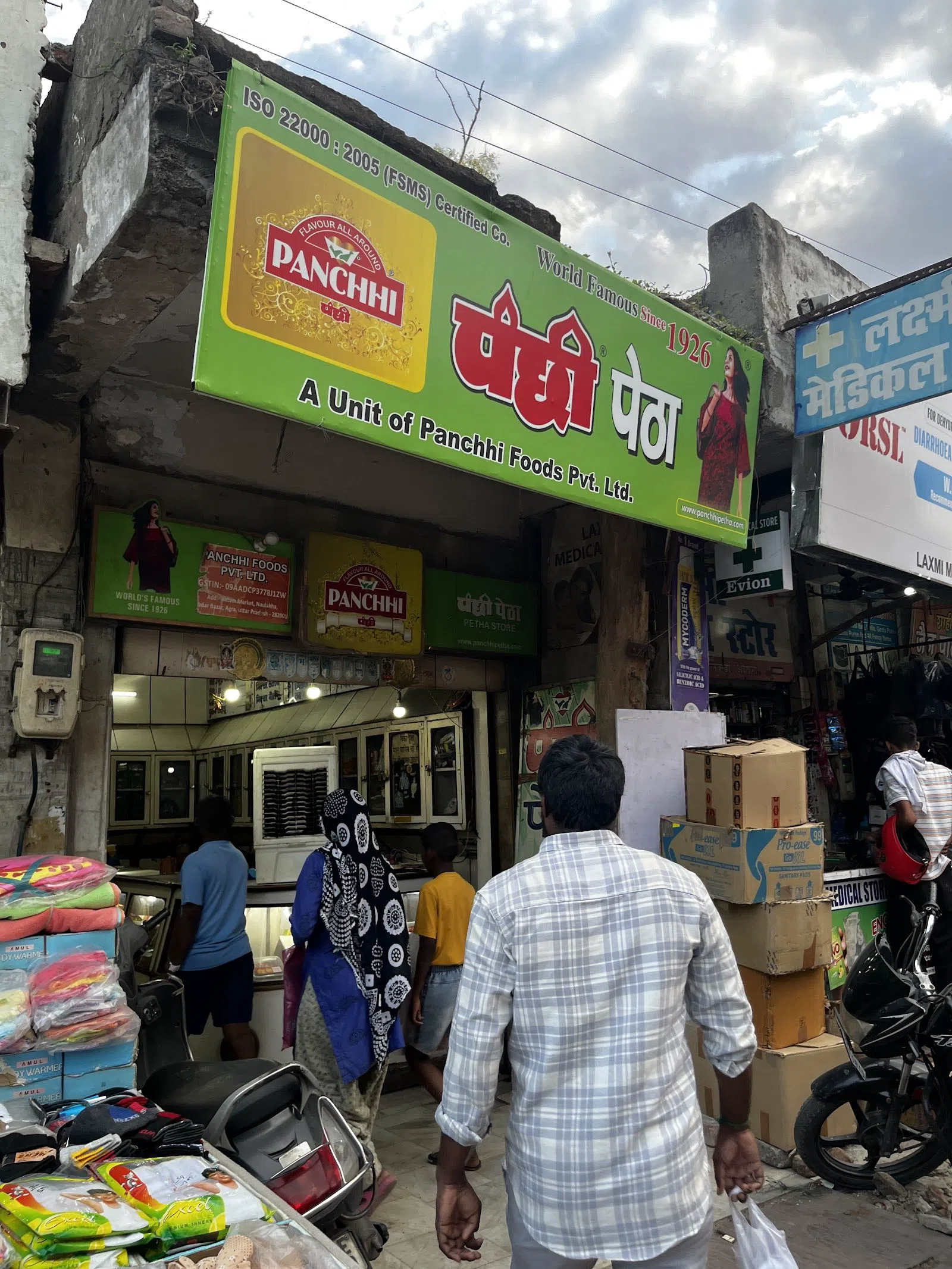
Take home petha, the translucent ash-gourd sweet Agra is known for. Panchhi Petha (branches at Hariparwat, Rambagh and elsewhere) is the name locals repeat, at ₹150-400 per kilo box. Buy the plain or kesar version rather than the flavoured novelties, buy it in the city rather than at airport prices, and read the shop sign carefully, because imitators trade on near-identical names.
Who each place actually suits
Couples and solo travellers get the most out of Kinari Bazaar, Chini ka Rauza and the Baby Taj, all of which reward slow, unscheduled time. Groups do better at Agra Fort, Akbar's Tomb and Fatehpur Sikri, where the grounds are large enough to absorb the numbers, and at Subhash Emporium, which is set up for demonstrations. Mehtab Bagh at sunset is difficult for a large party unless you arrive very early. Sheroes and the Kachhpura walk are built for small numbers by design. Nowhere on this list has a dress code beyond covered shoulders and knees at religious sites and smart casual at Esphahan.
Practical notes
Get around by prepaid auto-rickshaw or a car hired for the day through your hotel; a full day with a driver is usually cheaper than four separate negotiated rides and removes the commission-shop detour from the conversation if you say so up front. Ride-hailing apps work in the newer parts of the city and less reliably in the old lanes.
Carry cash. Monuments, the market, Mama Chicken and the petha counters all run on it, and ATMs near the tourist strip run dry at weekends. Cards work at the hotels, Subhash Emporium and Esphahan.
On timing, October to March is the comfortable window; April to June is genuinely punishing outdoors by mid-morning. Kinari Bazaar closes on Tuesdays, Mehtab Bagh closes at 6pm, and monument ticket queues are shortest in the first hour after opening.
On budget, two days of monuments for a foreign national comes to roughly ₹2,000-2,500 in entry fees, plus ₹2,200 upwards for the Fatehpur Sikri car, ₹600-3,500 for a guided walk and ₹400-800 a day on street food if you skip the hotel restaurants. One dinner at Esphahan will exceed all of that combined, which is the honest trade to weigh. For where to base yourself, the east gate strip gives early monument access and Sadar gives food and walkability; start with the Agra hotel search.
Before you go
Is two days actually enough for Agra?
Yes, if you commit to one half-day trip rather than three. Two days covers Agra Fort, the old city and Kinari Bazaar, the north-bank cluster of Chini ka Rauza and the Baby Taj, sunset at Mehtab Bagh, and either Fatehpur Sikri or Wildlife SOS. Trying to add all the out-of-town options turns both days into driving.
Where can I see the Taj Mahal without paying the main entry fee?
Mehtab Bagh, directly across the river on the north bank, gives you the rear elevation reflected in the water for ₹30 Indian / ₹300 foreign nationals. The gate closes at 6pm, so on many days you need to be inside well before the light goes. Arrive an hour before sunset to get space at the riverbank wall.
Which half-day trip is better, Fatehpur Sikri or Wildlife SOS?
Fatehpur Sikri for a first visit: Akbar's abandoned capital, 40km west, ₹50 Indian / ₹610 foreign nationals plus about ₹2,200 for a car, and roughly five hours door to door. Wildlife SOS Elephant Conservation and Care Centre, about an hour north-west, suits families and anyone tired of sandstone; it is a pre-booked observation visit with no riding or bathing.
Do I need to book guides and walks in advance?
For the Mughal Heritage Walk in Kachhpura, yes: book a day ahead, as village guides take two to twelve people. Soul Walks should also be booked in advance. At Agra Fort and Fatehpur Sikri you can hire an ASI-licensed guide at the gate or ticket office, but arriving undecided means being followed by touts, so settle it before you walk up.
Are there days or times to avoid for shopping and markets?
Most shops in Kinari Bazaar shut on Tuesdays and few open before about 11am on other days, so an early Tuesday visit is wasted. Buy petha at a Panchhi Petha branch in the city rather than at airport prices, check the shop name carefully against imitators, and carry cash, because the market does not run on cards.