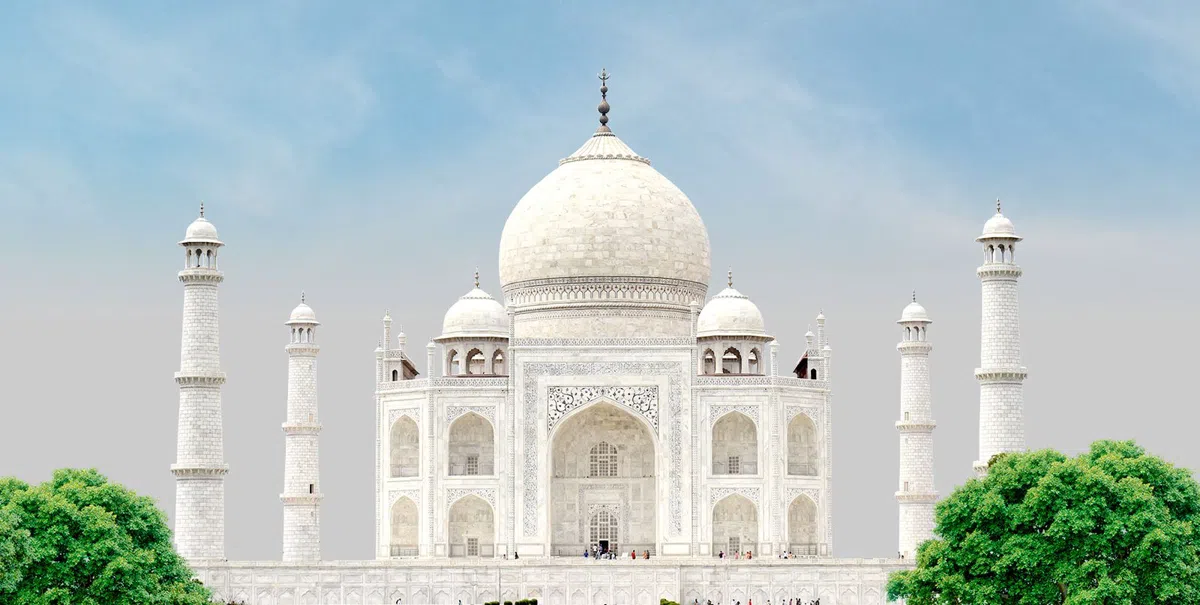

Between November and February the Yamuna throws a low mist across the riverbank, and for the first twenty minutes after the gates open the Taj Mahal arrives in pieces: the finial, then the dome, then the whole thing at once as the haze burns off the plinth. The second thing you notice is the cars. Almost everyone standing on that platform at sunrise got there in a hired sedan with a driver now asleep on the approach road, and how good your day in Agra turns out depends less on the monument itself than on how sensibly the driving day is built around it.
What you actually see at the Taj Mahal
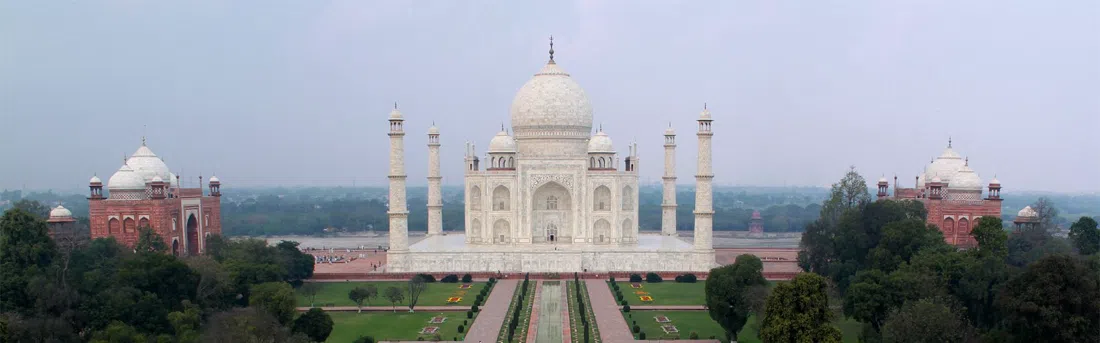
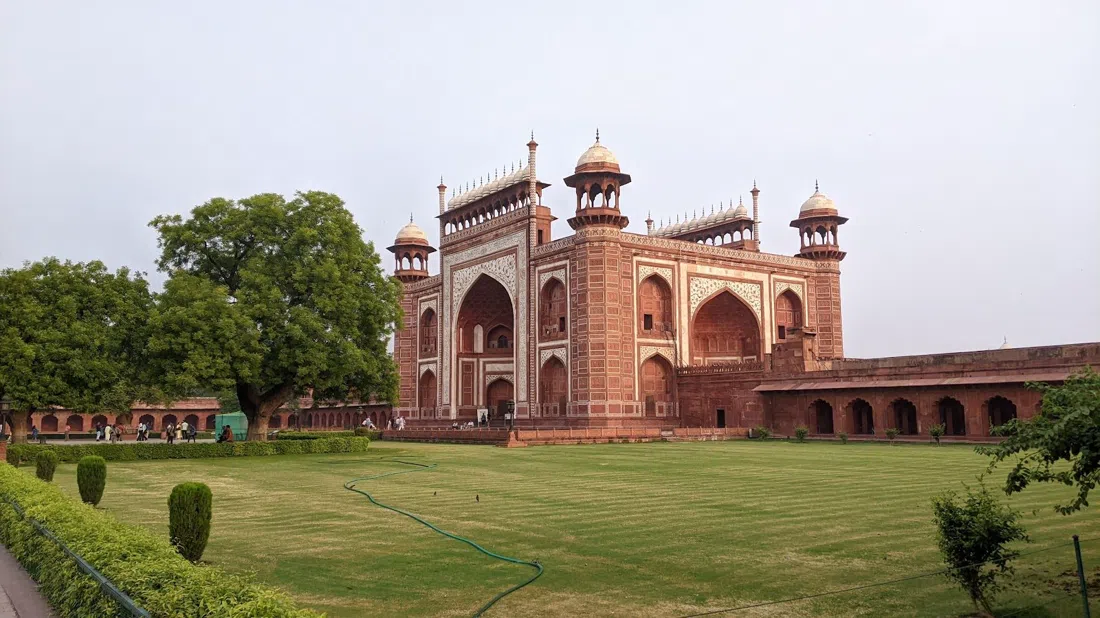
Taj Mahal (Taj Ganj, south bank of the Yamuna) reads as a single object in photographs and as a sequence on the ground. You clear security, cross a red sandstone forecourt, and pass under the great gateway, which frames the mausoleum in an arch and is the reason people stop dead in the doorway and block it. Beyond is a quartered Mughal garden with a raised water channel running its length, roughly 300 metres of walking, and then the marble platform with its four minarets. Shah Jahan built it for Mumtaz Mahal, who died in 1631; the mausoleum was substantially finished around 1648 and the surrounding complex a few years after. Both are buried in a crypt below the floor you walk on.
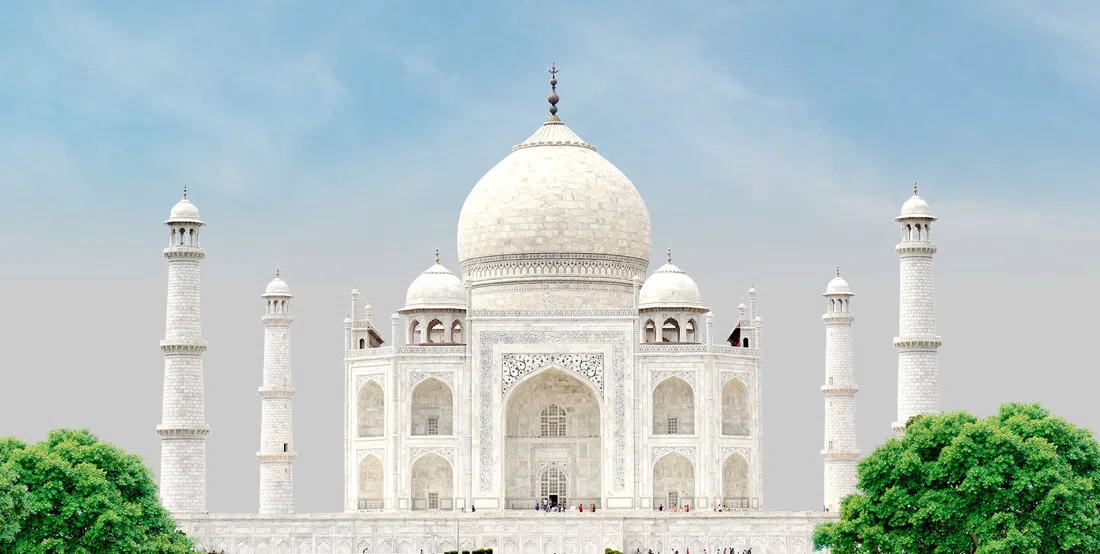
Entering the mausoleum chamber costs ₹200 on top of your entry ticket and is worth it, with one expectation adjusted: it is a small, dim, single-file loop around a perforated marble screen, it is kept hushed, and photography inside is prohibited. A coach party cannot move through it as a party, so groups get split and reassembled outside. You are there for the inlay at close range, the hardstone flowers set into white marble, which no photograph has ever conveyed properly.
Almost everyone walks past the Taj Museum (inside the complex, on the west side of the garden) without noticing it. It is free, included in your ticket, and it holds the original building drawings, imperial decrees and inlay specimens that explain what you have just looked at. Twenty minutes is enough. The catch is the clock: it opens at 09:00 and closes at 17:00, so a sunrise visit means either doubling back across the garden or waiting around. It is a tight set of rooms in a garden pavilion, so a large group filters through in waves rather than walking in together.
How long it takes and the hour that matters
A brisk visit is ninety minutes. A proper one, including the chamber, the museum and twenty minutes sitting on a bench watching the marble change colour, is two and a half to three hours. Add thirty to forty minutes for security, the walk in from wherever your driver is parked, and the shoe covers.
The complex opens thirty minutes before sunrise and closes thirty minutes before sunset, which in December means roughly 06:30 and in May closer to 05:30, so check the day's sunrise rather than trusting a printed time. The first hour is the one people describe afterwards: the light is low and warm, the temperature is bearable even in April, and the garden is quiet enough to hear birds over the crowd. By 09:30 the forecourt is dense and the queue for the chamber is a slow shuffle. Late afternoon, from about 16:00, is the honest second best: warmer light again, thinner crowds than mid-morning, and no alarm clock.
Tickets, queues and what booking ahead buys you
Entry is ₹1,100 for foreign nationals, ₹540 for SAARC and BIMSTEC nationals and ₹50 for Indian nationals, plus the ₹200 mausoleum supplement. Under-15s go free. Booking online takes ₹50 off each foreign ticket and, more usefully, removes you from the ticket window entirely.
Security runs separate queues for men and women at all three gates, so couples and families split up at the entrance and regroup inside. Worth saying out loud before you arrive, because people panic. Foreign-ticket holders have a shorter dedicated line, which is the single biggest practical advantage of that expensive ticket. The East Gate is the one most hotel drivers use; the South Gate is reached on foot through the Taj Ganj lanes, since vehicles do not get close.
A guided car tour is a different purchase from a ticket. It buys someone who knows which gate is moving that morning, who handles the queue logistics while you are still waking up, and who can tell you what the inlay is actually made of. There are 3,108 traveller reviews across the bookable tours for the Taj, and the top-rated one holds 4.9 out of 5 from 858 reviews, so the format is well tested. Multi-day private-car itineraries that take in Agra start from 209 USD per person and are currently discounted from 233 USD; a half-day with a local guide and driver is a fraction of that. Either way, book the car the day before rather than negotiating at the hotel door at 05:45.
The rules at the gate
Officially banned inside: food, tobacco, liquor, knives, tripods, drones, headphones, chargers and any electrical goods other than a camera. That list catches people out, and the power bank in your day bag will be taken off you. Carry as little as possible, leave the rest locked in the car, and assume your bag will be opened. Photography is permitted in the garden and prohibited inside the mausoleum chamber.
Friday closes the Taj, so plan around it
The Taj Mahal is closed all day Friday for Jumu'ah prayers. This is the most common way an Agra itinerary gets wrecked, and it wrecks it completely. There is no side entrance, no exception and no refund for a flight that lands on the wrong morning. If Friday is your only day, the rest of the city is open and a car makes it a good day anyway.
Mehtab Bagh (Nagla Devjit, on the north bank, about twenty-five minutes by road) is the obvious salvage plan: a wide Mughal garden directly across the river, open sunrise to sunset every day including Friday, ₹300 for foreign nationals and ₹25 for Indians. This is the across-the-water view you cannot get from inside the complex, and it is where drivers congregate for the sunset slot, so expect a car park doing the same thing you are. In the dry months the Yamuna can be too low for the mirror reflection, so come for the golden light on the marble and treat a reflection as a bonus.
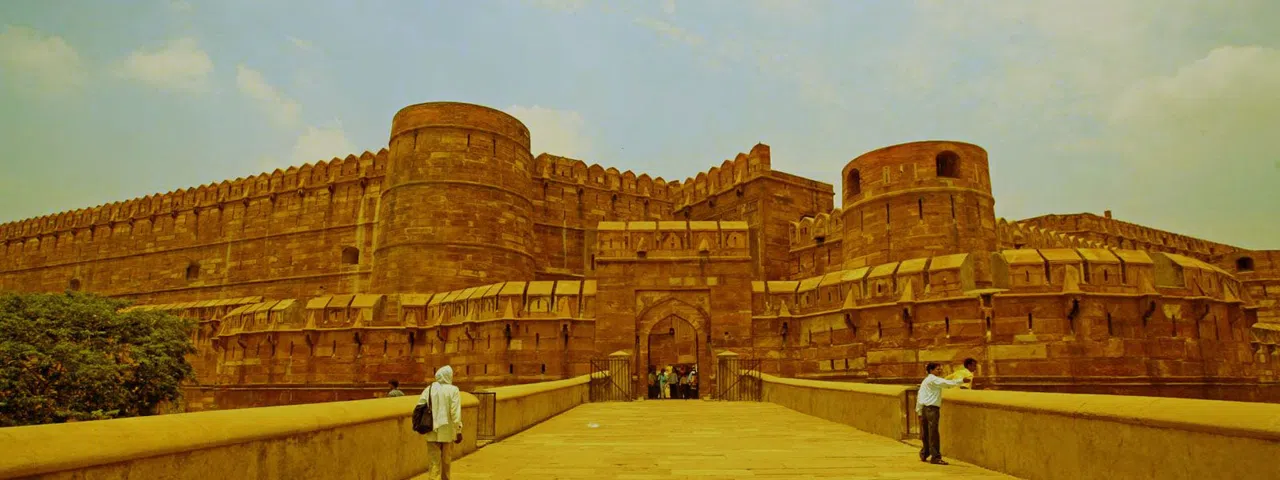
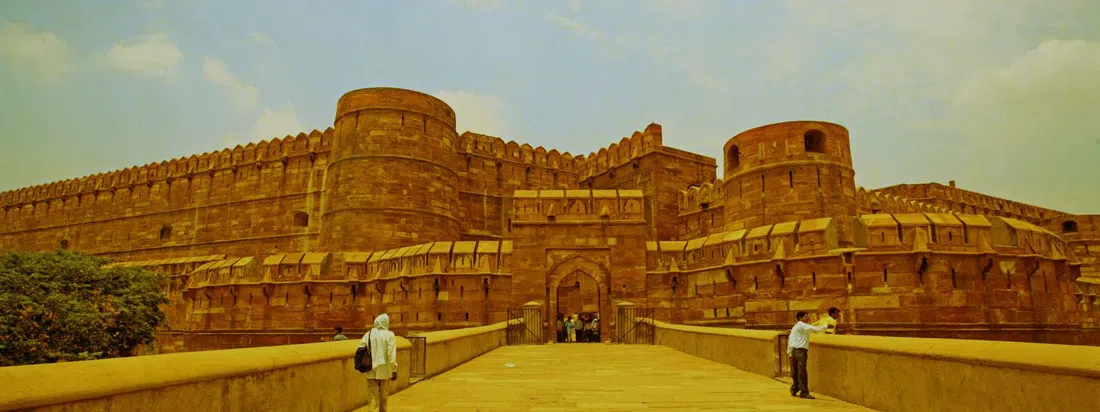
Agra Fort (Rakabganj, 2.5 km upriver from the Taj) is the other Friday-proof anchor and the natural second stop on any car day. It is open every day from 06:00 to 18:00 with last entry at 17:30, ₹650 for foreign nationals and ₹50 for Indians, with ASI guides and an audio guide at the gate for around ₹150. Broad ramps and courtyards make it easy with a group, though individual pavilions such as the Diwan-i-Khas are sometimes roped off at short notice. Go for the Musamman Burj, the octagonal tower where Shah Jahan was held by his own son with a clear view downriver to his wife's tomb. It is the other half of the Taj story and most visitors skip it. An evening light-and-sound programme, Rang-e-Agra, runs most nights in Hindi and then English.
An hour on the east bank
North of the Taj on the same side of the river, two short stops make a neat hour before Mehtab Bagh. The Tomb of I'timad-ud-Daulah (the Baby Taj, Moti Bagh, east bank) is the design prototype for the Taj, built for Nur Jahan's father, and it is where you can stand close to inlay work without anyone breathing behind you. It costs ₹310 for foreign nationals and ₹30 for Indians, opens sunrise to sunset daily including Friday, and thirty to forty minutes covers it. The inner chamber is small and dim; the garden is quiet enough that a group of eight effectively has it to themselves.
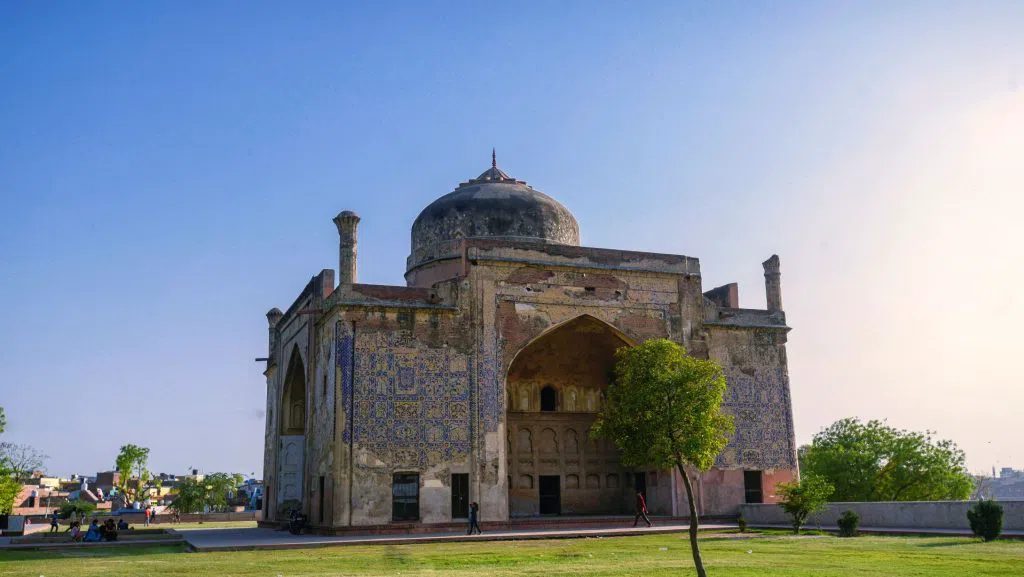
A few minutes further north, Chini ka Rauza (east bank, on the road toward Mehtab Bagh) is the only building in Agra faced entirely in Persian glazed tile, and it is genuinely half-ruined. There is no ticket desk, no toilet, no shade and no caretaker beyond one man with a gate. It is free, it takes ten minutes, and it belongs in the day as a stop between the other two rather than as a destination. Set expectations before anyone gets out of the car: this is a ruin, not a restored monument.
The long drive west
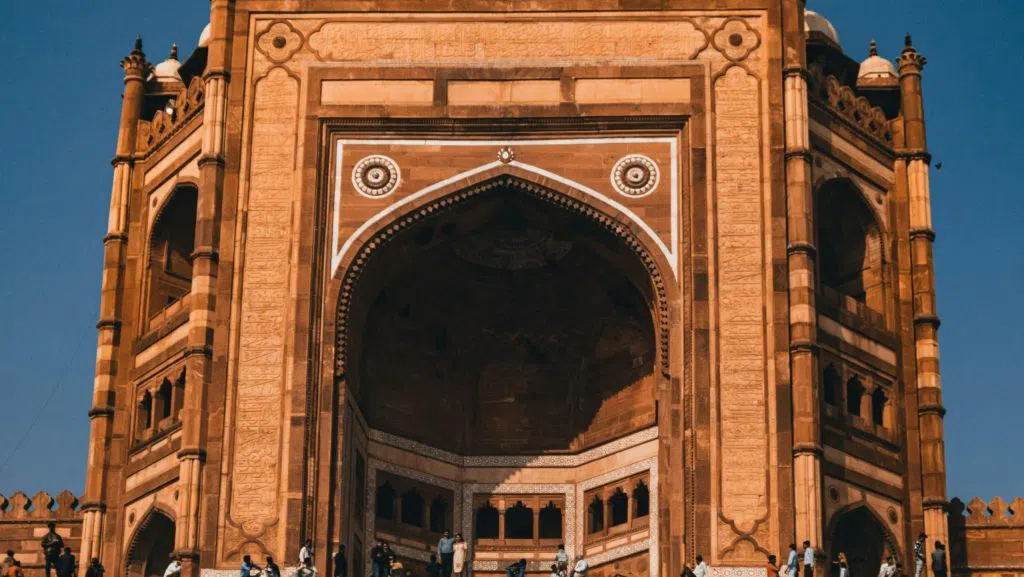
A full car day rather than a half day exists mainly for Fatehpur Sikri (40 km west, about an hour each way). Akbar's abandoned capital is a sandstone city on a ridge, and a shuttle runs from the lower car park to the gate. The palace complex is ₹610 for foreign nationals and ₹50 for Indians; the adjoining Jama Masjid and the Salim Chishti dargah are free. The two halves run by different rules: shoes off and heads covered in the mosque courtyard, and the dargah is an active shrine where people are praying, not a ruin to wander. The persistent problem here is unofficial guides and shoe-minders at the mosque end; agree with your driver in advance that you are using an ASI guide or none.
Akbar's Tomb, Sikandra (10 km out on the northern highway) suits anyone driving into or out of Agra, which is why it works as a first or last stop rather than a detour. It is ₹250 for foreign nationals, ₹20 for Indians, open 06:00 to 18:00, and the walled garden is so large and so quiet that a guide can talk at normal volume. Reports differ on whether it opens on Friday, so confirm before you build a Friday around it.
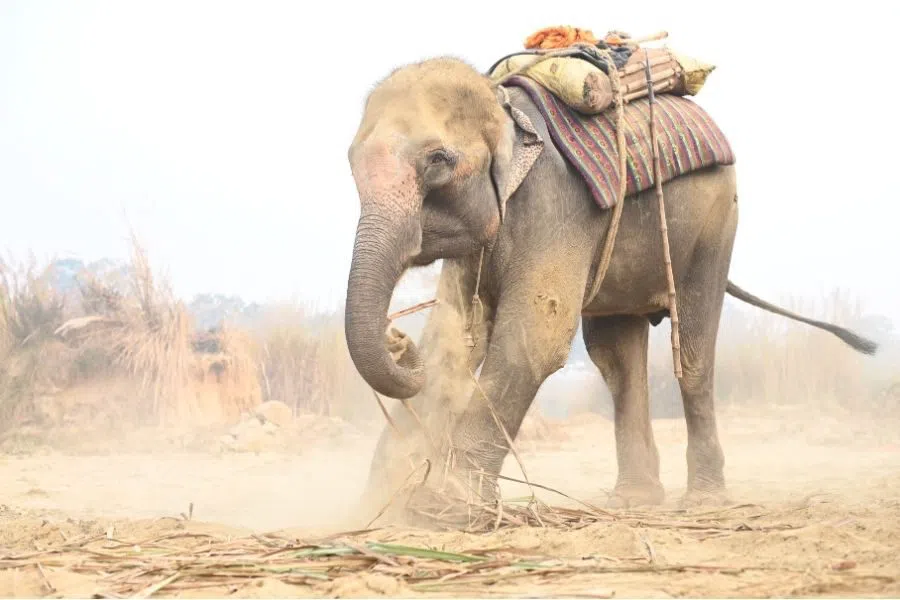
The Wildlife SOS Elephant Conservation and Care Centre (an hour north on the NH-2) is the honest alternative to the elephant and camel rides touted all over Agra. There is no riding and no bathing with the animals; you get a viewing verandah and time with the vets and keepers. Visits are by appointment only, in one of three daily slots, with a cap on numbers; email or phone ahead, because walk-ups do not work. The fee is a donation and you book direct through the foundation. It only makes sense if the car day is built around it, and it is not a petting zoo.
Where the car day stops to eat
Sheroes Hangout (Taj Nagari Phase 1, Tajganj, behind the hostel) is the one stop that is about the living city rather than the Mughals. It is run by women who survived acid attacks, and there are no fixed prices: you pay what you think the meal was worth, and proceeds fund the Chhanv Foundation. Open 10:00 to 19:00 daily. Four to eight people is the right scale; phone ahead for more. Older guides still print the old Fatehabad Road address, which is wrong. Go for the coffee and the conversation, and do not photograph staff without asking.

Saniya Palace rooftop restaurant (Chowk Kajziyan, Taj Ganj, near the South Gate) is the place to wait out the midday heat. It is a narrow guesthouse roof up a flight of stairs with about a dozen tables, and cars cannot get up the lanes, so you walk the last few hundred metres. Chai and simple North Indian plates at café prices, and a sightline to the dome that costs you nothing beyond the order. People come for the view, not the cooking, which is worth knowing before you order a full meal.
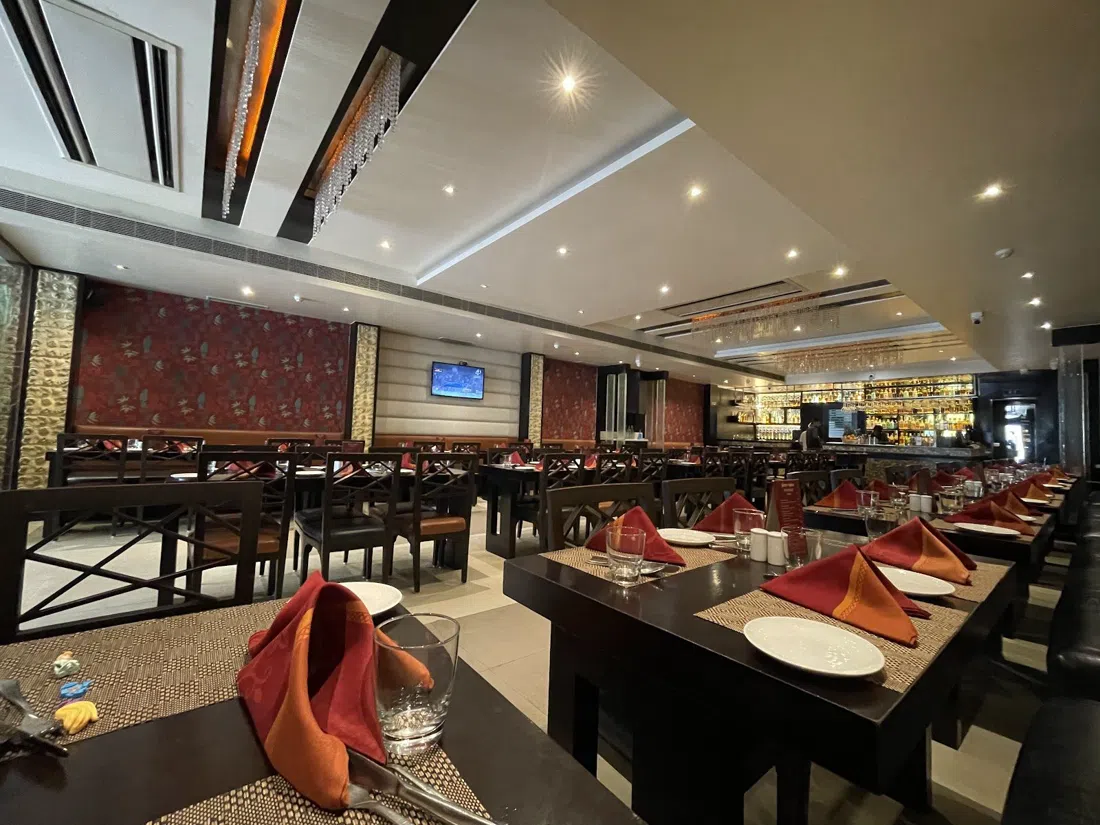
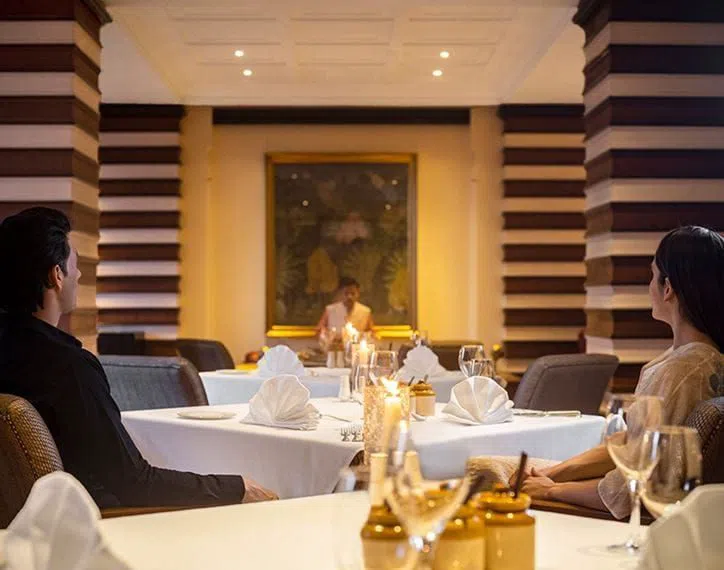
Pinch of Spice (Fatehabad Road) is the dependable North Indian default, open noon to 23:30, a large room used to tour parties that can seat a dozen without notice. Mid-range, and a two-course meal with drinks costs a fraction of hotel dining. It fills on weekend evenings, so book or arrive early. Esphahan, The Oberoi Amarvilas (Taj East Gate Road, 600 m from the East Gate) is the splurge: Mughlai cooking from imperial-kitchen recipes, two fixed dinner seatings at 19:00 and 21:30, reservations essential rather than advisable, smart casual enforced, children over 8 only. One correction, because it is widely assumed: the restaurant has no Taj view. At Amarvilas the view belongs to the rooms, balconies and terrace lawns.
After the monuments close
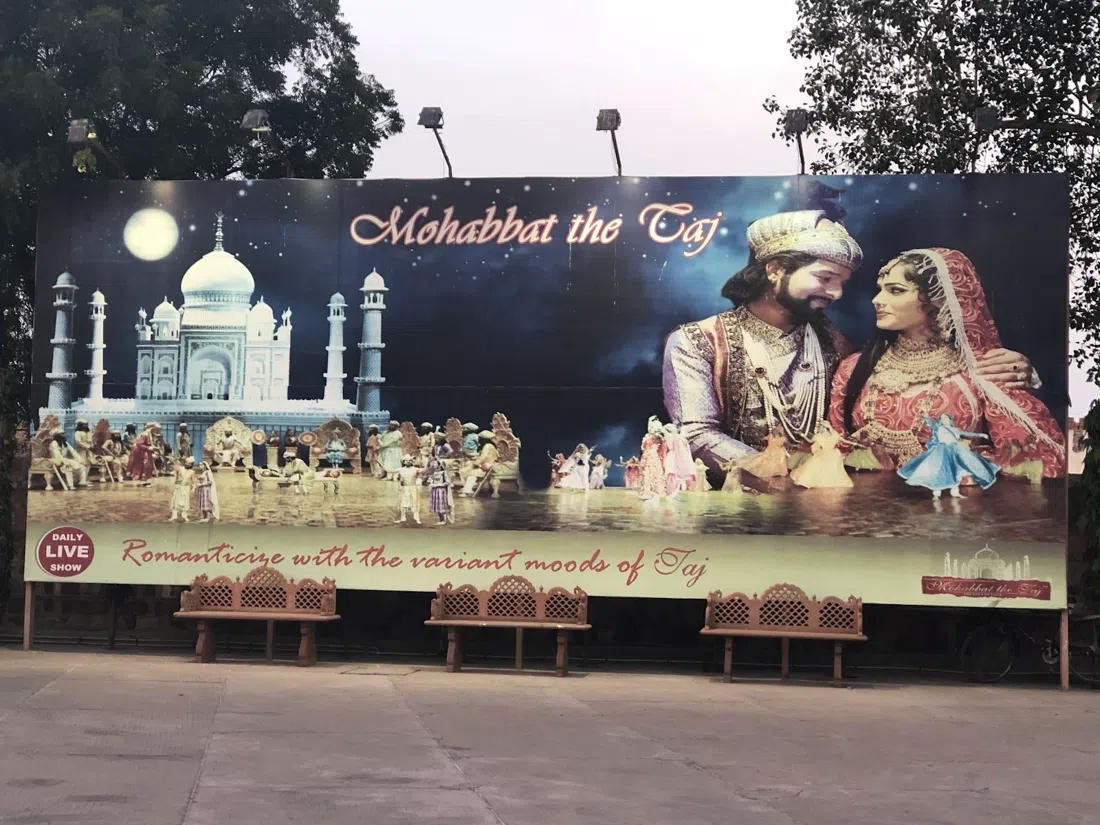
Everything shuts at dusk, which leaves the evening genuinely empty. Kalakriti Cultural and Convention Centre (Fatehabad Road) fills it with Mohabbat the Taj, a ninety-minute production of the Shah Jahan and Mumtaz story at 18:30 and 20:30 daily, in a tiered theatre built for group bookings. It is spectacle, not history, and it is better for saying so.
Night viewing of the Taj itself runs on five nights around each full moon, in eight thirty-minute batches of fifty people. Tickets are sold offline only, 24 hours ahead, at the ASI Agra Circle office on Mall Road, never at the gate and never from a man outside your hotel. If the dates line up, send your driver in the morning.
Kinari Bazaar (the old city, a few minutes from Agra Fort) comes as a relief after a day spent inside walled gardens. It is free to walk, open roughly 11:00 to 21:00 and closed on Tuesdays when most shutters stay down, and the lanes take no vehicles at all. Four or five people behind one guide works; a group of fifteen does not. Two warnings worth printing: your driver or guide may try to steer you to a commission-paying marble emporium instead, and prices here open high for anyone who arrived by car.

Best time to go to the Taj Mahal
October to March is the comfortable window, and November through February gives you the mist mornings. Late December and January bring fog that can delay the first light by an hour and disrupt flights and trains into the city, so build slack into arrival day. April to June regularly passes 40°C, which makes anything after 10:00 unpleasant and turns the marble platform into a hotplate underfoot. The July to September monsoon is humid and the gardens are green, and the river runs higher, which improves your odds of an actual reflection from Mehtab Bagh.
By day of the week: never Friday. Weekends are heavily attended by domestic visitors, so a Monday or Wednesday sunrise is noticeably calmer. Tuesday closes Kinari Bazaar, which matters only if the old city is on your list.
Is it worth it
Yes, without hedging, and the common complaints are all about logistics rather than the building. It suits almost everyone: couples, solo travellers, families with young children who go free under 15, and groups, with the caveat that the mausoleum chamber splits big parties and the museum takes them in waves. It suits people with mobility limits reasonably well. The garden paths are flat and long, the platform has steps, and the walk from the car is the harder part.
Where it disappoints is when it is treated as a two-hour stop bolted onto a long drive. The monument gives back what you put into the day around it: the fort, the east-bank tombs, a meal that is not in a hotel, and a sunset from the far bank. A car and a driver is what makes that possible, and it is why a full day beats a half day by a wide margin.
Practical notes
Most visitors stay on Fatehabad Road or in Taj Ganj; the Agra hotel search covers both, and Taj Ganj wins on walking distance to the South and East Gates while Fatehabad Road wins on restaurants. Expect to pay roughly ₹2,500 to ₹4,000 for a car and driver for a local day, more with Fatehpur Sikri added, agreed as a flat figure before you set off rather than by the hour. Carry cash in small notes for parking, shoe covers, tips and the bazaar, even though monument tickets are card and online friendly. A realistic per-person day at the monuments, foreign ticket prices included, lands somewhere near ₹2,500 before food and the car.
Budget the morning for the Taj, the middle of the day for the fort or a long lunch out of the sun, and the late afternoon for the east bank finishing at Mehtab Bagh. Confirm with your driver the night before which gate he is dropping at, and agree where he will wait, because the pick-up, not the drop-off, is what goes wrong. For where to stay, how long to give the city and what else is worth a car, see the wider Agra guide.