
Most people arrive at Agra Fort with an hour budgeted and a driver idling, and most leave surprised by how much wall there is and how little of it they were allowed near. The ticket buys the riverside palace quarter (marble courtyards, latticed screens, a balcony that looks straight downriver at the mausoleum the same dynasty is remembered for) and not much more, because roughly a third of the site is still a working Indian Army cantonment. Knowing that before you walk in changes what you expect from the stop.
What the ticket at Amar Singh Gate buys
Agra Fort (Rakabganj, on the west bank of the Yamuna) is open daily from sunrise to sunset, and there is exactly one visitor entrance: Amar Singh Gate, on the south side. The fort's other ceremonial gate is army-held and shut to the public, so there is no through-route. You come out the way you went in, which matters if your driver is planning to meet you somewhere else.
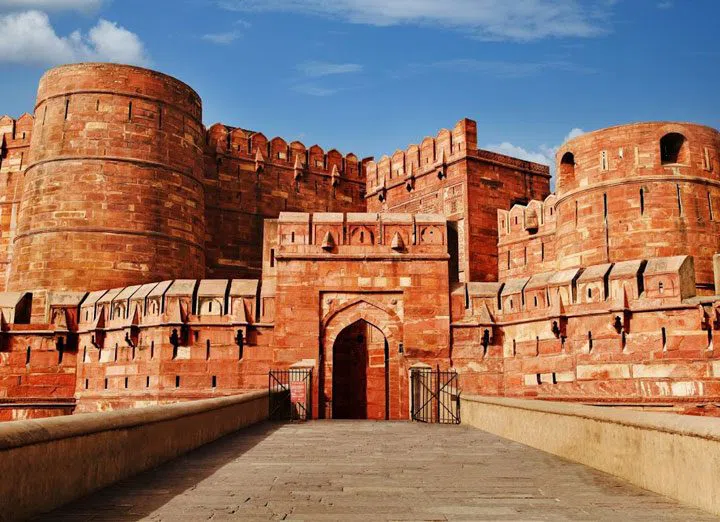
Entry is ₹650 for foreign visitors and ₹50 for Indian nationals, dropping to ₹600 and ₹40 on Fridays. Under-15s go free. Parking a car costs ₹100. There is no door policy, no dress code and no timed entry. A coach party of forty and a couple in a taxi join the same line, and licensed guides and group tickets are both arranged at the gate rather than in advance.
What you walk through is a compressed palace: a long sloping ramp built to break a charge, an audience courtyard where petitioners waited, then a sequence of sandstone and marble apartments stepped down toward the river. The octagonal marble tower at the far end is the view everyone comes for, the whole eastern bend of the Yamuna, with the white dome about two kilometres downstream. On a clear winter morning it is the best framed view of that building anywhere in the city that is not the building itself. On a hazy May afternoon it is a pale shape in the glare, and standing there longer does not fix it.
The scale is worth stating plainly. The fort is often quoted at 94 acres, and you will see perhaps a third of that. The military section has its own gates and has been closed for decades, so there is no rope line to peer over.
How long it takes and where the car waits
Ninety minutes is a brisk pass. Two hours is comfortable with a guide who stops and explains; two and a half if you photograph. Anything a driver sells as a forty-minute fort stop is a photograph of the tower and a walk back.
Parking rarely gets written down anywhere. Cars, coaches and Tempo Travellers use the ground at Rakabganj square, a two to three minute walk from Amar Singh Gate, which is what people are looking for when they type "agra fort square rakabganj". It is close enough that a large group can be dropped, ticketed and inside within fifteen minutes, and close enough that anyone who needs to sit out the climb can wait in an air-conditioned vehicle without being stranded.
Buying at the gate versus booking a car tour
The fort does not sell out. Tickets are bought at the counter, the line moves, and the only real queue pressure is the 08:00 to 10:00 domestic surge on weekends and public holidays, plus the Friday effect described below. If all you want is entry, arrive and buy.
A driven tour buys something different: the logistics of a city where the sites sit on both banks of a river with limited bridges, where one monument closes weekly and another keeps late hours, and where the gap between the car park and the gate changes at every stop. Guided car tours covering the fort run seven days a week, and the top-rated one holds 4.9 out of 5 from 855 reviews, with 2,774 traveller reviews across the bookable options here. Multi-day private tours start from 232 USD per person. Whether that is worth it depends on whether you would rather solve the sequencing yourself, which is entirely possible with a half-decent taxi and this article.
Why Friday rearranges the whole itinerary
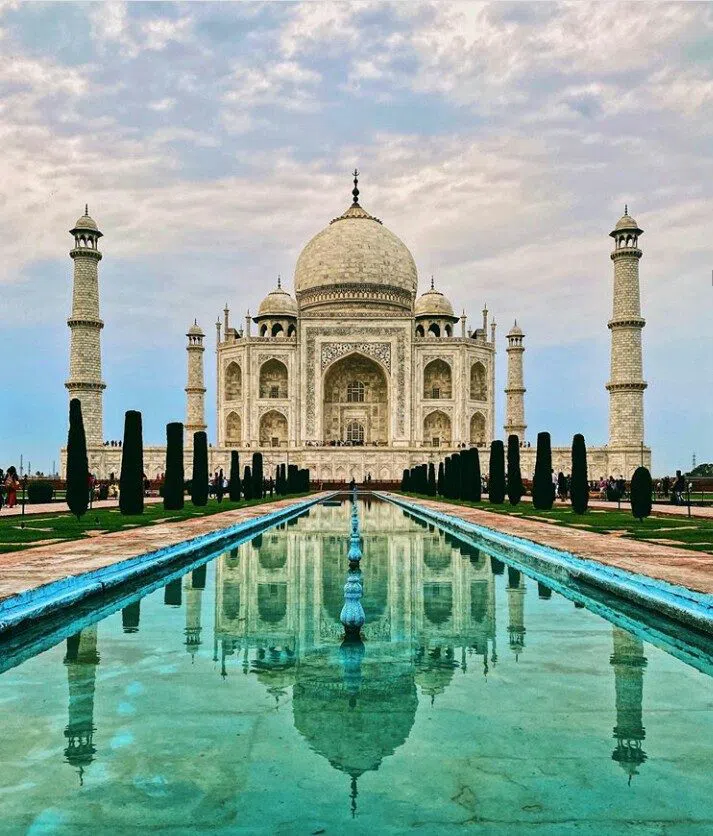
The Taj Mahal (Taj Ganj, on the same bank a short drive downstream) is closed every Friday. Agra Fort is not. This is the scheduling fact most day visitors get wrong, and Friday is also the day the fort's own ticket is cheapest.
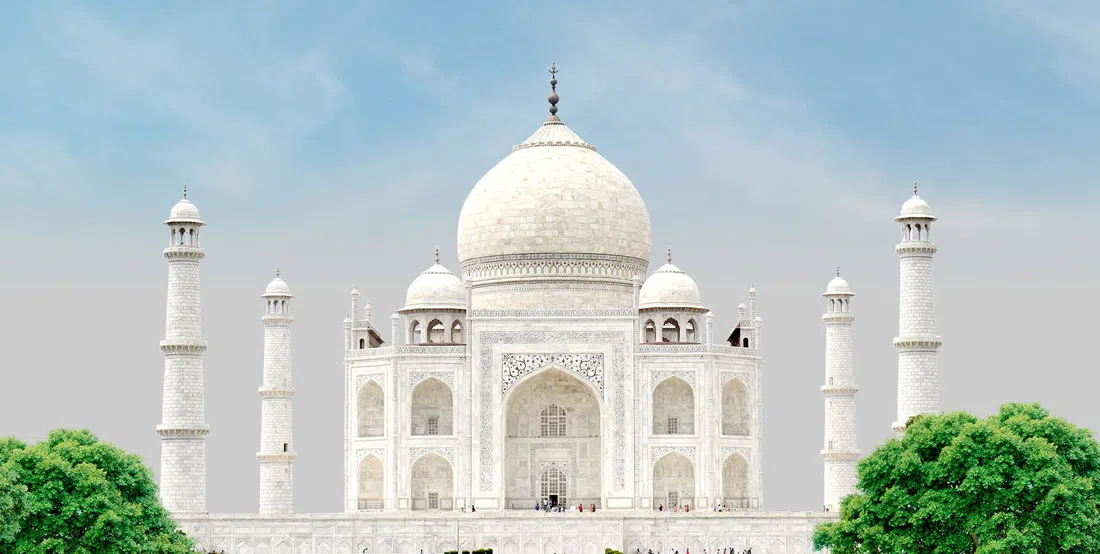
When the Taj is open, budget properly for it: ₹1,100 for foreign visitors plus ₹200 to step inside the mausoleum itself, ₹50 for Indian nationals, with a ₹50 discount for foreigners booking online. Entry is time-limited to three hours. No fuel-burning vehicle comes within 500 metres, so your car stops at Shilpgram or the east gate approach and you finish by battery e-cart or on foot. Build ten to fifteen minutes into each direction for that transfer, and more with a group.
On a Friday, the working alternatives are Taj Nature Walk (a woodland park five minutes from the east gate), open daily 06:00–19:00 at ₹200 foreign and ₹50 Indian, and Taj View Point A.D.A. (north bank, sharing a car park with Mehtab Bagh), which is open on Fridays when its neighbour is not. The Nature Walk is genuinely quiet, birds rather than touts, and a large party changes its character entirely, so it suits couples, families and anyone with an awkward hour to fill rather than a coach.
The east bank stop most cars skip
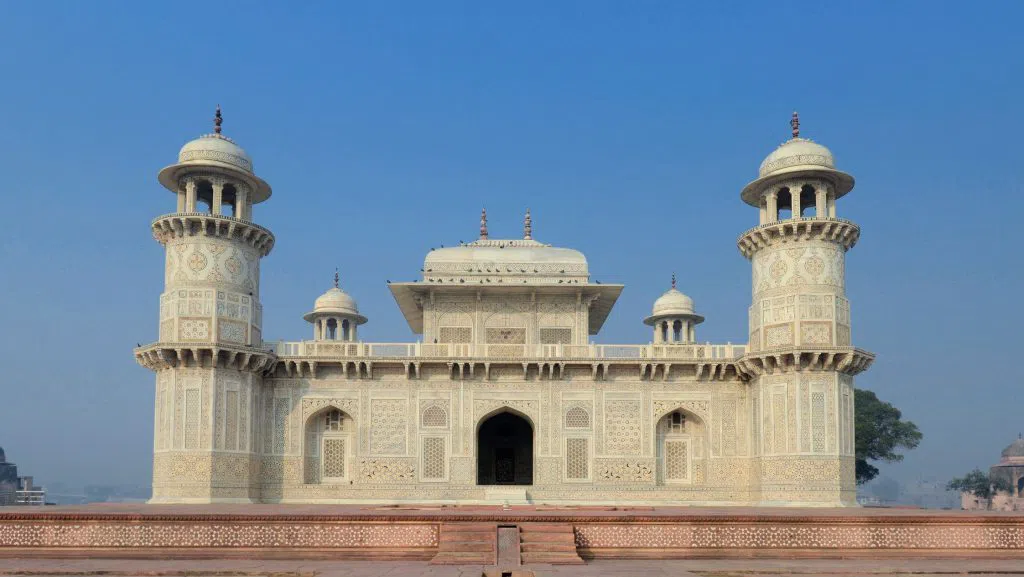
Drivers offer the Tomb of I'timad-ud-Daulah (the Baby Taj, east bank) and most visitors decline it because the fort and the Taj have already filled the tank. That is a mistake of sequencing, not of taste. This is the building where Mughal marble inlay was first worked out, at a scale you can inspect without a crowd behind you. Entry is ₹310 foreign and ₹30 Indian, bought at the gate, with under-15s free. Foreign visitors also pay a ₹500 same-day Agra Development Authority toll, but that toll is shared across the ADA sites and is not charged on Fridays, so visiting on the same day as the fort usually costs nothing extra.
Five minutes further on, Chini Ka Rauza (east bank, off the riverside road) is free, unstaffed and half-ruined. There are no toilets, no shade and no ticket desk. Conservation work means scaffolding and closed sections are normal rather than unlucky. Include it as the counterweight to the polished sites: fifteen minutes, glazed tilework, nobody selling you anything.
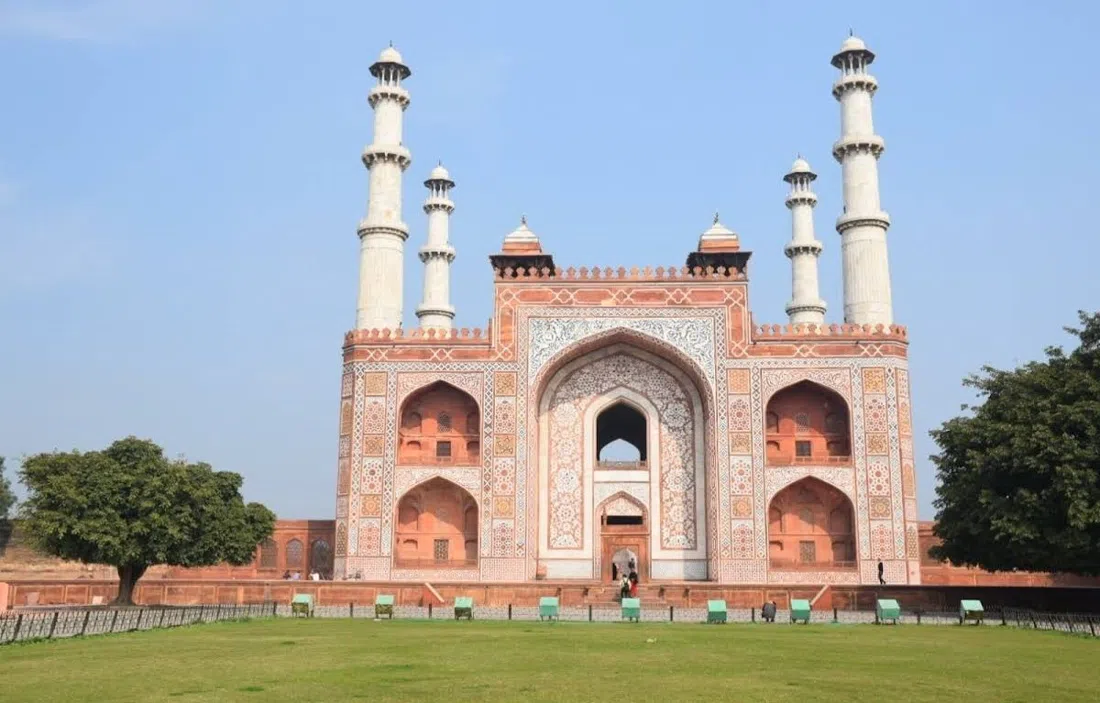
The north bank in the last hour of light
Mehtab Bagh (north bank, directly opposite the Taj) is the standard closing move on a car circuit because it is on the sunset side of the river. Tickets are ₹300 foreign, ₹25 Indian, under-15s free, sold only at the counter. There is no online booking, which is why a guide usually buys for the whole group at the gate. Be realistic about the water: in the dry months the Yamuna here can be a sandbank rather than a mirror, and the reflection photograph people plan around is not guaranteed.
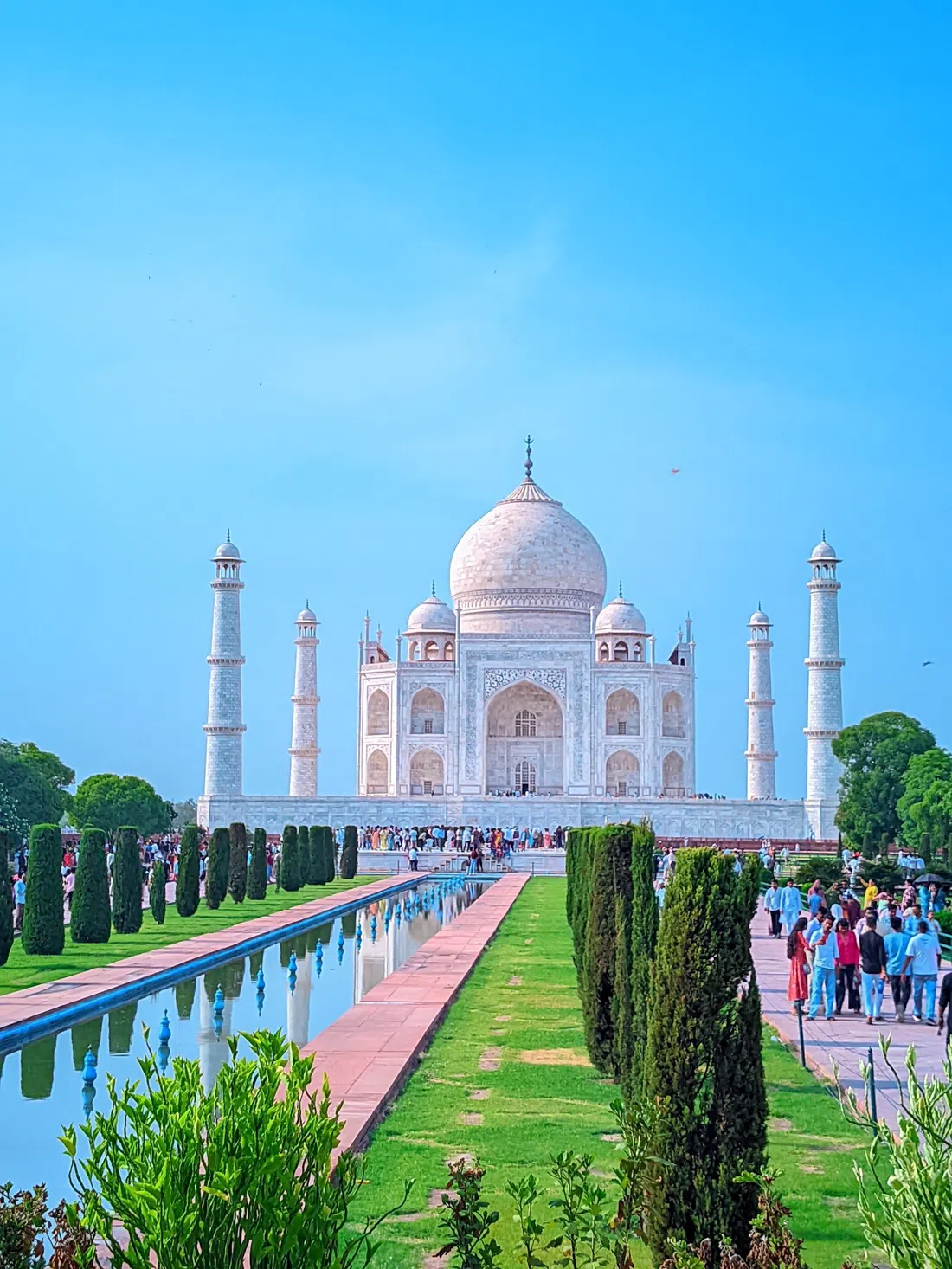
Taj View Point A.D.A., next door, is run by the development authority rather than the archaeological survey, which is why it keeps hours nothing else on the river does. Sunrise to sunset is ₹200 foreign and ₹50 Indian; sunset to midnight is ₹500 and ₹200. It is the only straightforward way to look at the Taj after dark without a moonlight-viewing ticket, and it stays open on full-moon nights when Mehtab Bagh has shut. Despite the shared car park, it is a different stop, not a duplicate.
The Mughal Heritage Walk (Kachhpura, same north bank) is a community-run guided walk led by trained villagers, roughly 45 USD per walk, reservation mandatory and payment in cash on the day. It slots into a driving itinerary with no detour at all, and it is the most direct way to spend money in Agra that stays in Agra. Book it before you arrive; you cannot turn up.
The mosque and the market across from the gate
Shahi Jama Masjid (directly opposite the fort, above Agra Fort railway station) was built in 1643 for Jahanara Begum and is the one stop that puts the fort back into its city rather than its guidebook. It is free and open outside prayer times, roughly 07:00–12:00 and 13:30–18:30, so it does not fit a midday visit. There is a charge for photography. Cover heads and shoulders, remove shoes, keep group numbers low. It is closed to non-Muslims on Fridays.
Behind it, Kinari Bazaar (old city, minutes from the fort) is the only unticketed thing on this list and the real answer to what else there is to do here. The lanes are far too tight for a coach; cars stop at the edge and everyone walks in single file. Snacks and trinkets run ₹50–500. If you are buying marble, go in with someone who knows the lanes; this is where a guide earns their day.

Staying for the evening show
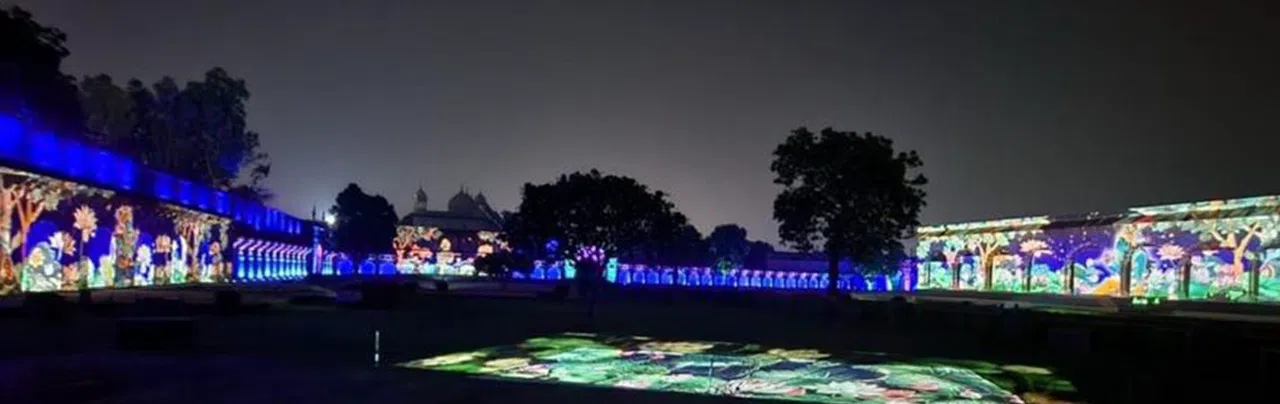
When the fort gate closes at sunset, one thing continues. Rang-e-Agra: Yugon Ka Safar (Agra Fort) relaunched on 18 April 2025 as a 45-minute projection-mapped rebuild of the old light and sound show, with a Hindi sitting at 18:30–19:15 and an English one at 19:30–20:15. Tickets are ₹800 for foreign adults and ₹300 for Indian adults, ₹400 and ₹150 for ages 8–17. Seating is 300 per show, first come first served, so an off-peak group walks in and a full coach should arrive early.
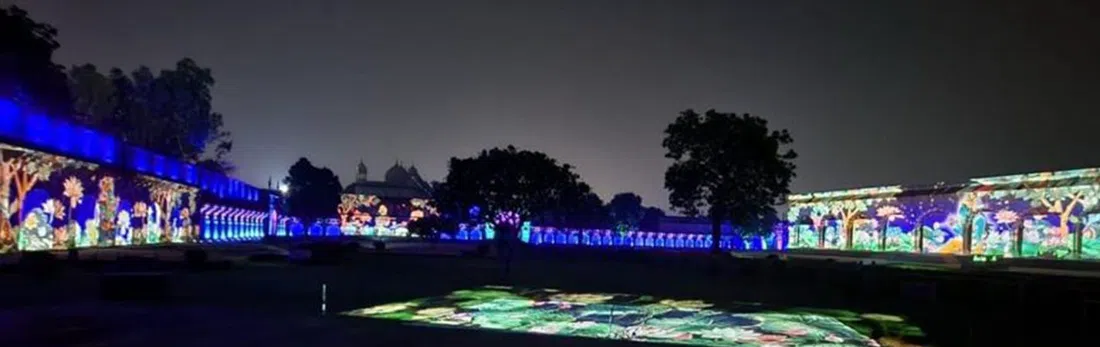
It is the only way to be at the fort after hours, and it is the argument for a car tour that finishes its night in Agra rather than driving out at five in the afternoon.
The two long add-ons on the highway
Akbar's Tomb (Sikandra, 10km out on the north-western highway) is the natural first or last stop for anyone arriving or leaving by road, rather than a separate excursion. Huge grounds, easy coach access, ₹110 foreign and ₹15 Indian (₹100 for foreigners on Fridays), and under-15s free. The resident deer make it read as much like a park as a monument, which after a morning of sandstone is the point.
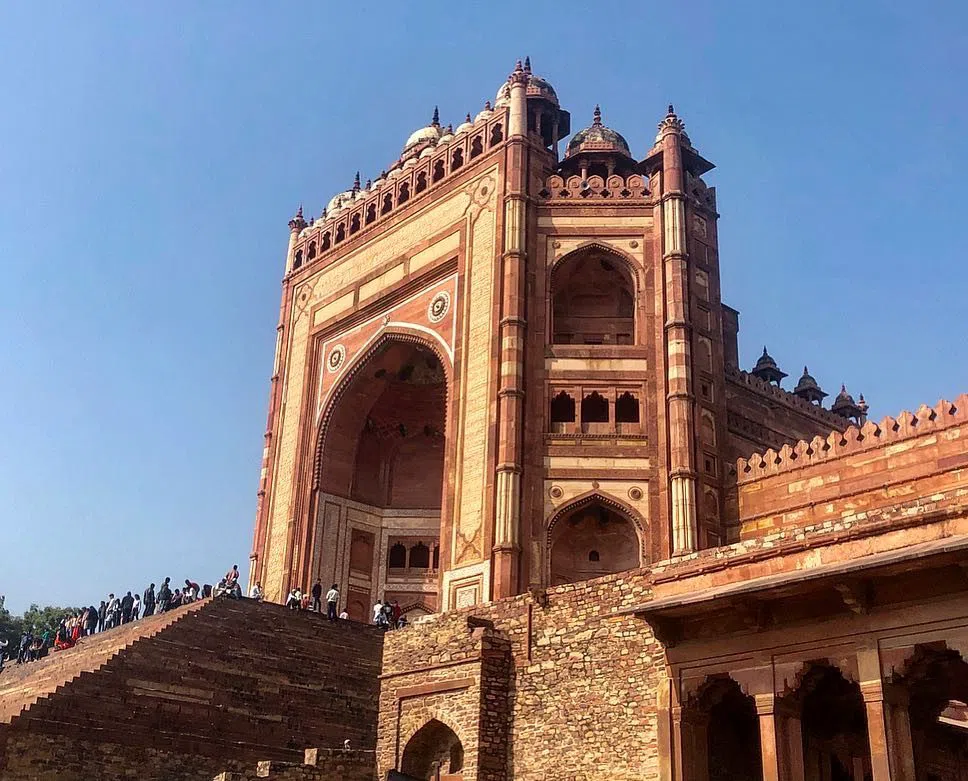
Fatehpur Sikri (40km west) is the add-on that turns an Agra day into a long one. Private vehicles stop at the lower car park and everyone transfers to the shuttle for the final climb, so a large party should allow extra time at both ends. The palace complex is ₹550 foreign and ₹40 Indian; the great mosque and the Salim Chishti dargah are separately entered and free, though donations are pressed hard and the touts around the shrine are persistent. Do not attempt it and the fort and the Taj in one day unless you start before sunrise.
Where to eat when the day ends late
Pinch of Spice (Fatehabad Road) has been running eighteen years, opens noon to 23:30 and takes big tables and private events. Around ₹800 a head. It is the default choice drivers and guides steer groups toward, and unusually for that category it is not a commission trap. Reserve ahead at peak.
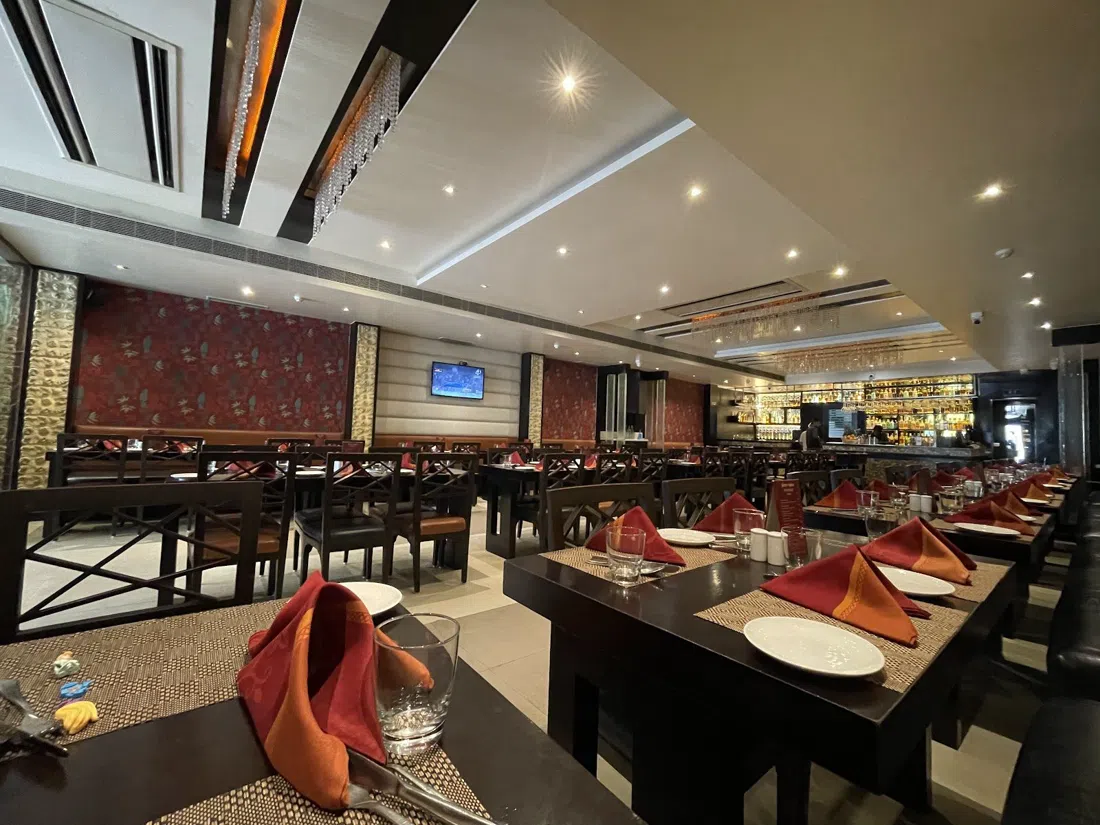
Esphahan at The Oberoi Amarvilas (Taj East Gate Road) is the other end of the same evening, at several thousand rupees a head. The hotel sits closer to the Taj than anything else in the city. The rules are real: smart-casual dress, children aged eight and over only, and parties above eight must book through Oberoi reservations directly. Wrong call for a family car tour, right one for a couple.
Sheroes Hangout (Taj Nagari Phase 1) is open daily 10:00–19:00, costs a few hundred rupees, and puts a living present tense into a day spent among dead emperors. It is run by the Chhanv Foundation, staffed by acid-attack survivors, and proceeds fund surgery and rehabilitation. The room is small, so book ahead for a group rather than arriving as a coach party. The staff are colleagues, not an exhibit.

Best time to go
November to February is the season the fort was built for: clear light, temperatures you can walk in, and the downstream view from the marble tower at its sharpest. It is also the busiest stretch, and weekend mornings between 08:00 and 10:00 bring the heaviest domestic crowds.
March and October are the compromise: warm, thinner crowds, still clear. April to June is genuinely punishing; if you come then, be at Amar Singh Gate within the first hour after sunrise, be out by ten, and spend the afternoon indoors. July to September brings monsoon humidity and dramatic skies, and it is the one window when the Yamuna at Mehtab Bagh actually holds a reflection.
By time of day: first light for the fort, late afternoon for the north bank, evening for the projection show. Friday is the cheapest fort ticket and the emptiest fort, because everyone else has been sent home by the Taj closure. Plan your Friday around the fort, the east bank and the Nature Walk, and accept that the mosque is off the table.
Is it worth it
Yes, and not as a consolation prize. The fort is the older, denser, more legible building of the two great ones here: a stronghold that became a palace and then a prison, with the whole story visible in the material as you walk downhill from red sandstone to white marble. The caveat is scale. If you expect 94 acres and a full circuit, you will feel short-changed at the ticket price, and if you arrive at midday in June you will remember heat rather than architecture.
It suits almost everyone: no door policy, no dress code, under-15s free, and groups handled without friction. Couples should pair it with the north bank at sunset and the late viewing platform. Families should pair it with the deer at Sikandra and skip the long western detour. Anyone with mobility limits should know the entry ramp is long and steep, and that the palace quarter is largely flat once you are up.
Practical notes before you go
Transport. Everything in this piece is a driving day. The fort, the mosque and the bazaar cluster together on the west bank; the Baby Taj and Chini Ka Rauza sit on the east bank; Mehtab Bagh, the viewing platform and the Kachhpura walk are north. Bridge crossings are the time cost, so do one bank at a time rather than zig-zagging. Remember the 500-metre no-fuel-vehicle zone at the Taj.
Cash. Carry it. Ticket counters at Mehtab Bagh and the Baby Taj sell at the gate only, the heritage walk is cash on the day, the bazaar is cash, and Chini Ka Rauza has no staff at all. Card works at the restaurants and the hotel.
Timing. Fort 90 minutes to two hours, Taj two to three within its three-hour limit, Baby Taj 45 minutes, Chini Ka Rauza 15, Mehtab Bagh 45 around sunset, the show 45 plus arrival. Fatehpur Sikri is half a day on its own.
Budget. A foreign visitor doing fort, Taj with mausoleum entry, Baby Taj with the ADA toll and Mehtab Bagh spends roughly ₹3,000 on tickets in a day, plus ₹100 car parking and ₹800 more if you stay for the evening show. Indian nationals pay well under ₹500 for the same circuit. Add the car and a guide on top.
Where to sleep. Fatehabad Road and Taj Ganj put you within ten minutes of both gates, which is what makes a sunrise start survivable. Compare rates on our Agra hotel search, and read the rest of the city in our Agra guide.