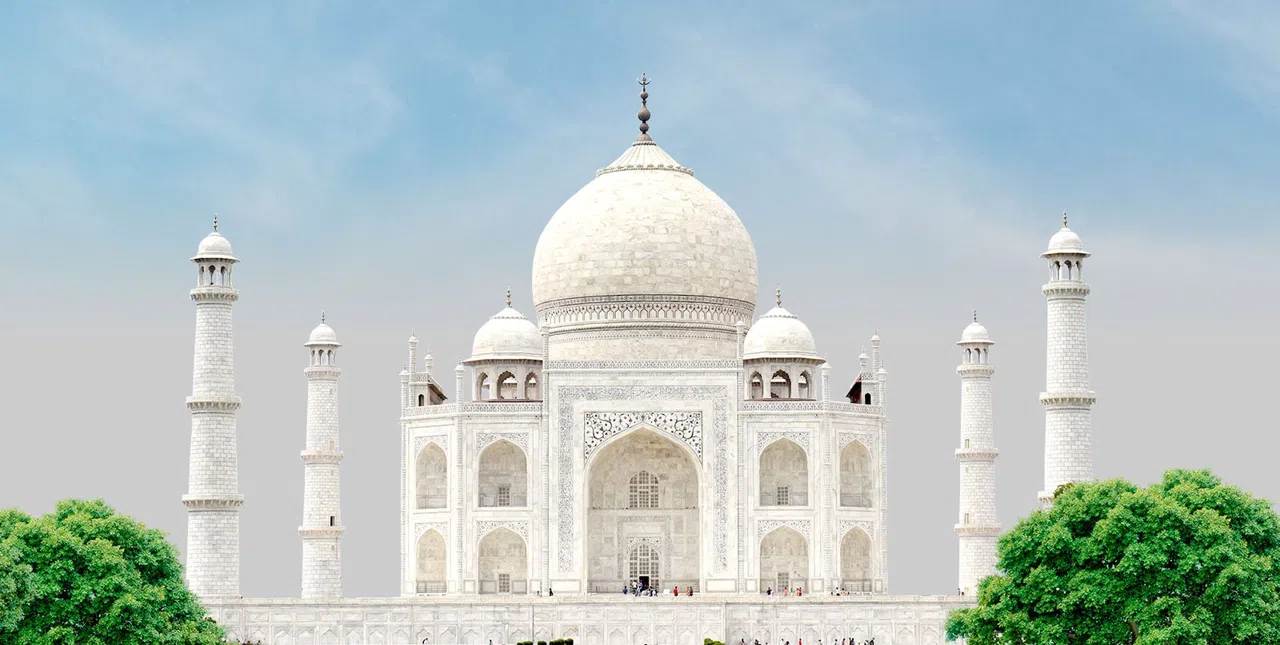

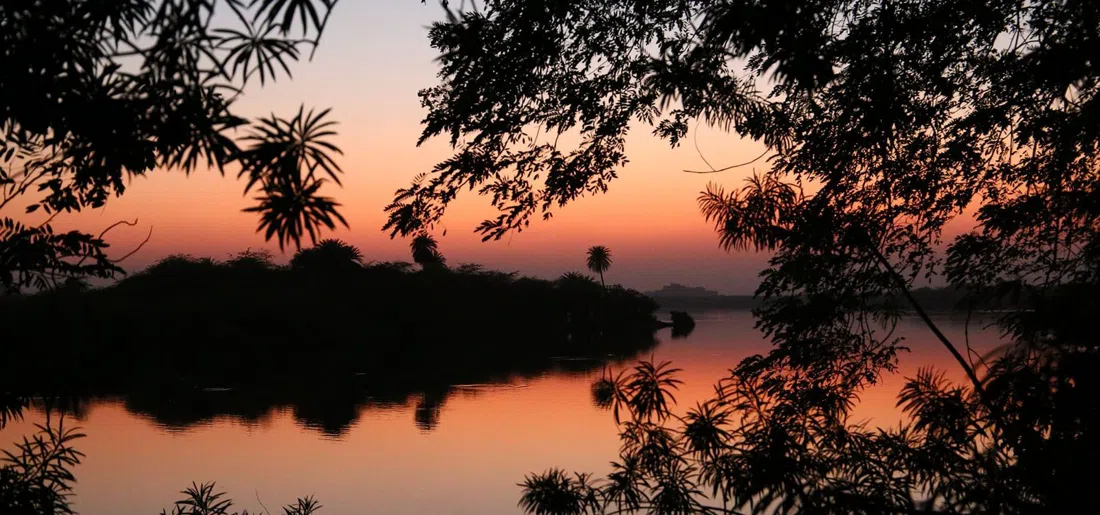
For most of the year the Yamuna behind the Taj Mahal is barely a river: a wide flat of grey sand with a channel wandering through it, and the mausoleum standing above it looking faintly stranded. In the second week of July that reverses. The water comes up to the bank, the reflection the builders designed for comes back, and the marble spends the whole day changing colour under moving cloud.
Agra in the rains is quieter and cheaper than Agra in January, and it asks more of your planning in return.
Reading the season before you book
The monsoon usually reaches Agra in the first days of July, does its heaviest work through August, and tapers through the second half of September. The river runs on a delay. What fills the Yamuna here is rain falling upstream as much as rain falling on your head, so the high water that makes the east bank worth crossing for generally arrives in August and holds into the first week or two of September. If you want the reflection, that is the window. If you only want storm light on marble, any week from July to late September will give it to you.
Rain here comes in bursts rather than steady drizzle: an hour of hard fall, standing water at the roundabouts, then it stops and the light turns to something the dry season never gives you. Temperatures sit in the low-to-mid 30s°C with humidity to match, so you will sweat more than you get wet. Build every day the same way. A monument early, something roofed in the middle, and an evening plan you can move indoors at twenty minutes' notice.
Two things follow from that. Hotel rates are at their annual floor; the Taj-facing and river-facing rooms that are fought over in December go quietly in August, and they are finally worth the premium because there is a river to face (Agra hotel search). And nothing on the bank is guaranteed open. The Archaeological Survey closes flooded ground without notice, so ask whether a riverside site is open on the morning, not the week before.
The Taj in storm light
Taj Mahal (Taj Ganj, south bank) is the building most people arrive already knowing from photographs, which is why the monsoon is the interesting time to stand in front of it: it does not look like the photograph. Under a loaded sky the marble reads pewter, almost lead. The cloud breaks, and within a minute the same wall is ivory. Across an afternoon it will do that four or five times.
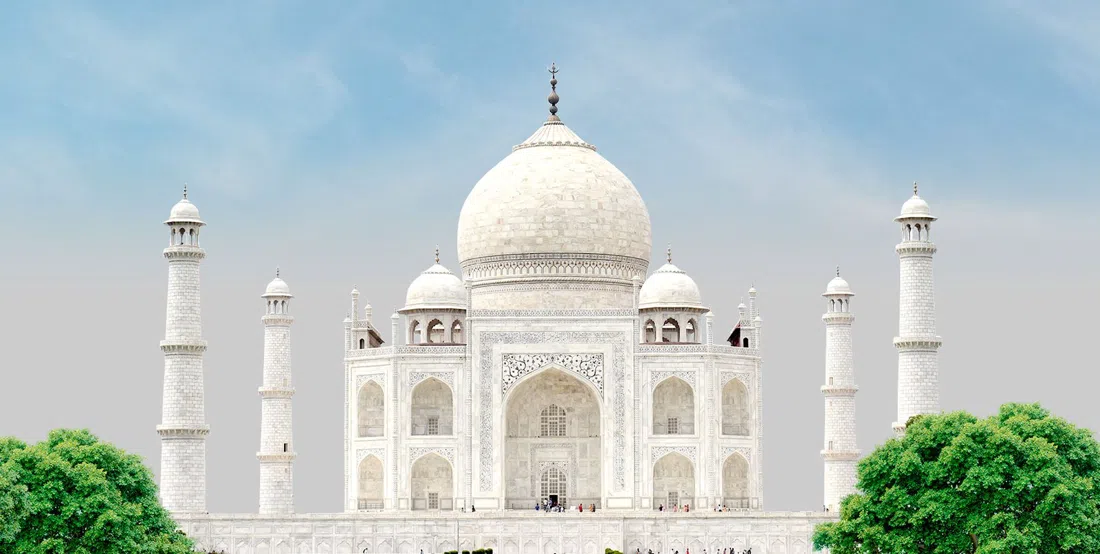
Tickets are ₹1,100 for foreign nationals, plus ₹200 if you want to go inside the main mausoleum, and ₹50 to ₹60 for Indian nationals. It is closed on Fridays for prayers. Three gates, West, East and South, have their own counters and licensed ASI guides. Groups are handled without fuss, but there is no group rate, so every head pays. If you are running a party, the West and East gates absorb volume best; the South gate is the walk-up from the Taj Ganj lanes.
Go in when it rains. Most visitors scatter for the arcades the moment a cloudburst starts, and the queue for the mausoleum interior is at its shortest in a downpour, so use those twenty minutes. Wet marble is slippery, the plinth more than the platforms, and the shoe covers issued with the mausoleum ticket slide on it, so take the steps slowly. Umbrellas are fine; tripods are not.
The east bank, where the river does the work
Everything that makes an Agra monsoon worth the trip is on the far side of the water, and almost nobody crosses.
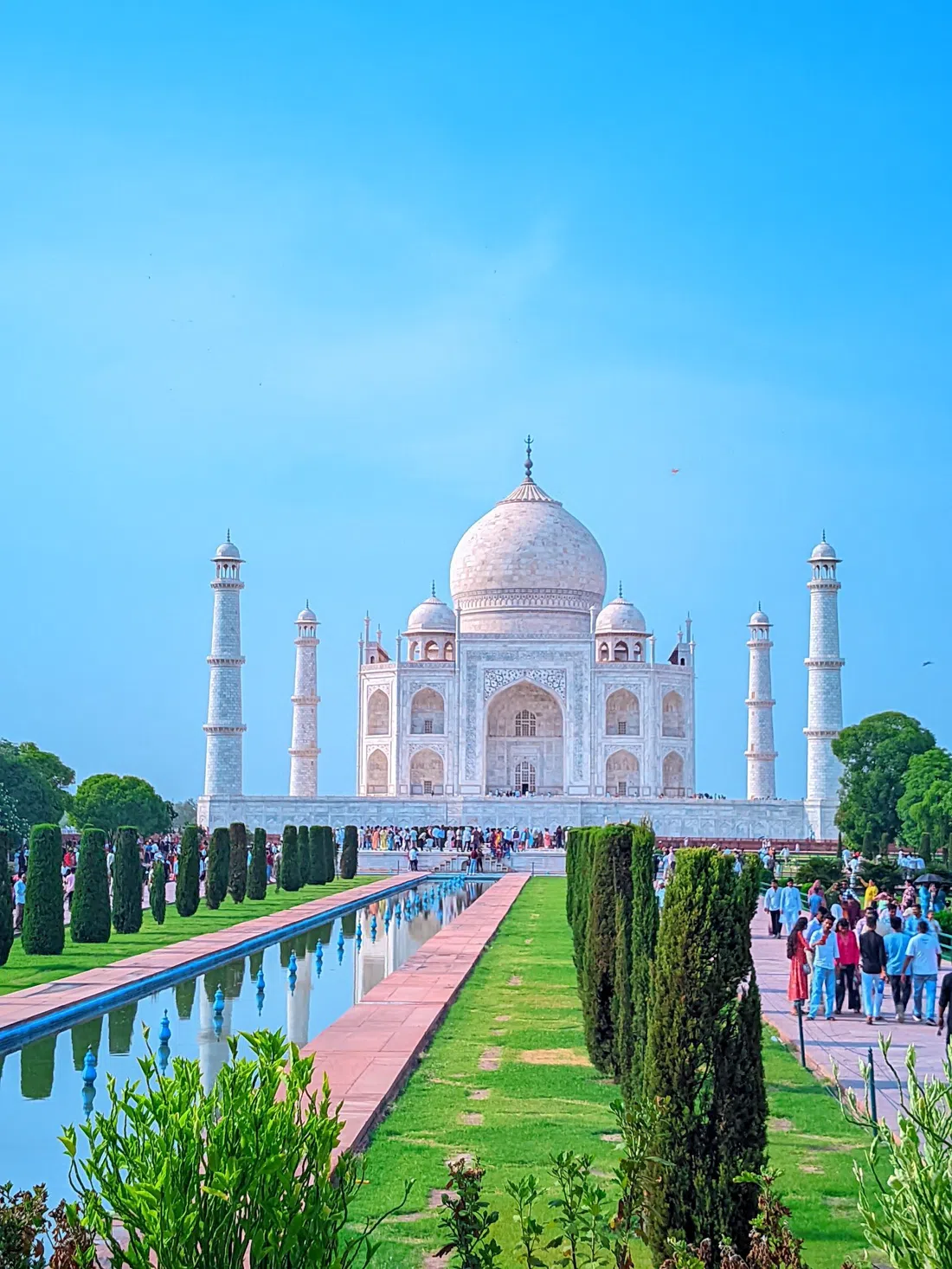
Mehtab Bagh (east bank, directly opposite the Taj, off the Kachhpura road) is the main reason to come. This is the garden that squares the Taj across the river, and for most of the year you look at the monument over a sandbank, which is not what anyone designed. With a full channel it works: the building doubled in moving water, the effect the whole composition was built around. Entry is ₹300 for foreign nationals and ₹25 for Indians, cash at the gate; there is no online booking and no advance ticket. One narrow entry path and one ticket window means coach parties bunch badly, so send a group through in two waves rather than one. The lower terrace is the first ground to go under at peak spate, and sections get closed on the day without announcement. Check the morning you plan to go.
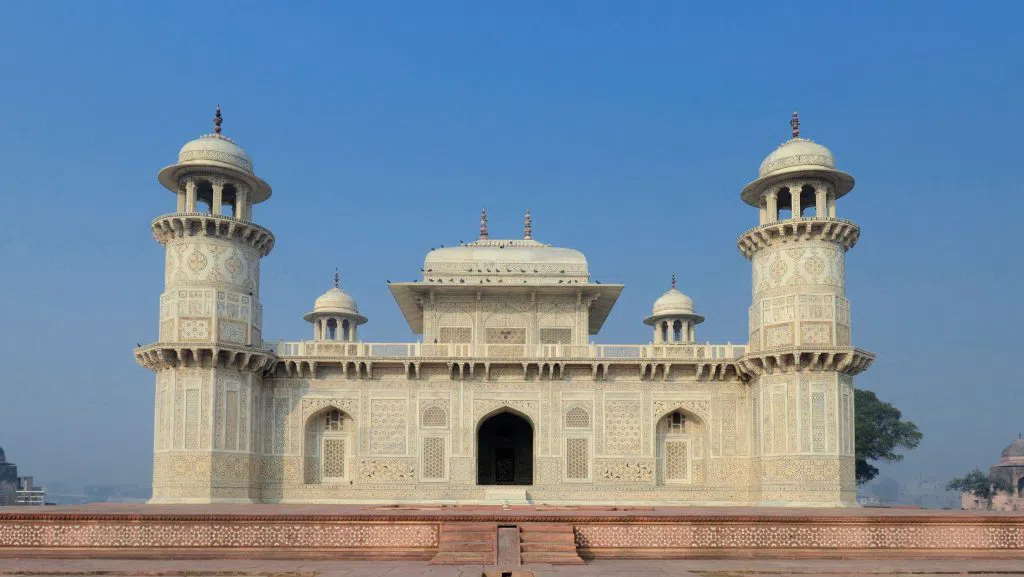
Tomb of Itimad-ud-Daulah, the Baby Taj (east bank, Moti Bagh), is ten minutes north and rarely holds more than a handful of people. Nur Jahan built it for her father, and it is the design rehearsal for the Taj, the first Mughal building here to go wholesale into white marble and pietra dura inlay. Rain suits it: wet stone saturates, and the carnelian and jasper reach a jewel colour they never manage in dry glare. Tickets are ₹310 for foreign nationals plus a ₹500 same-day ADA toll, waived on Fridays, and ₹30 for Indians. Groups walk in easily, but the tomb chamber itself takes about a dozen comfortably, so rotate people through instead of queueing them at the door.
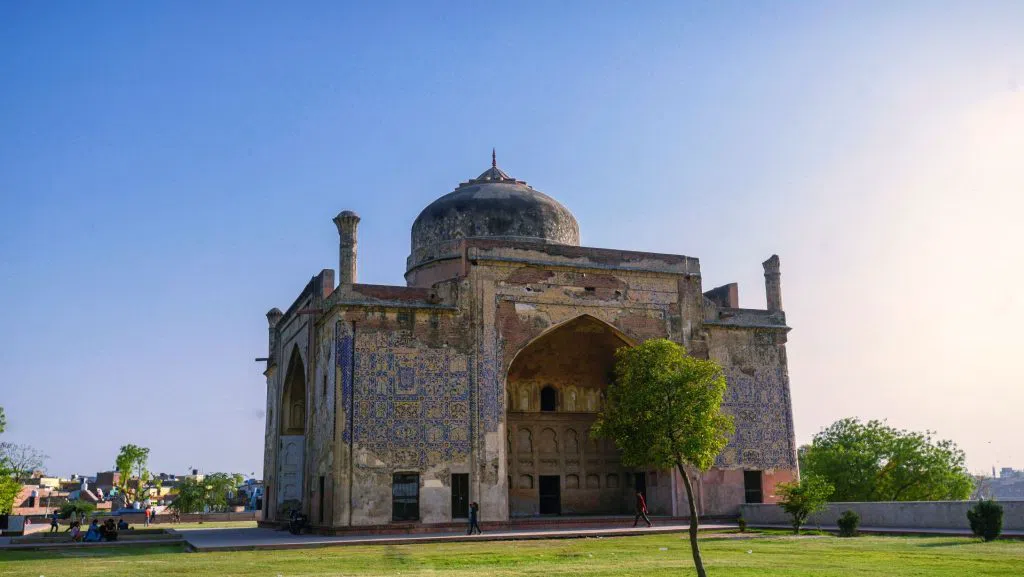
Chini ka Rauza (east bank, roughly a kilometre further north) is free, unstaffed and open sunrise to sunset all seven days. It is the only monument in Agra faced entirely in Persian kashi tile, and wet tile behaves differently from dry: the surviving blue and turquoise panels come up saturated after a shower. It suits a small guided group of ten to fifteen and does not suit a coach. The ground is rough, the riverbank drop is completely unprotected, and it is slick after rain. Keep well back from the edge, and keep children close.
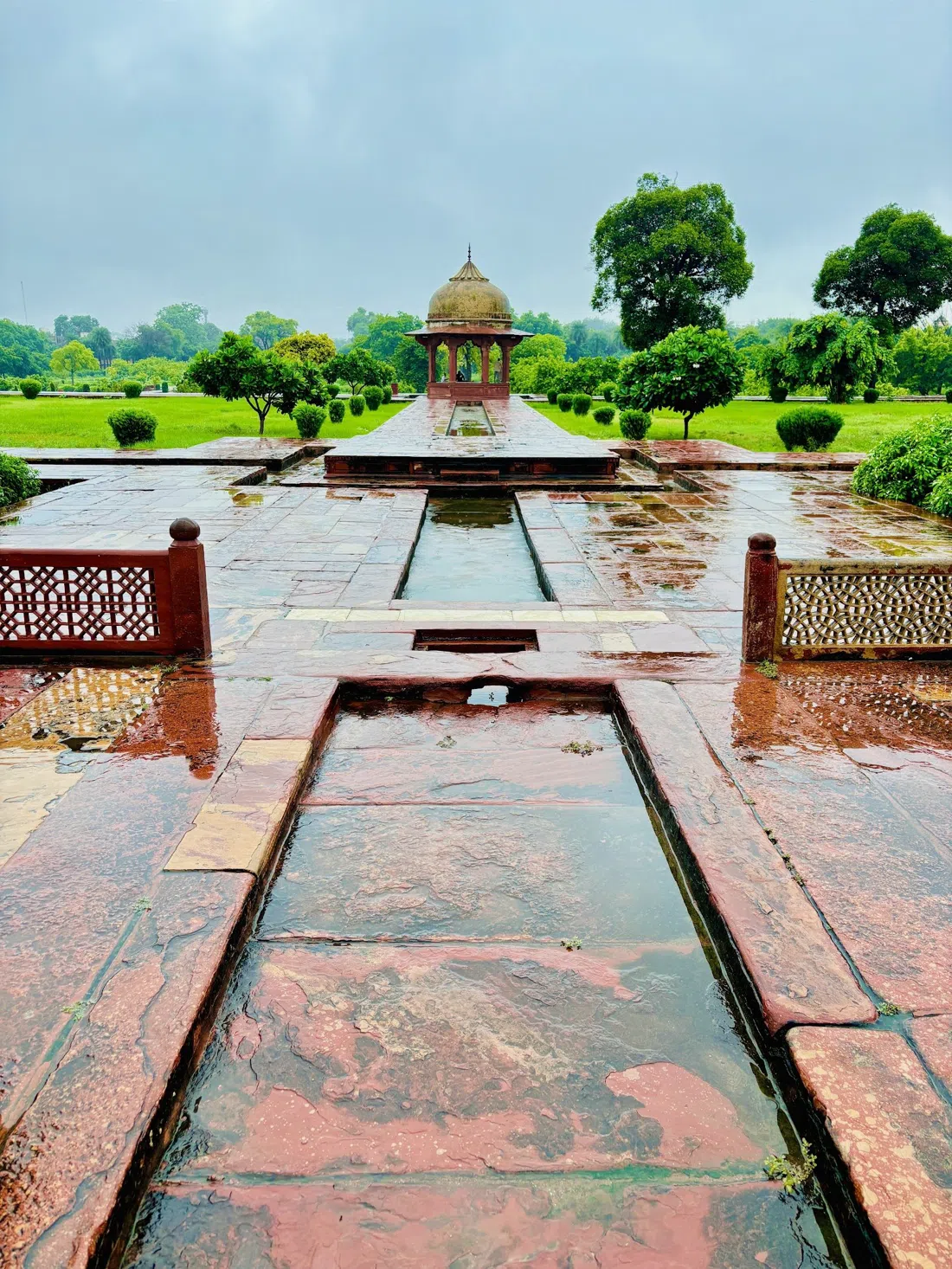
Ram Bagh, also called Aram Bagh (east bank, Rambagh, at the north end of the river road), closes the loop and is the one people skip. Babur laid it out in 1526 specifically to escape the Indian heat by sitting above running water, and for most of the year that intention is invisible because the channels are dry. In the rains they fill, the river he aligned the garden on is up, and you can finally read it as a working piece of engineering rather than a lawn with stone edging. Tickets run ₹200 to ₹300 for foreign nationals and ₹10 to ₹25 for Indians, sold by a caretaker. There are no facilities at all, so plan water and toilets around it rather than at it.
A walk on the floodplain
The Mughal Heritage Walk (Kachhpura village, east bank) is a one-kilometre route from the village down to Mehtab Bagh, led by residents trained as guides, and it is the counterweight to a day of ticketed monuments: you see the floodplain as land people farm and live on rather than as a view. Expect roughly ₹1,500 to ₹4,000 (about US$20 to 45) per person depending on the operator and the size of the party, with the money staying in the village. Book ahead. A realistic cap is twelve to fifteen people per guide, and fewer is better on wet lanes, which in the monsoon are mud, so closed shoes rather than sandals. Take the morning slot, both for the light and because the afternoon is when the sky usually breaks.
Friday, and where to stand while a storm passes
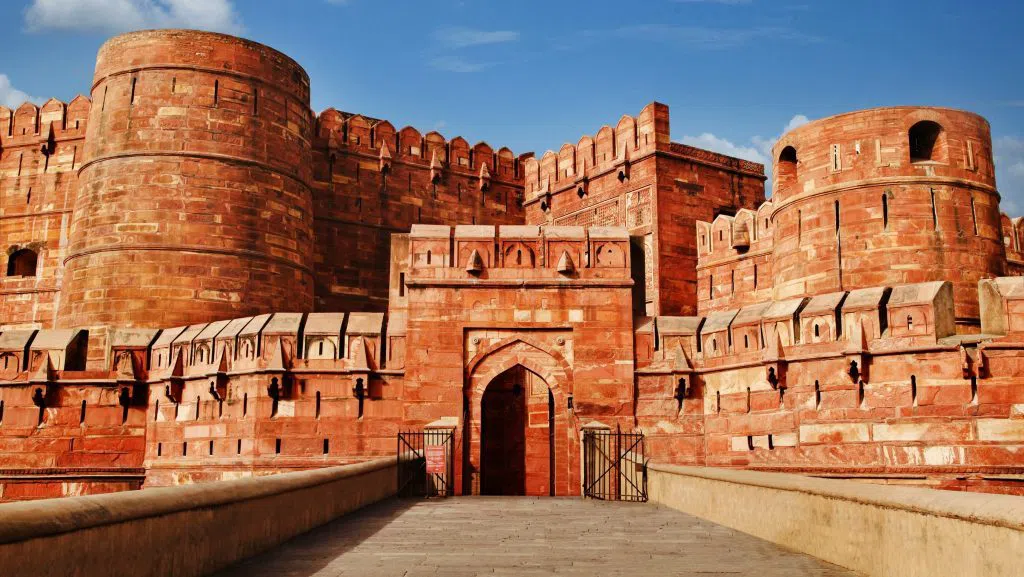
Agra Fort (Rakabganj, two and a half kilometres up the river from the Taj) is open on Fridays when the Taj is shut, which makes it the anchor of a Friday rather than a filler. It is also the most weather-proof monument in the city: wide ramped avenues a group can move along without single-filing, and enough covered marble in the Diwan-i-Am and the Khas Mahal colonnades to keep fifteen people dry for half an hour while a cloudburst blows through. Entry is ₹550 for foreign nationals and ₹60 for Indians, with licensed guides and audio guides at the Amar Singh Gate. Go up to the Musamman Burj: it is the best high vantage in Agra on a Yamuna in flood, and it gives you the downstream sightline to the Taj from the balcony where Shah Jahan spent his last years.
Two more Friday notes. The ADA toll at the Baby Taj is waived that day, and Chini ka Rauza never closes.
Shravan in the old city
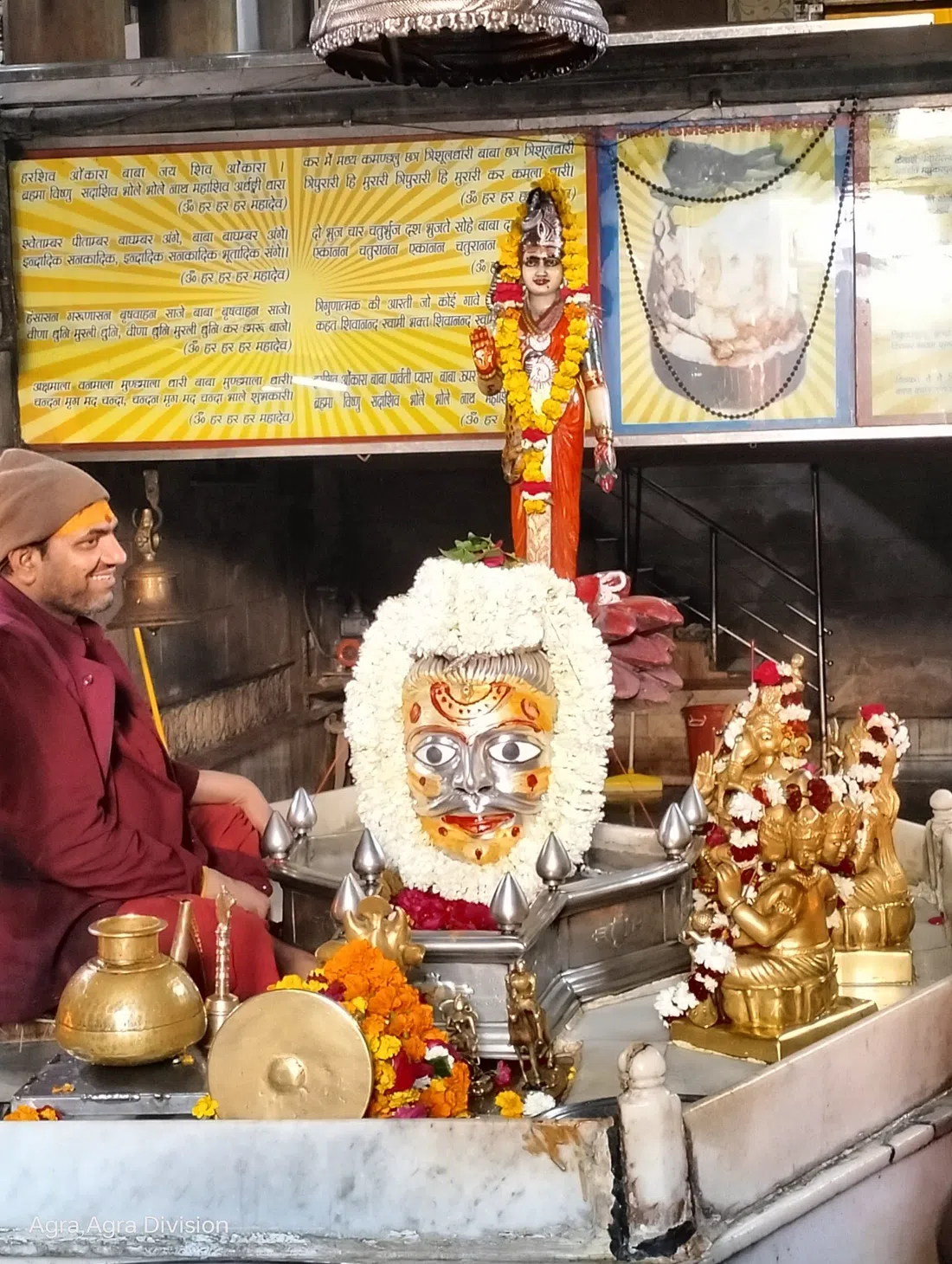
Shri Mankameshwar Temple (Rawatpara, in the lanes behind Jama Masjid near the Fort) is the clearest evidence that the monsoon here is a season people celebrate rather than sit out. One of the oldest temples in the city, it runs continuous Rudrabhishek through Shravan, the lunar month that falls across July and August, with processions of water-carriers moving through the old-city lanes. Entry is free; donations are the norm. Hours are 5am to noon and 4pm to 9pm daily. Modest traditional dress is required, shoes come off at the counter and phones usually go there too. Mondays in Shravan are crowded to the point of a crush, so if your group dislikes being pressed, go early morning on any other day.
Water birds, and bears that prefer the rain
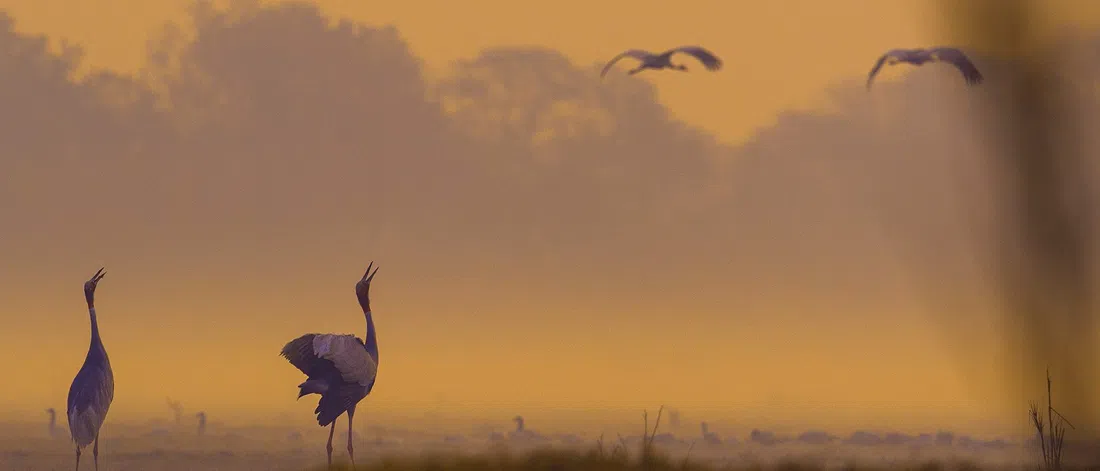
Keoladeo National Park (a 55km day trip south-west, over the state line into Rajasthan) is the strongest single argument for the rains, and almost nobody makes it. Winter draws the migratory crowds and the tour buses; July to September is the heronry, when fifteen species of stork, ibis, egret and cormorant nest in their thousands over flooded woodland, often within twenty metres of the path. Admission runs about ₹650 to ₹800 for foreign nationals and ₹130 for Indians, plus ₹200 to ₹400 for a cycle-rickshaw or guide. The rickshaw drivers are trained naturalists and work in convoy, which makes this unusually easy with a group; where the water is deep enough, boats run. Leave at six and you are back for a late lunch.
Agra Bear Rescue Facility (Wildlife SOS, at Sur Sarovar, about 20km out on the highway) keeps around ninety sloth bears taken from the ended dancing-bear trade, and is the largest centre of its kind anywhere. The rains are the right time to see them: bears that hide from the heat for most of the year are out wallowing and visibly active. Entry is ₹500 for foreign nationals and ₹50 for Indians through the Forest Department, plus a requested donation. Booking is strictly in advance by email or phone, and there are only three or four guided slots a day, so a large party needs to reserve well ahead. Treat it as an education visit rather than a photo stop; that is how it is run.
Wet afternoons and long evenings
A washed-out afternoon is not a lost day here, provided you have booked the indoor options early.
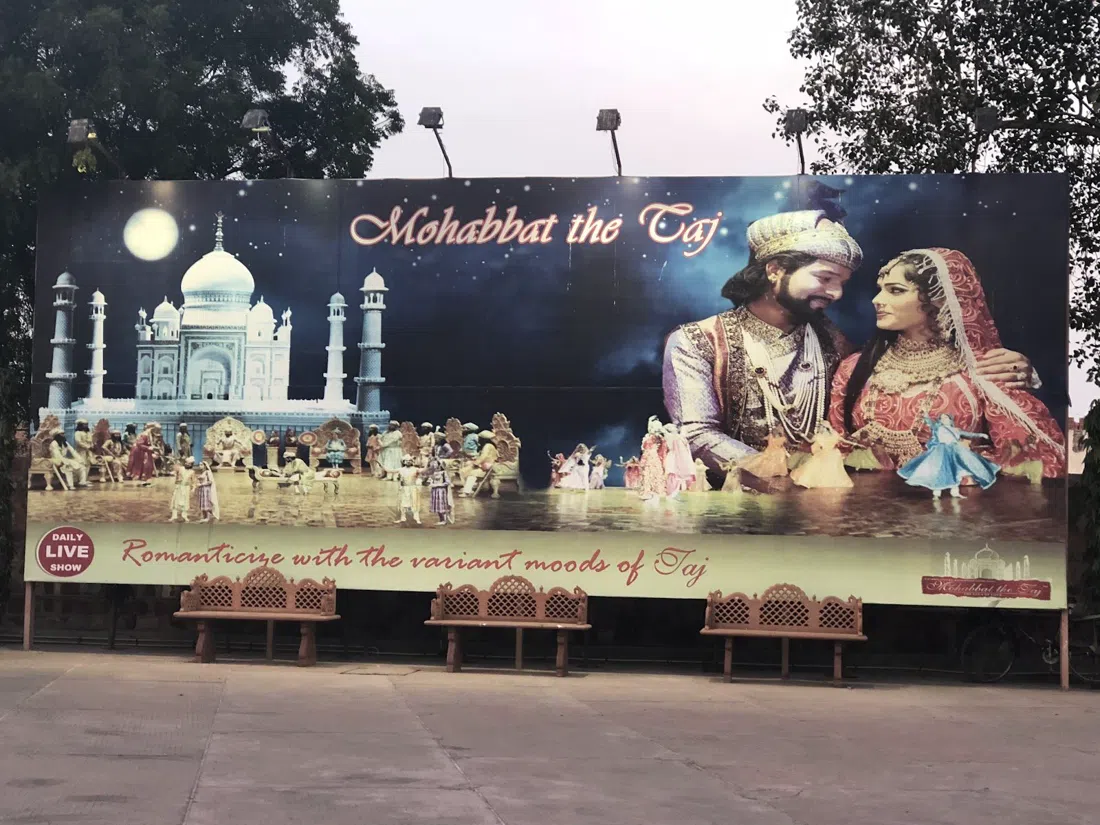
Kalakriti Cultural & Convention Centre (Fatehabad Road) is the dependable one. The "Mohabbat the Taj" show is entirely indoors and air-conditioned, in a purpose-built auditorium with tiered seating, so block bookings are standard and every operator in the city sells it. Seats run roughly ₹700 to ₹2,500 by tier, with shows typically at 6:30pm and 8:30pm daily. Confirm the exact time by phone, because it shifts with the season and with holidays.
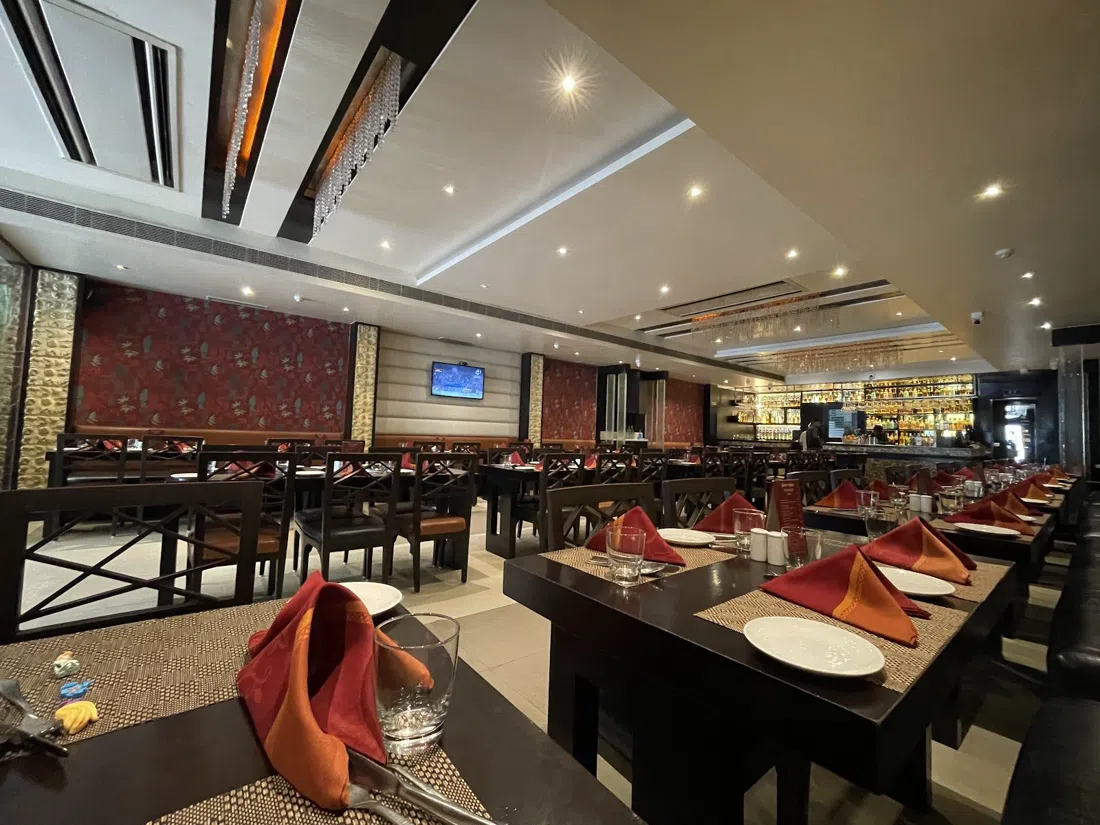
Pinch of Spice (Fatehabad Road) is where Agra eats its own Mughlai and North-West Frontier food, and it takes groups better than any other independent kitchen in the city: the banquet side handles a hundred covers upward, so a party walking in after the show is unremarkable. Around ₹1,500 to ₹2,500 for two, open noon to 11:30pm. Fully indoor and air-conditioned, which in August matters more than any view.
Esphahan, at The Oberoi Amarvilas (Taj East Gate Road) is the most accomplished table in Agra, and the monsoon case for it is the setting as much as the menu: the hotel terraces look straight down the axis at the Taj, and a storm clearing over it between courses tends to be the thing people remember about the trip. There are only two seatings, 6:30pm and 9:00pm, at a small number of tables. Parties over eight must call the hotel directly, and children under eight are not admitted. Expect ₹6,000 and up per head with wine. Smart casual, and book weeks ahead.
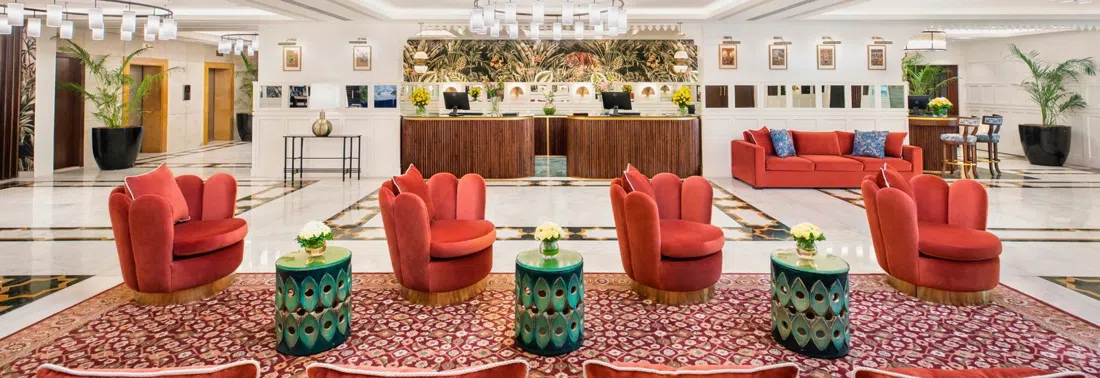
Sky Deck, Taj View Agra (IHCL SeleQtions, Fatehabad Road) is the sensible version of the same idea: a genuine rooftop with a real Taj sightline and a covered indoor half three steps away, which is the insurance you want in a season where a clear horizon and a cloudburst can be twenty minutes apart. Around ₹2,500 for two, open noon to 11pm. Rooftop sections can be reserved for a group on request (+91 56266 02000).
Sheroes Hangout (Fatehabad Road) is a small café run by acid-attack survivors under the Chhanv Foundation, its takings funding reconstructive surgery and legal aid. This is the original Agra room, still open after its COVID-era interruption. Pay what you wish; ₹300 to ₹500 a head is a fair contribution. It seats about fifteen comfortably, so call ahead for a group (+91 99580 66951). Open 10am to 7pm. A dry, unhurried hour that earns its place on any itinerary, monsoon or not.

The practical part
Getting around. Autos and app cabs both work, and in heavy rain the cab is worth the extra simply because you stay dry between stops. Petrol and diesel vehicles cannot approach the Taj gates, so the last stretch is on foot, by battery bus or by electric cart. Allow an extra fifteen minutes at either end, more if it is pouring. The east-bank circuit (Mehtab Bagh, Chini ka Rauza, the Baby Taj, Ram Bagh) sits on one road and is far cheaper as a single half-day car hire than as four separate fares. Agree the waiting time up front.
Cash. UPI is everywhere in restaurants and shops, but Mehtab Bagh and Ram Bagh are cash at a window with no online option, and the Kachhpura guides prefer cash. Carry small notes.
Timing. Dawn slots give the coolest hours and the clearest air; mid-afternoon is when the sky usually opens. Fridays the Taj is closed, so build those days around the Fort, the east bank and the temple. Check the river state on the morning of any Mehtab Bagh plan.
Budget. A foreign visitor doing the Taj with the mausoleum, the Fort and the full east bank across two days will spend roughly ₹2,500 to ₹3,000 on tickets alone; Indian nationals, about a tenth of that. Add ₹1,500 to ₹2,500 for a day's car and driver, and similar for a good dinner for two outside the hotels. Rooms are where the season pays you back.
What to bring. Quick-dry clothes rather than waterproofs, since it is too warm for a shell, closed shoes with grip for the floodplain and for wet marble, a dry bag for a camera, and repellent for the east bank and Keoladeo at dusk.
For the rest of the city, year-round, see the Agra guide.