The Agra issue
Where to Stand in Agra When the Taj Mahal Turns Gold
The good Taj Mahal vantage points in Agra all close, empty or fill at about the same moment, so here is how to pick one and get there in time.

By Matteo FerraroAgra is a Mughal city, not a single monument
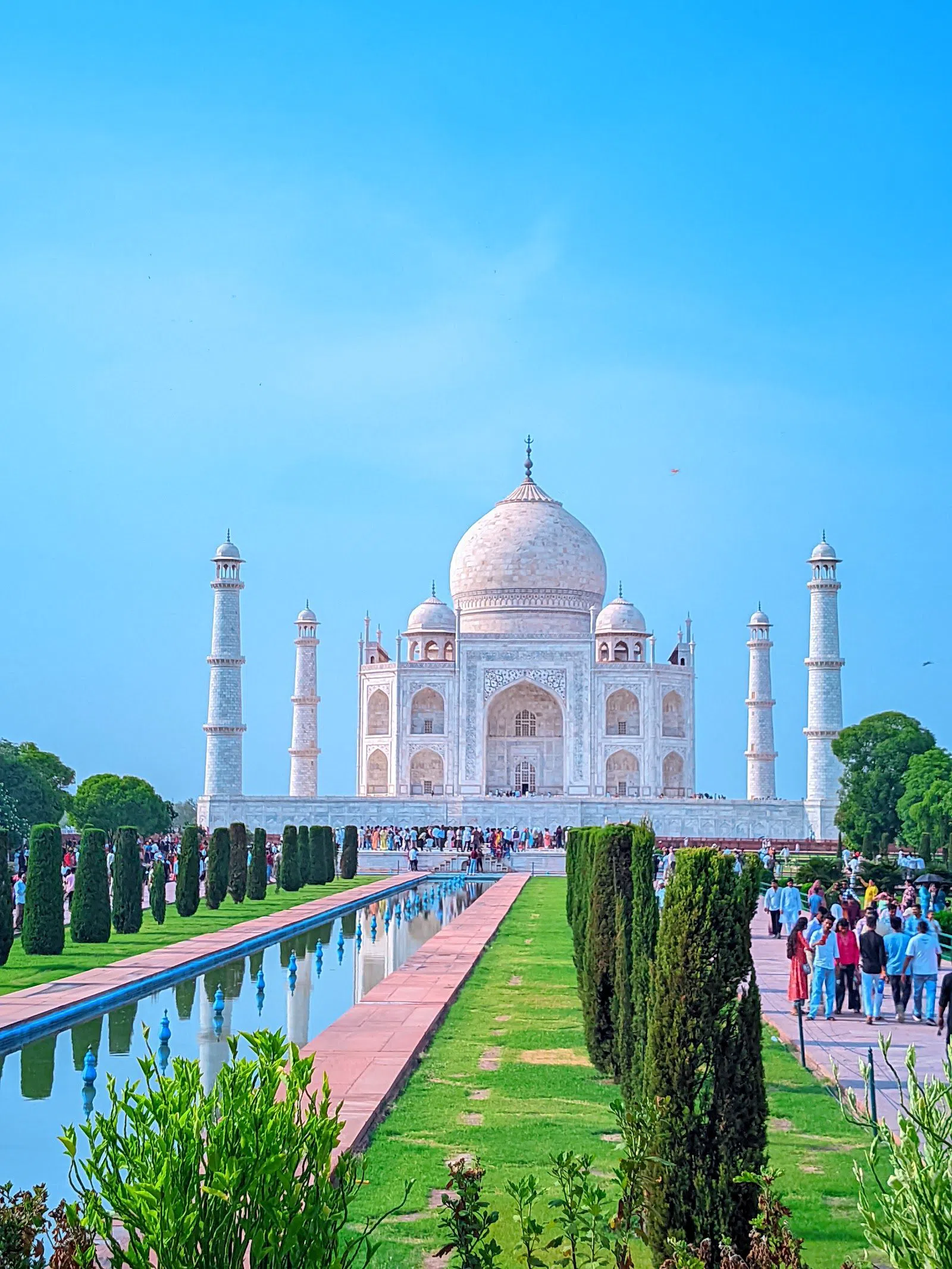
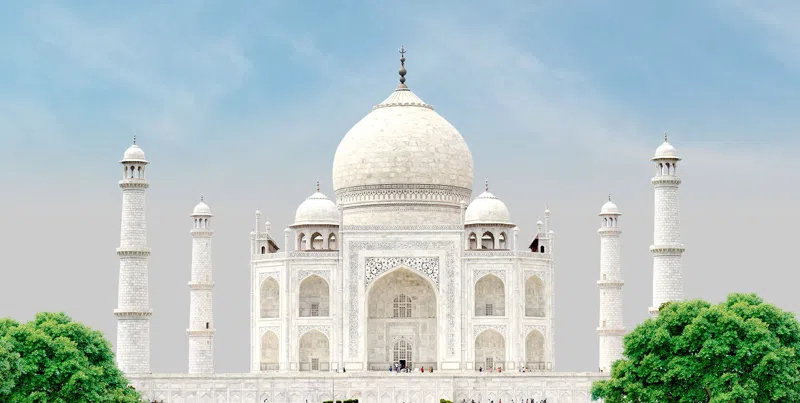
The Taj Mahal's marble does not hold one colour for long. In the last hour of daylight it moves from white to cream to a thin gold, and then, within about ten minutes of the sun clearing the sandstone rooftops, to a flat blue-grey that photographs poorly and looks remarkable in person. Agra makes you choose where to stand for that hour, because nearly every good vantage point in the city shuts, empties or fills at the same moment.
The hour the whole city plans around
Sunset in Agra swings by roughly eighty minutes across the year. In late December the sun is down around 17:45; by mid-June it holds on until about 19:05. Check the actual time for your date in 2026 before you fix anything else, because three closing rules hang off it and none of them are negotiable at the gate.
First, the Taj Mahal's ticket window shuts 45 minutes before sunset and the last entry is 30 minutes before. Second, Mehtab Bagh closes at sunset itself, not after it, so you are inside for the light and then walked out during it. Third, Agra Fort stops admitting at about 17:30 and the guards begin clearing the ramparts as the sun goes. Work backwards from the sunset time, subtract those margins, and most of the afternoon plans itself.
One more fact reorganises itineraries: the Taj Mahal is closed all day Friday. If your only free evening in Agra falls on a Friday, you are choosing between an outside viewpoint and the fort, and it is better to know that when you book the train than when you reach the gate.
Plan your Agra trip
Live prices from our booking partners.
Free cancellation on many rooms. We may earn a commission when you book.
Across the river at Mehtab Bagh
Mehtab Bagh (north bank, directly across the river from the tomb) is the one viewpoint that sits squarely on the monument's axis, so the dome lands dead centre with the riverbed in front of it. That geometry is why it is the default sunset spot, and also why it is busy. It is an ASI garden that sells tickets at the gate only. There is no advance booking, which is how coach parties and tour groups arrive unannounced, and the single counter starts backing up about an hour before sunset. Entry is ₹300 for foreign nationals and ₹25–30 for Indian and SAARC visitors, with under-15s free, which makes it the cheapest workable option for a family.
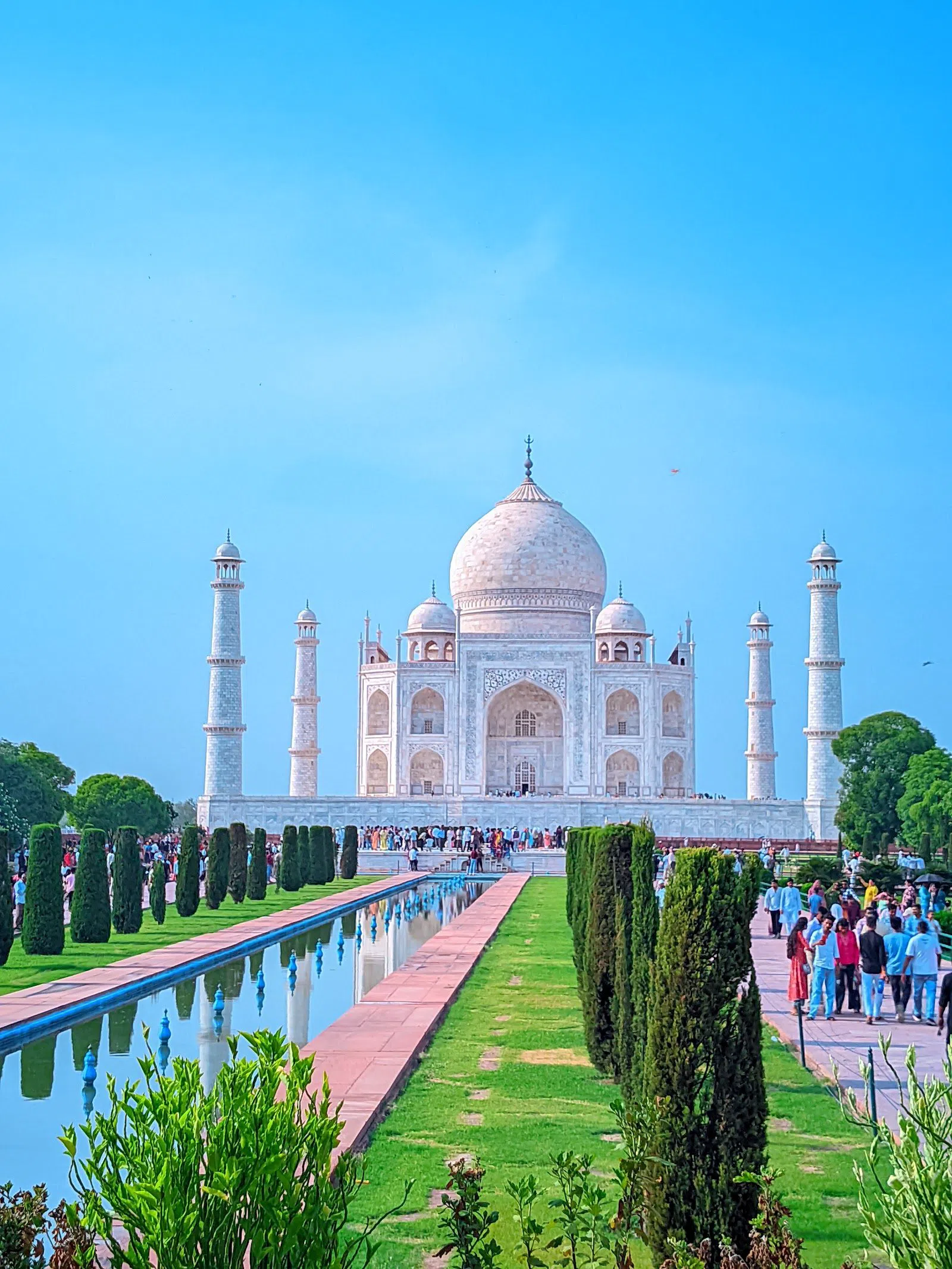
Arrive by 17:00 in winter and you have time to reach the riverbank terrace, pick a spot and settle before the crowd thickens. Arrive at 17:40 and you will spend the useful light in a queue. Because ASI closes the garden at sunset rather than after it, expect to be moved along while the sky is still changing; the last of the colour is watched from the road or the car park.
Getting there takes longer than the map suggests. The road loops upriver to a bridge and back down the far bank, so allow 30 to 40 minutes from Tajganj in late-afternoon traffic, more at a weekend. Agree a waiting fee with your driver rather than hoping to find a ride at closing time, when several hundred people want the same thing. The water in front of the garden is seasonal, fullest in the weeks after the monsoon and closer to sand than river by late spring.
Inside the complex as the marble turns
Standing inside the Taj Mahal (Tajganj, west and east gates) as the stone goes gold is the strongest version of this experience, and the one with the least forgiving rules. Tickets are ₹1,100 for foreign nationals, plus ₹200 if you want to walk up onto the mausoleum plinth, and ₹50–250 for Indian visitors. The window shuts 45 minutes before sunset and the hard last entry is 30 minutes before, which is the rule that catches people out most often. Buy by mid-afternoon, or you watch from outside.
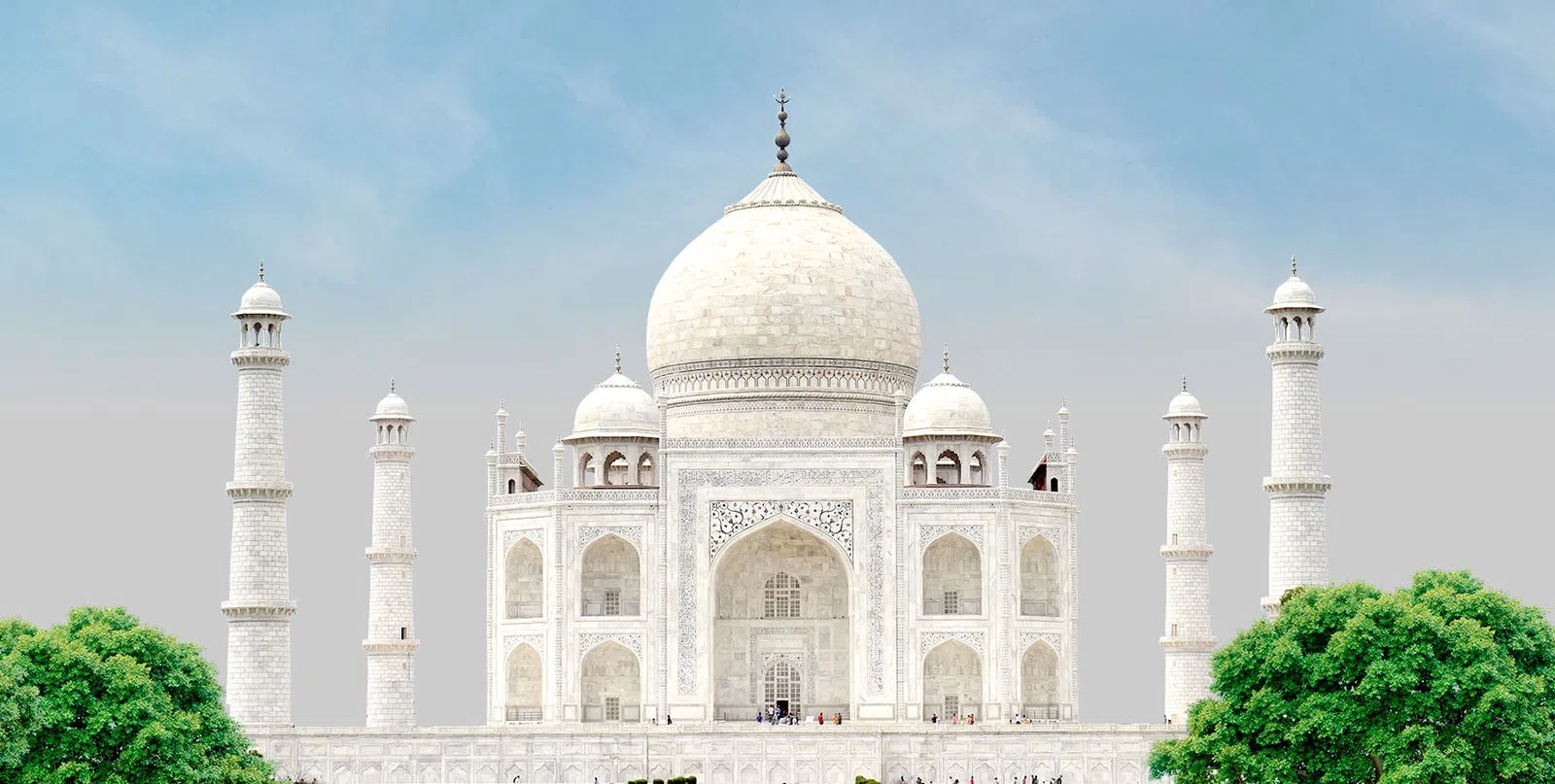
The complex handles very large volumes every day and groups are fine in principle, but security screening slows big parties badly. A party of ten or more should add 20 to 30 minutes at the gate and carry as little as possible, because bags are the main delay. There is a separate ticket line for foreign nationals, which helps at the counter but not at screening.
Plan for one thing only. If you are inside for the last light, you are inside until they clear the grounds, so a same-evening run across the river is not realistic. Sunset inside the complex and sunset at Mehtab Bagh are two different evenings.
The Friday answer is Agra Fort
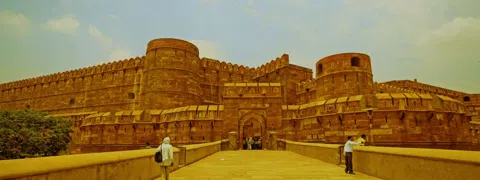
Agra Fort (riverside, about 2.5 km upriver from the tomb) is open every day including Friday, which makes it the one major viewpoint that survives the weekly closure. From the Musamman Burj you get Shah Jahan's own view of the tomb: smaller in the frame, but with the whole bend of the river in it, which is a more informative picture of where the monument actually sits.
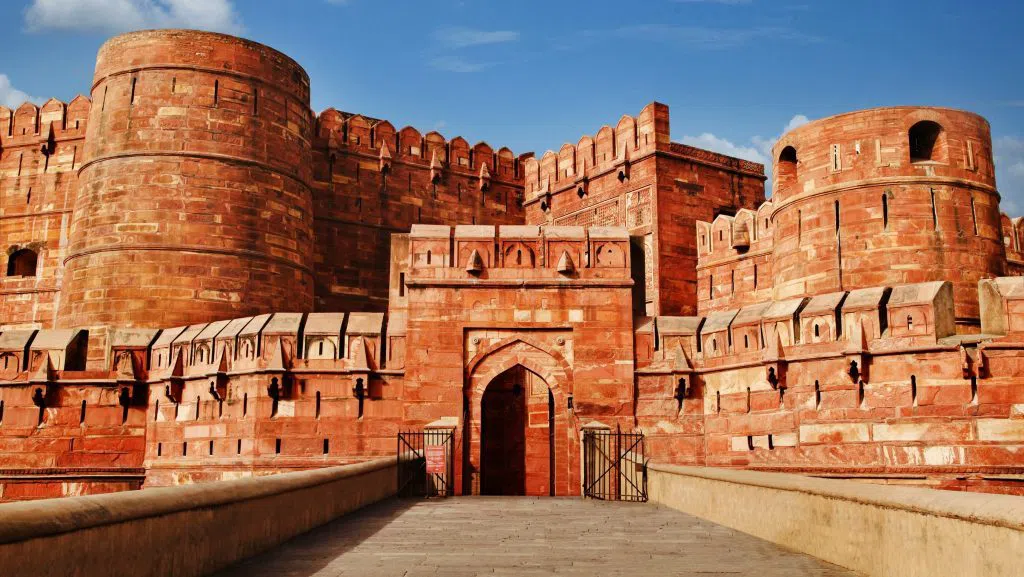
Entry is ₹650 for foreign nationals and ₹50 for Indian visitors. Last admission is around 17:30 and the guards clear the ramparts at sunset, so this is an arrive-by-16:30 plan rather than a drop-in. The fort absorbs tour groups without much friction, since the courtyards are wide and the flow is one-directional, but the viewing balconies themselves are narrow, so a party of a dozen will be taking turns at the rail. Bring a longer lens if you own one; at 2.5 km a phone gives you sky, river and a small white shape.
Walking in through Kachhpura
The Mughal Heritage Walk (Kachhpura, the village on the north bank behind Mehtab Bagh) is a community tourism scheme run with village-trained guides, and it is the most interesting way to reach the garden. The route takes in the riverbank monuments most visitors never see and a rooftop chai stop, then ends at Mehtab Bagh from the village side rather than the car park side.
Guided versions, including private and hotel-pickup bookings sold through the usual platforms, run around US$45 or ₹3,500–4,000 per person. The walk itself is free to do on foot if you would rather find your own way. Groups of up to a dozen are handled well; book ahead rather than turning up, because the guides are local residents on call, not staff waiting at a desk. Start mid-afternoon so the walk lands you at the garden gate with an hour of light left, and the fee stays in Kachhpura, which is the point of the scheme.
Tajganj rooftops for a few hundred rupees
The lanes south of the complex are stacked with small terraces charging under ₹800 for two, and on a tight budget they are the honest answer. None of them are dinner destinations; you are paying for a chair, a chai and a line of sight.
Chia Taj View Cafe (Tajganj lanes) sits higher than its neighbours, which is the only thing that matters here: it is consistently the least obstructed of the cheap roofs. Food is decent rather than special, there are no reservations, and seating is limited at golden hour, so climb the stairs by 16:45 in winter.
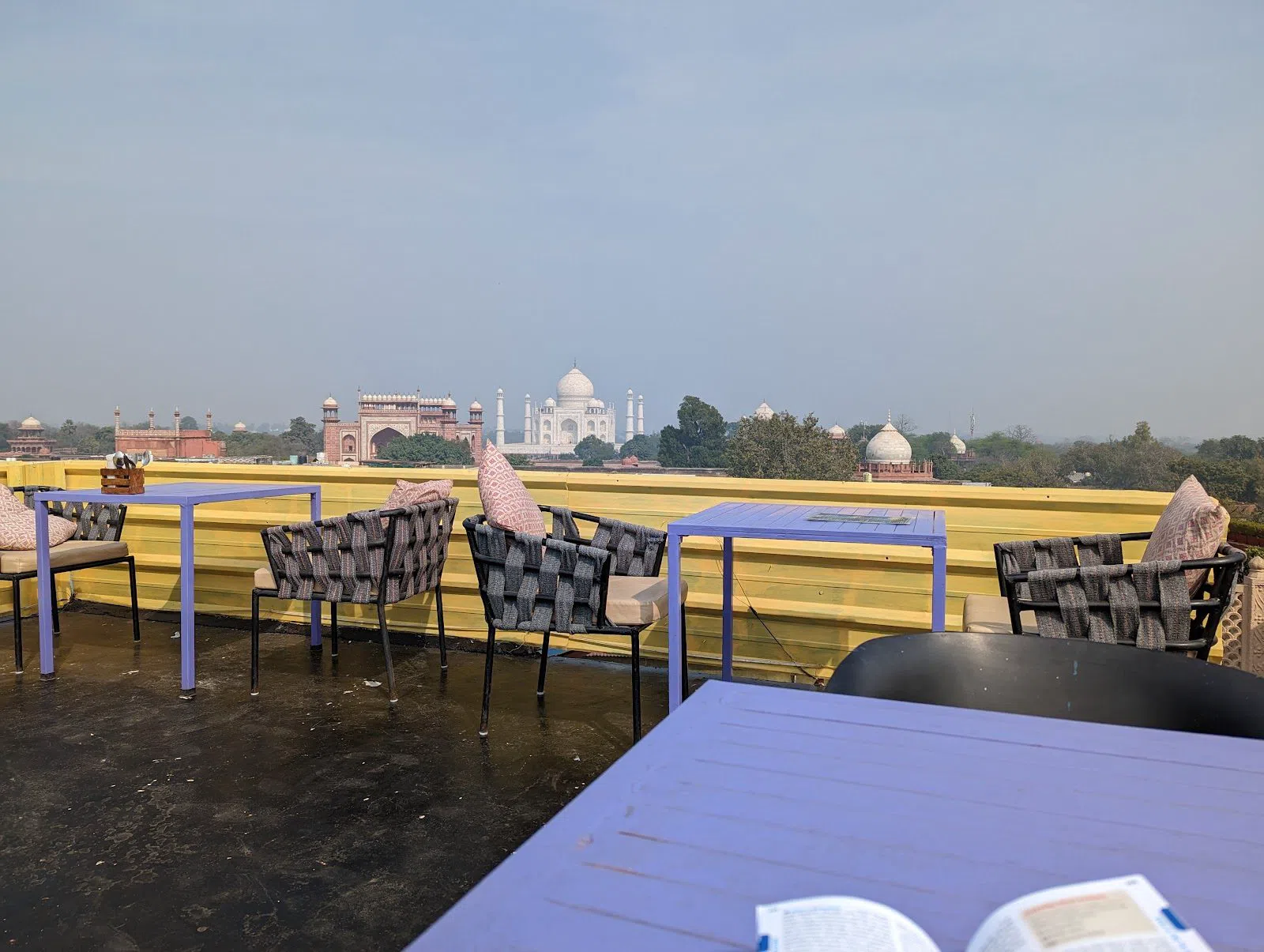
Saniya Palace rooftop restaurant (Tajganj, near the south gate) opens from 06:00 to 23:00, so it covers both ends of the day if you are also doing sunrise. Tables are small; a group over six should arrive early and expect to split across two.
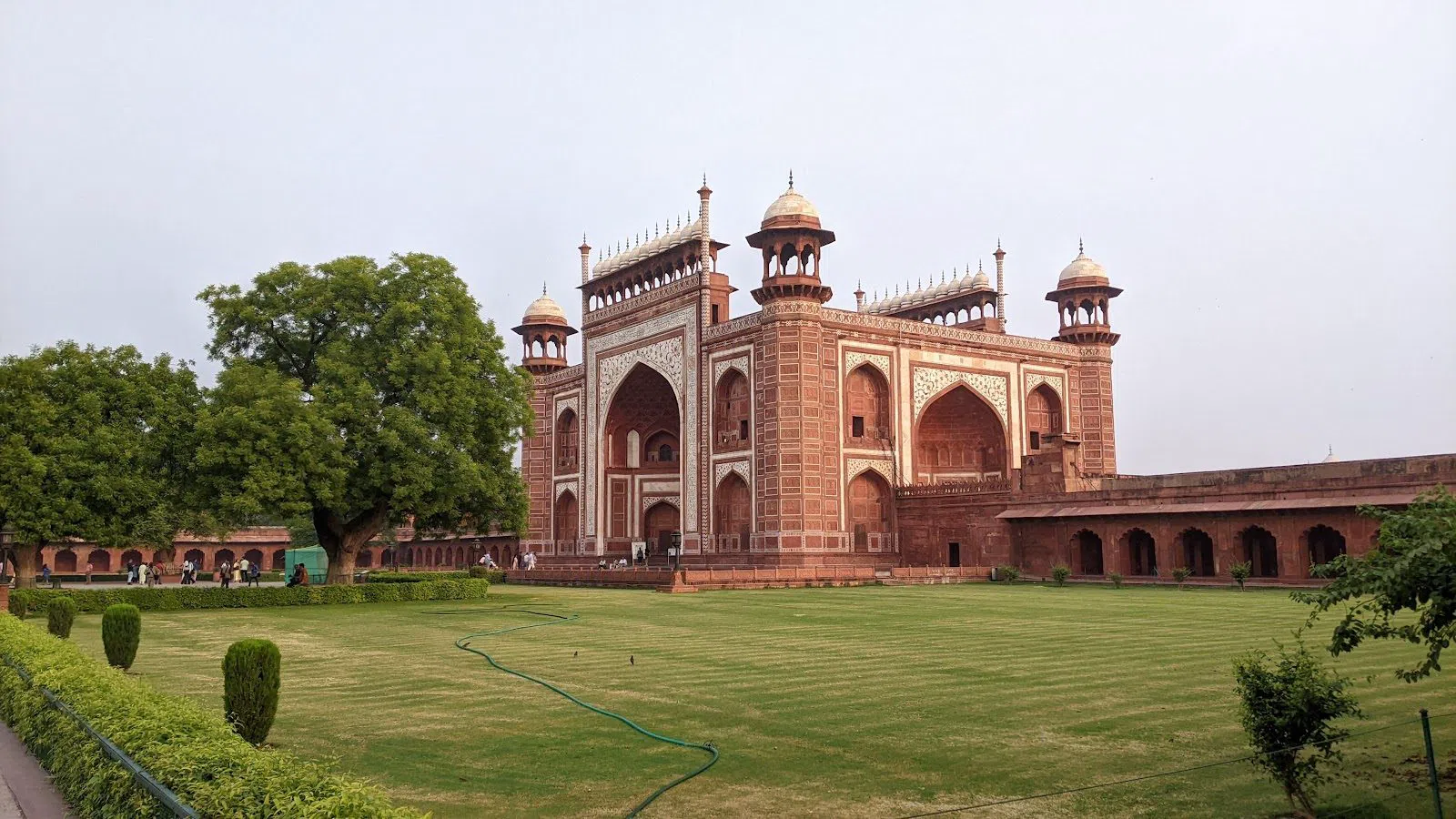
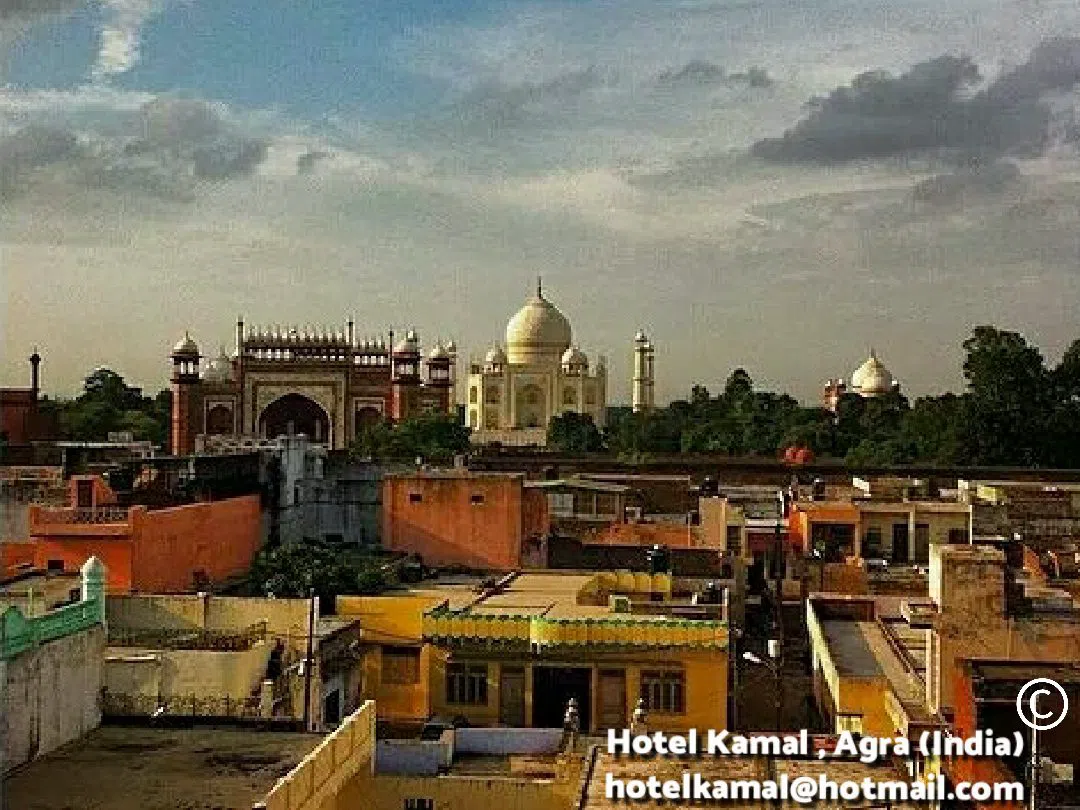
Hotel Kamal rooftop, trading as Stuff Makers (Tajganj, near the south gate), is the closest view in the city, close enough that the marble detail is still readable once the light drops, which no other budget terrace manages. Surroundings are basic, it is walk-ins only, and there are only a handful of tables at peak.
The Hippie Cafe at Joey's Hostel (Tajganj) is the sociable one: open to non-guests, no dress code, easy to join someone else's table. Solo travellers do particularly well here, and it is the easiest place in Agra to find someone to split a rickshaw to Mehtab Bagh with the following evening.
Rooftops that want a reservation
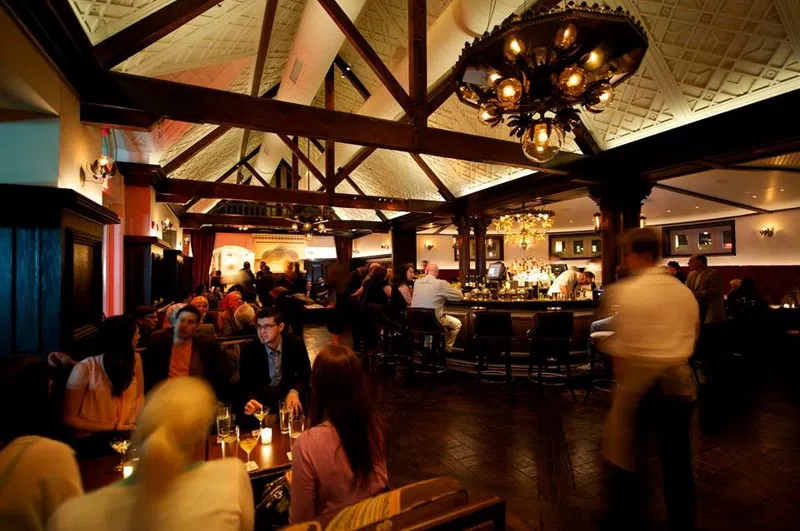
Infini – The Sky Lounge at the Taj Hotel and Convention Centre (Taj Nagari, south-east of the complex) is the most comfortable of the hotel roofs and has an unobstructed line to the monument. Non-residents are welcome, reservations are advised, and it takes larger tables and private events without fuss. Reckon on ₹2,500–4,000 for two with cocktails. The tomb is floodlit right at sundown, so the seat keeps earning after the colour goes.
The Rooftop at Radisson Agra Taj East Gate (east gate) is the closest of the big-hotel terraces to the east gate, which makes it the practical sit-down after an afternoon inside the complex. The menu is grill-led, around ₹2,000–3,000 for two, and evening service starts before the light goes rather than at eight. Walk-ins are fine; book for a party over six.
Qairo Rooftop Social Bar at Howard Plaza The Fern (Fatehabad Road) is the livelier option rather than the reverent one, with live sets most evenings and a room built for groups, events and party bookings. Around ₹1,800–2,800 for two. Call ahead on music nights. Come for golden hour and stay for the band; the other way round means walking in mid-set with the view already gone.
The Lounge terrace at The Oberoi Amarvilas (Taj East Gate Road) is the most comfortable seat in Agra for the last half hour, in the one hotel with a clear sightline from essentially everywhere. Non-residents can book afternoon tea or drinks; reservations are essential and smart dress is expected. Small groups are fine, large parties by arrangement. Afternoon tea and drinks run into several thousand rupees a head. Book ahead, because walking in at golden hour rarely gets you a table.
The frame with both monuments in it
The Mughal Room at Hotel Clarks Shiraz (Fatehabad side, about 3 km out) holds the tomb and the fort in a single frame, which is the shot most visitors go home without. The trade-off is scale: at that distance the monument sits small and the sweep does the work. It is a long-established hotel restaurant that is used to tour groups and set menus, around ₹2,000–3,000 for two, and worth booking in season.
Matching the viewpoint to who you are travelling with
Couples wanting quiet and a drink should book the Oberoi terrace or Infini and skip the river entirely. Families do best at Mehtab Bagh, where under-15s are free and there is space to move. Coach and tour parties fit at Mehtab Bagh, Agra Fort and the Mughal Room without a booking problem, but will struggle on any Tajganj roof. Solo travellers get the most out of the Hippie Cafe. Photographers should take Agra Fort for the composition and Mehtab Bagh for the axis. If it is Friday, your options are the fort or a rooftop, and that is the whole list.
Practical notes for the afternoon
No petrol or diesel vehicles are allowed within roughly 500 m of the Taj gates, so the last stretch is done by battery rickshaw, electric cart or on foot; budget ₹100–200 and a few extra minutes. Autos and e-rickshaws cover the rest of the city cheaply, and ride-hailing apps work but struggle in the Tajganj lanes.
ASI ticket counters take cards and UPI, but carry rupees for rickshaws, waiting fees and the budget roofs, which prefer cash. Hotel terraces take cards.
On timing, one viewpoint per evening is the realistic ceiling. Two evenings gets you the complex and the river; three adds the fort. Staying in Tajganj puts you inside walking distance of the gates and the cheap roofs, while Fatehabad Road buys comfort at the cost of a ride each way. Compare both in the Agra hotel search before you book, and see the Agra guide for the rest of the city.
On budget, a good sunset costs ₹300 plus a rickshaw at Mehtab Bagh, ₹650 at the fort, ₹1,100 or more inside the complex, ₹700–800 for two on a Tajganj roof, ₹2,000–4,000 for two on a hotel terrace, and several thousand a head at the Oberoi. The cheapest of those is not the worst of them.
Before you go
What time should I get to Mehtab Bagh for sunset?
Aim to be at the counter by 17:00 in winter, when Agra's sunset falls around 17:45. Queues at the single ticket window build from roughly an hour before sunset, and ASI closes the garden at sunset itself rather than after it, so late arrivals spend the good light standing in line. Entry is ₹300 for foreign nationals, ₹25 to 30 for Indian and SAARC visitors, and free for under-15s.
Can I see the Taj Mahal at sunset on a Friday?
Not from inside, because the monument is closed all day Friday. Agra Fort is open every day, with last entry around 17:30 and ₹650 for foreign nationals, and its Musamman Burj balcony gives you the tomb from 2.5 km upriver. Mehtab Bagh and the city's rooftops also stay open, so a Friday evening still works; it just cannot include the complex itself.
How late can I buy a ticket to be inside the Taj Mahal for sunset?
The ticket window shuts 45 minutes before sunset and the hard last entry is 30 minutes before, so buying at the gate late in the day is a gamble. Buy by mid-afternoon. Tickets are ₹1,100 for foreign nationals, with ₹200 more to walk onto the mausoleum plinth, and ₹50 to 250 for Indian visitors. Allow extra time for security screening if you are in a group.
Do I need to book a rooftop for a Taj view at sunset?
It depends on the roof. The Oberoi Amarvilas lounge terrace needs a reservation and smart dress; Infini at the Taj Hotel and Convention Centre advises booking; Qairo at Howard Plaza The Fern is worth a call on live-music nights; and the Radisson terrace wants a booking for parties over six. The budget Tajganj roofs (Chia, Saniya Palace, Hotel Kamal and the Hippie Cafe) are walk-ins only, so arrive 45 to 60 minutes early for a seat.
Can I do Mehtab Bagh and the Taj Mahal complex on the same evening?
No. If you are inside the complex for the last light you stay until the grounds are cleared, and Mehtab Bagh is a 30 to 40 minute drive that loops upriver to a bridge and back down the far bank. Treat them as two separate evenings, or pair Mehtab Bagh with the Mughal Heritage Walk from Kachhpura earlier the same afternoon.