The Agra issue
The petha sweet trail — Agra's famous ash-gourd candy, the shops that invented it, and the backstreet makers still doing it by hand
A walkable trail through Agra's ash-gourd candy trade in 2026, from the 1926 counter with the strongest claim to inventing it to the marble-slab alley shops still cutting it by hand.

By Matteo FerraroAgra is a Mughal city, not a single monument
Agra's ash-gourd candy trail starts long before the Taj Mahal opens its gates and runs on narrow, sugar-scented lanes rather than monument sightlines. Petha — a translucent, syrup-soaked sweet cut from white pumpkin (ash gourd), then boiled, hollowed and steeped until it turns glassy — has been made in this city since well before photographs existed, and in 2026 the trade still runs on family names, marble slabs, and a century-old rivalry over who actually invented it. This guide follows that trail from the shop with the strongest claim to being first, through the backstreet counters where it's still hand-cut in view of the street, to the polished showrooms built for travellers who want the sweet without the navigation.
What petha actually is, and why Agra owns it
Petha starts as ash gourd — a pale, thick-skinned squash grown in the fields around the city — peeled, cut into cubes or discs, and pricked all over so the syrup can penetrate. It's boiled in lime water to firm the flesh, then simmered through repeated syrup baths until the interior turns from opaque white to a faint glassy translucence. Done well, it should have almost no raw-vegetable taste left; what remains is sweetness, a light chew, and whatever flavour has been folded into the syrup — plain, kesar (saffron), angoori (grape-shaped), dry, or the harder-edged lal (red) version made by two of the backstreet shops below. Agra's near-monopoly on the sweet isn't folklore: the ash gourd grows well in the surrounding soil, the Yamuna's water was historically credited with helping the texture set, and the trade has stayed concentrated in a handful of old-city neighbourhoods — Noori Gate, Sadar Bazaar, Kinari Bazaar — for the better part of two centuries. That geography is what makes a walkable trail possible in the first place.
Plan your Agra trip
Live prices from our booking partners.
Free cancellation on many rooms. We may earn a commission when you book.
Where the trade actually started
Two shops both stake a serious claim to being the origin point of Agra's petha industry, and the honest answer is that they're both genuinely close to the source — just with different priorities today.
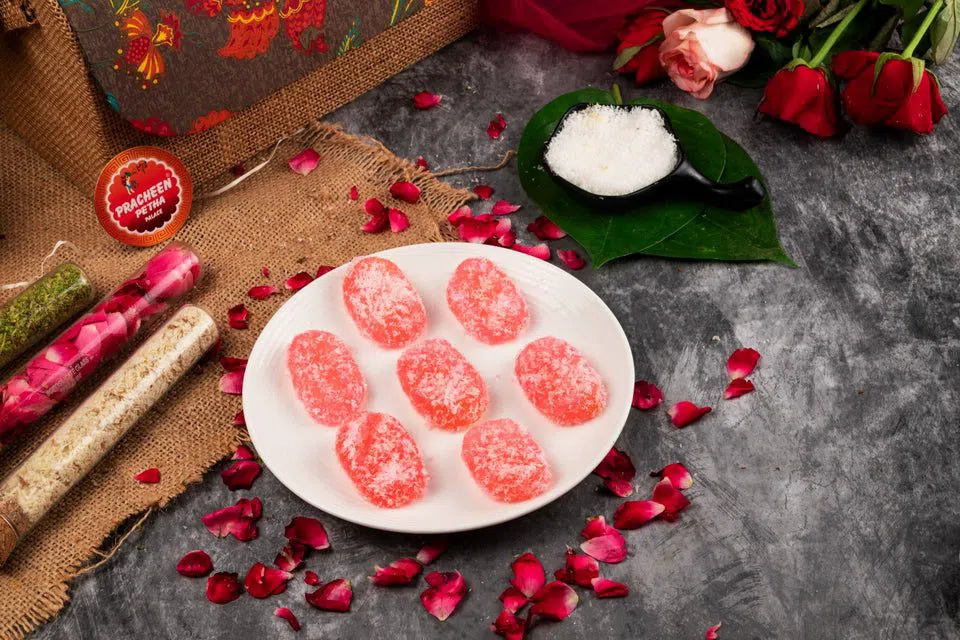
Pracheen Petha, at the Noori Gate crossroads, has the stronger origin story. It was founded in 1926 by Gokul Chand Ji at the same junction where Agra's cottage petha industry first took root, and it's still a single counter with no seating — comfortable for a couple or a small group of six to eight, but not built for a coach party. Prices run ₹200–450/kg (roughly $2.5–5.5). If you only have time for one "started it all" stop and want the version closest to how the trade actually began, this is it. Go on foot or by auto-rickshaw; there's nowhere to park a bus, and there's no reason to bring one.
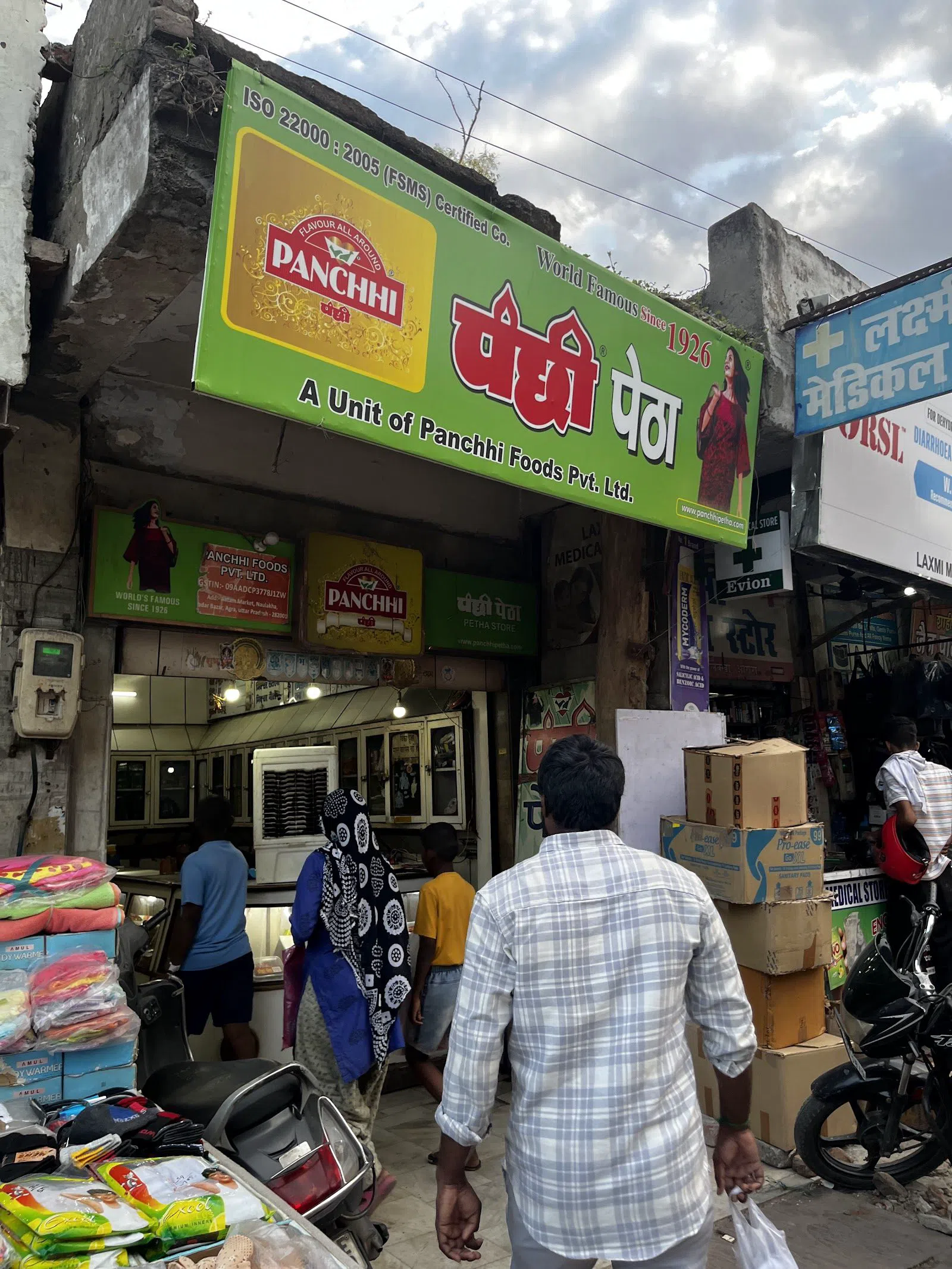
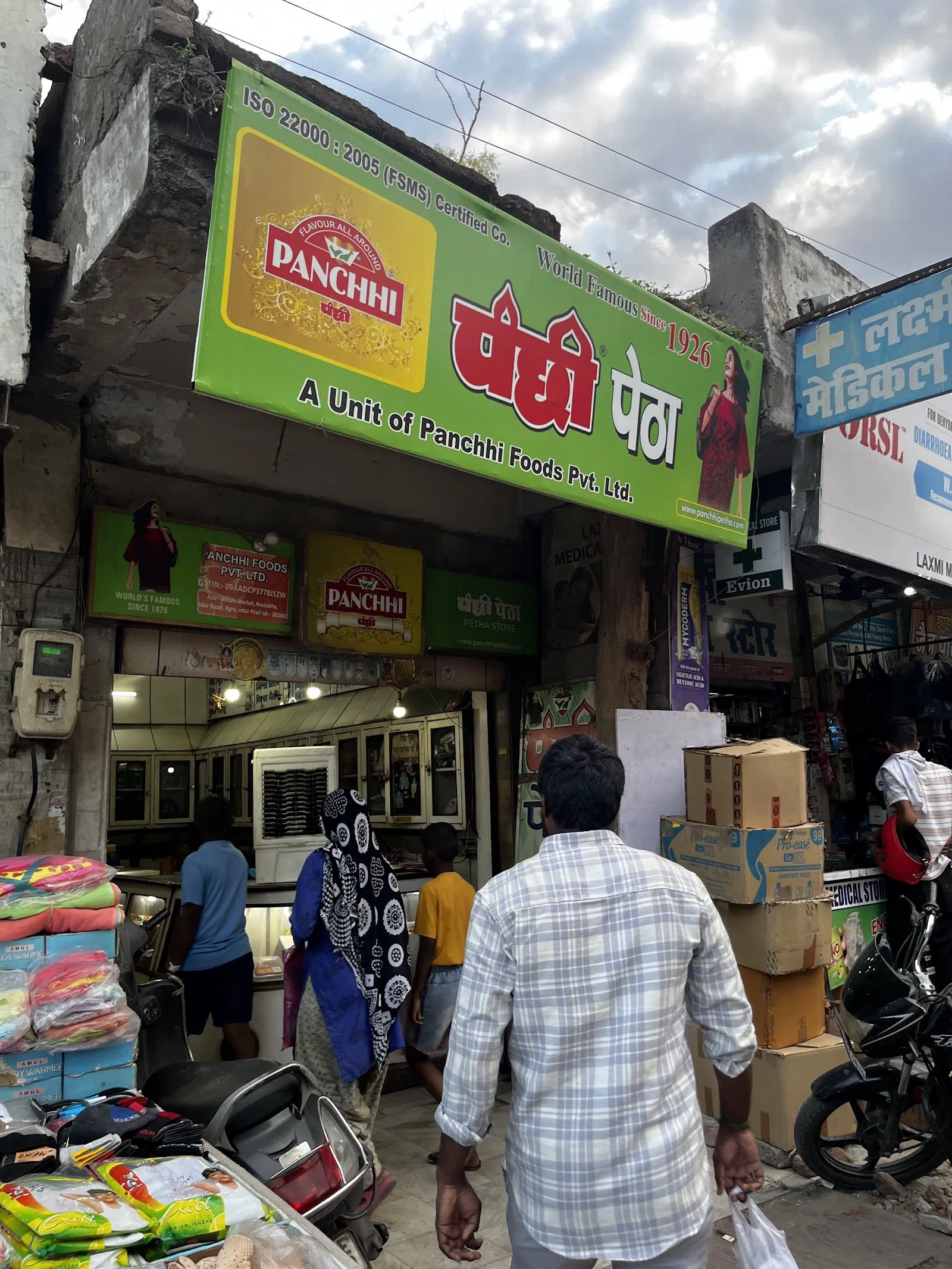
Panchhi Petha, Sadar Bazaar, is the name most visitors will already recognise, and for good reason — it was started by Pancham Lal Goyal nearly a century ago and has grown into nine branches across the city, each with space for coach parties and dedicated bulk gift-box counters. That scale makes it the easiest single stop for a tour group or anyone buying petha to carry home in quantity, and prices sit at ₹250–500/kg (~$3–6). The catch worth knowing before you go: imitator shops borrow the Panchhi branding across the city, so confirm you're at a genuine outlet rather than a lookalike counter trading on the name. Ask for the branch address in advance and match it against what's posted at the door.
Between the two, Pracheen has the better claim to originality and Panchhi has the better claim to convenience. A well-planned trail visits both — they're a short rickshaw ride apart in the old city.
The backstreet makers, still doing it by hand
This is the part of the trail that separates a quick sweet-shop stop from actually watching the craft happen. These three counters are best reached on foot, work well as a small guided food walk, and are not set up for coach groups.
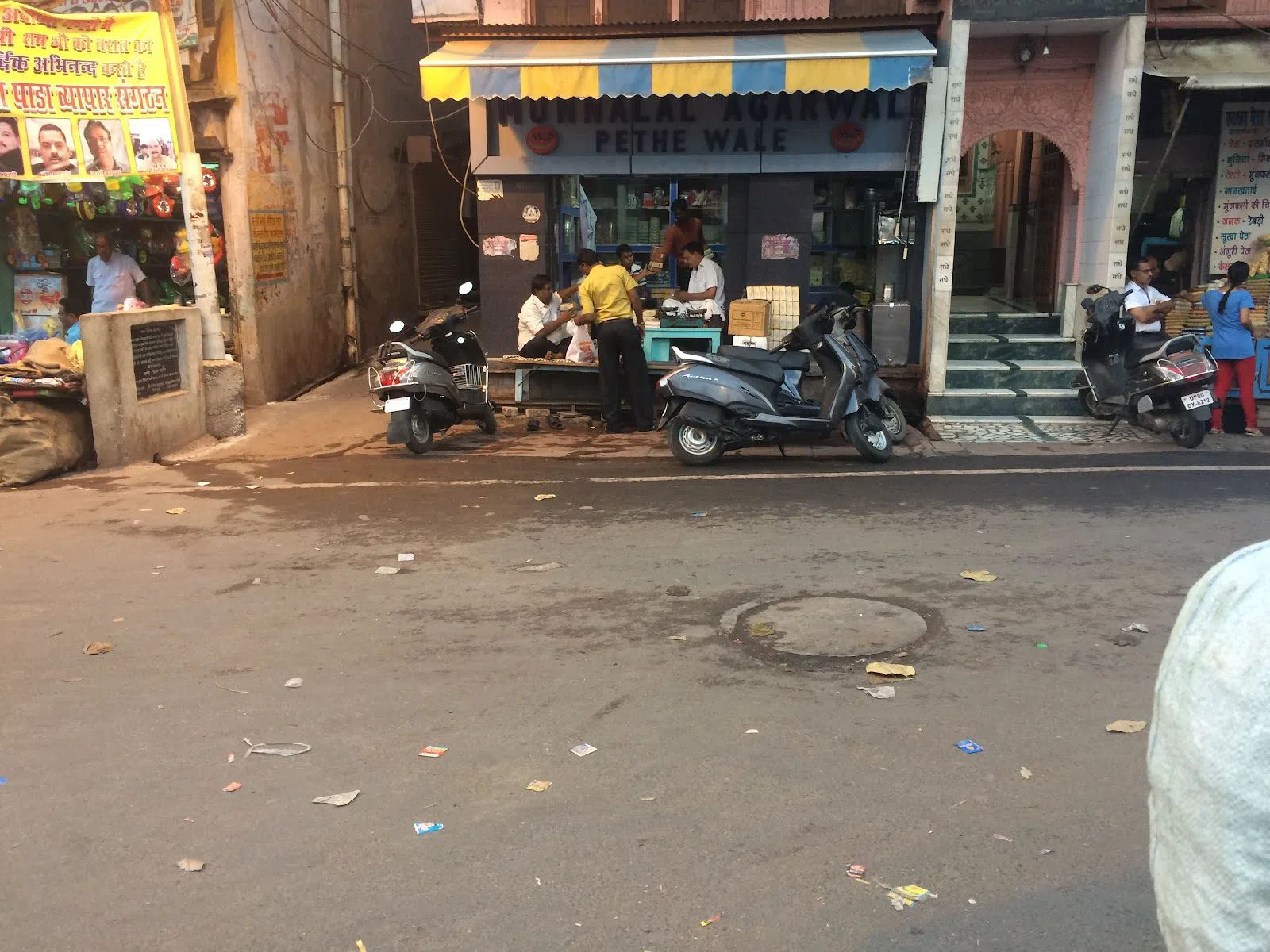
Munna Lal Agarwal Petha Wale, down a tiny alley off the Noori Gate lanes reachable only on foot or by auto-rickshaw, is the city's benchmark for lal (red) petha. The petha is still hand-cut on a marble slab in full view of the alley, which makes this the closest the trail gets to watching the backstreet craft happen live rather than reading about it on a shop sign. Prices are ₹200–400/kg (~$2.5–5). It suits a small guided food walk far better than a self-driven itinerary — there's genuinely nowhere for a coach to stop nearby, and the alley itself is part of the experience.
Sitaram Petha Bhandar sits inside the same Noori Gate cluster where several hundred small cottage units still hand-make petha behind unmarked doors and narrow shopfronts. It's a single-counter, walk-in-only stall — this is the trail's backstreet heart rather than a polished storefront, and it's priced accordingly at ₹180–350/kg (~$2–4), the cheapest entry point on this list. Treat it as a stop on a guided walk rather than a destination you navigate to alone; the surrounding lanes aren't signposted for tourists and a local guide will get you there faster than a map app will.
Munna Lal Petha Wale — Hathi Ghat branch, near the Hathi Ghat riverside stretch of the old city, is a separately run outpost of the Munna Lal name, known specifically for its orange petha and its desi-ghee dalmoth rather than for duplicating the red-petha specialty of the alley shop above. It's a small independent stall, best visited on foot as part of a walking route, and a useful second stop for travellers who want the same lineage of hand-cut sweet without doubling back to a crowded counter. Prices run ₹200–400/kg (~$2.5–5).
Old-city shops that locals actually use
Two counters worth a detour precisely because they weren't built with tourists in mind.
Shree Jee Petha Bhandar, tucked into the old city's residential lanes, is a neighbourhood bhandar that locals actually shop at rather than a brand built for visitors — a small shop best suited to two to four people, walk-in only, with no formal group booking. Prices are ₹200–400/kg (~$2.5–5). It won't have an English-language sign worth photographing, but it's worth the detour for an unvarnished version of the trail: no gift-box counter, no coach parking, just a shop that sells petha because the street buys it.
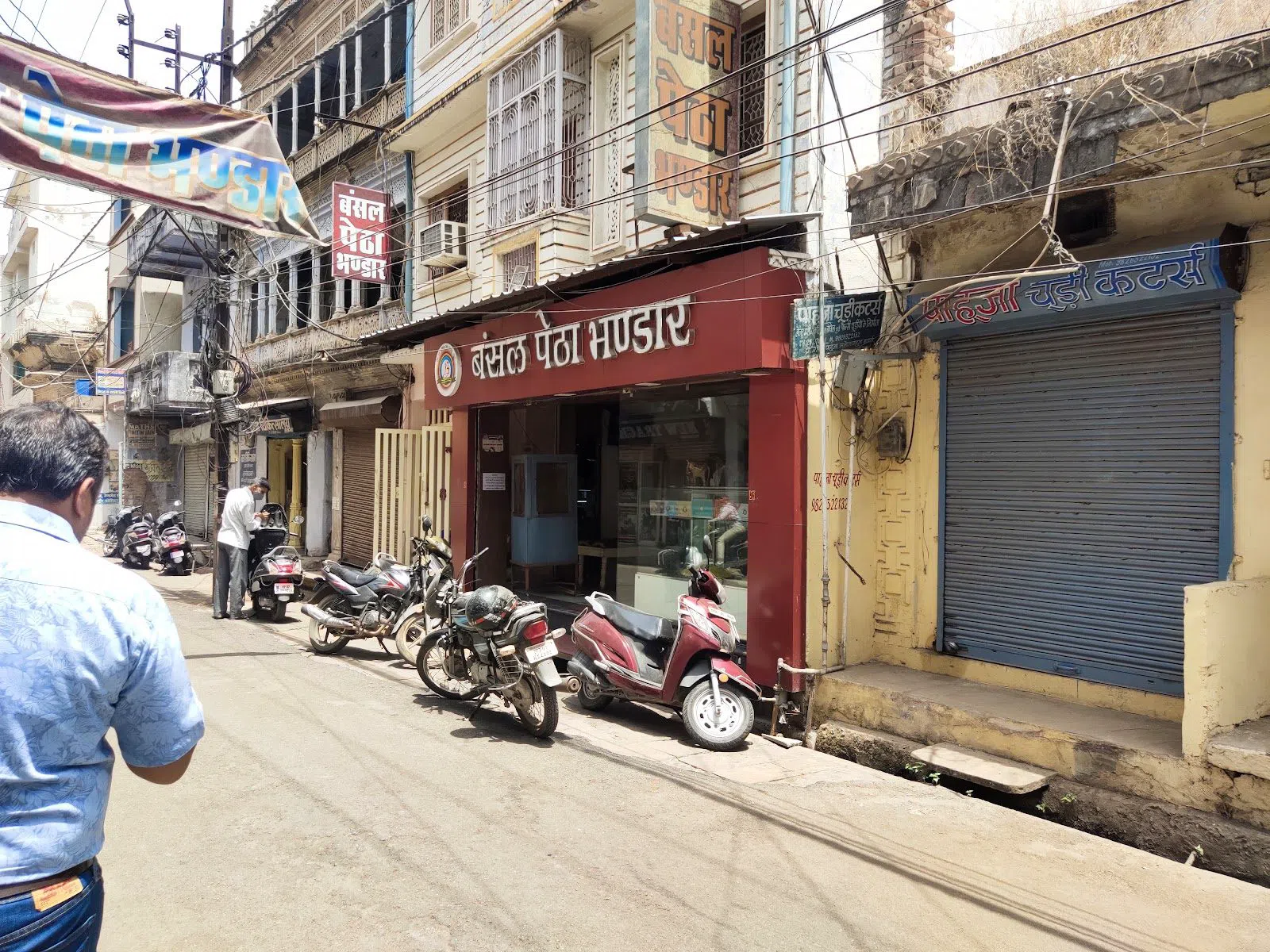
Shree Bansal Petha Bhandhar, another old-city counter, is known specifically for kesar angoori petha — the saffron-and-grape-shaped variety — but recent reviews have been mixed, so it's worth treating as a single-item taste stop for that one specialty rather than a primary shopping call. It's a small counter, walk-in only, not set up for large groups, at ₹200–400/kg (~$2.5–5). If kesar angoori is on your list to try, add it in passing rather than building a special trip around it.
The convenient stops, for travellers short on time
Not every visitor wants to navigate the old city's lanes, and two shops on this trail are built specifically for that traveller.
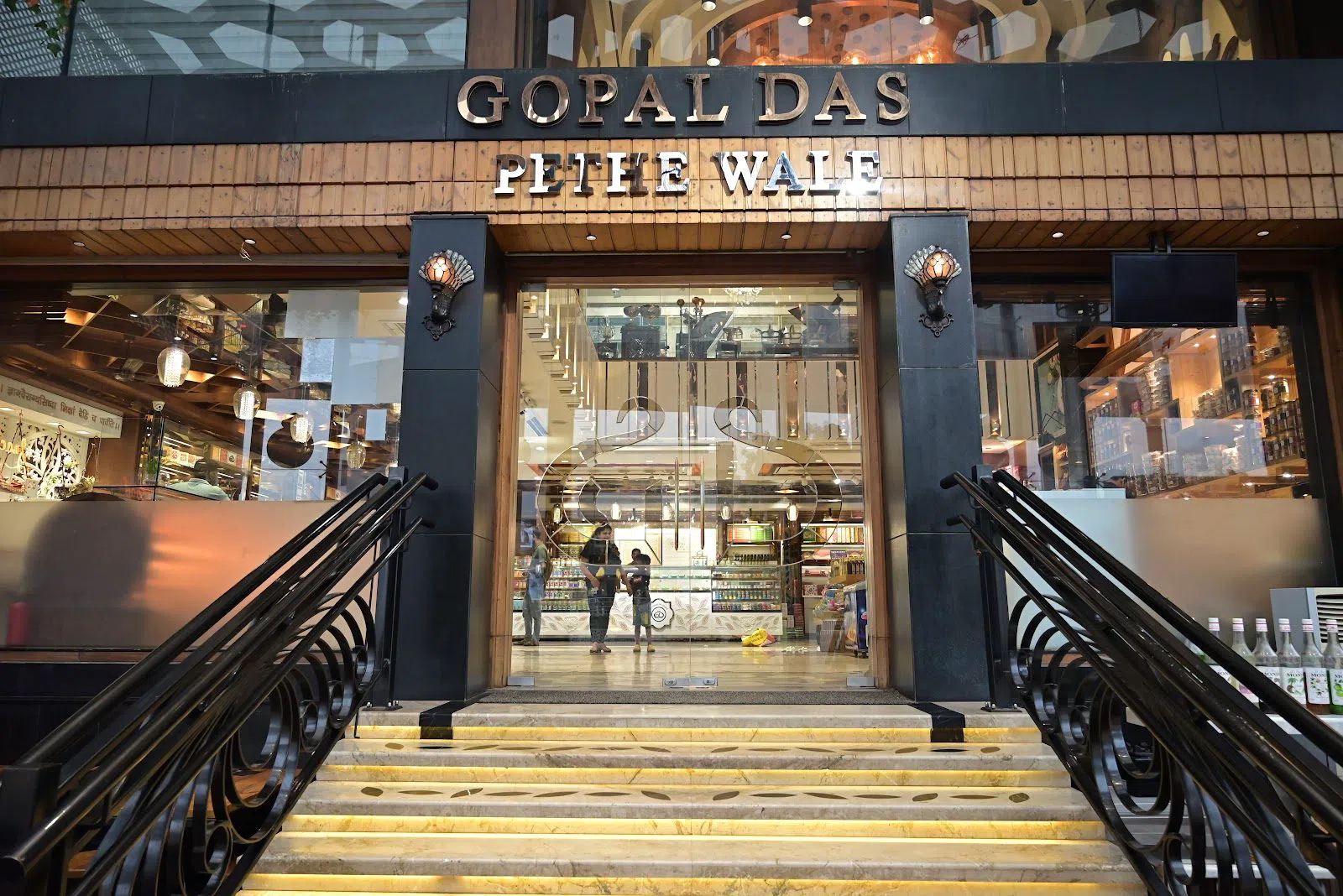
Gopaldas Pethe Wale, a few minutes from the Taj Mahal's gates, is the most tourist-convenient stop on the trail: a standalone, air-conditioned showroom with room for groups. It's easy to slot into a sightseeing itinerary — a short rickshaw ride from the monument rather than a detour into unmarked lanes — and suits travellers who want quality petha without the backstreet navigation. Prices run ₹250–550/kg (~$3–6.5).
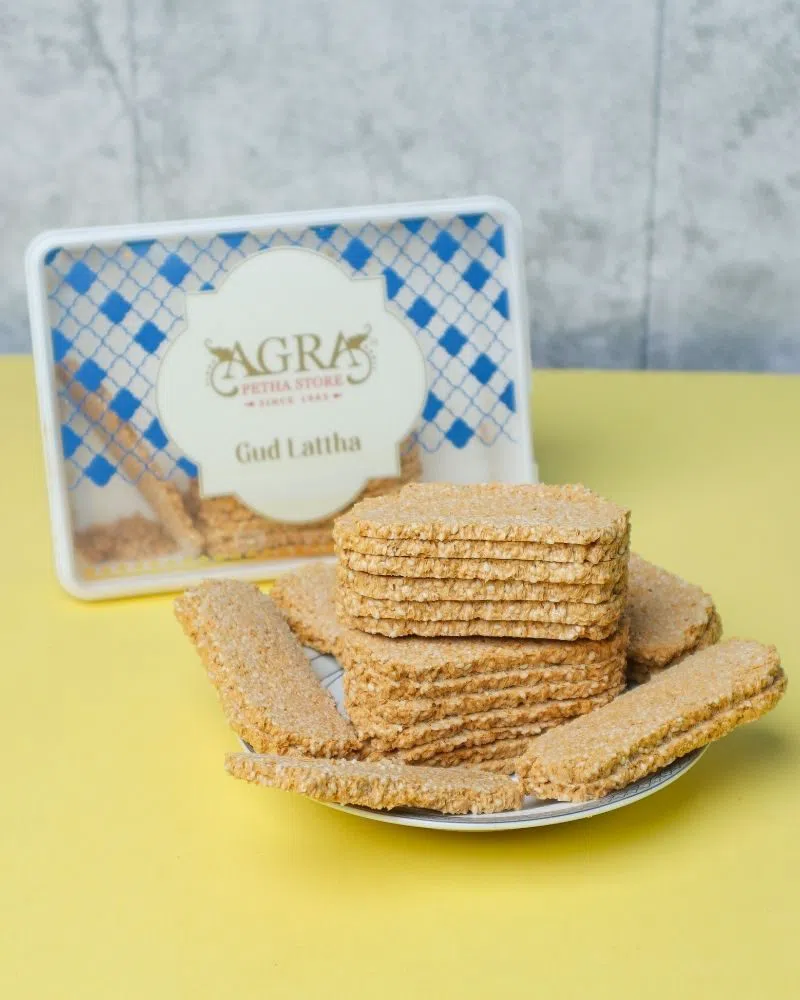
Agra Petha Store, with its modern retail counters in the newer part of the city, has been trading since 1988 and has built its identity around hygiene certification and eco-friendly packaging, which matters to international visitors who are understandably cautious about roadside sweet stalls. Its modern retail format is comfortable for groups, and — usefully for anyone travelling onward rather than home directly — it ships internationally, so buying more than you can carry isn't a problem. Prices sit at ₹300–600/kg (~$3.5–7), the upper end of the trail, which reflects the packaging and certification rather than a different product.
If you'd rather be guided than navigate
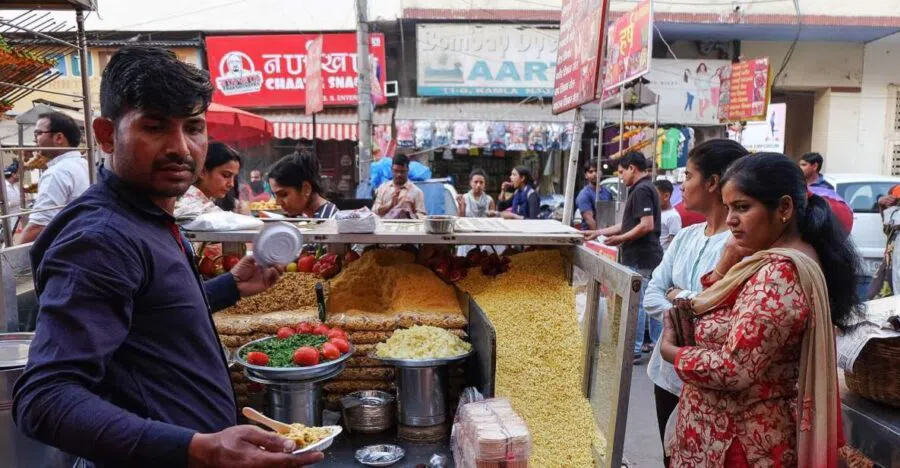
Agra Food and Old Market Walking Tour, based around Kinari Bazaar, is the option for travellers who want the trail led rather than self-navigated. Private groups take up to ten people, with pickup and drop-off included, and a multilingual local guide threads you through Kinari Bazaar's petha stalls alongside the rest of the old city's street food — useful context for a trail where half the value is knowing which unmarked alley to turn down. It starts from around $18 per person and is worth booking a day ahead in peak season (November through February), when old-city walking tours fill up around Taj Mahal visiting hours.
How to actually run the trail
Order of stops. Start at Pracheen Petha for the origin story, then Munna Lal Agarwal Petha Wale and Sitaram Petha Bhandar for the backstreet cutting — all three sit close enough together near Noori Gate to do on foot in under an hour. Save Panchhi Petha or Agra Petha Store for last if you're buying in bulk to take home or ship, since both are built for exactly that. If your schedule runs through the Taj Mahal, Gopaldas Pethe Wale slots in on the way back to your hotel without a detour. A full trail covering four or five stops with tasting at each realistically takes three to four hours, including the walking between the backstreet counters — build it into a half-day rather than trying to fold it into the edges of a Taj Mahal visit.
Who it suits. Couples and small groups have the run of almost every shop on this list — only Panchhi Petha and Gopaldas Pethe Wale are genuinely built for a full coach. If you're travelling with a larger group and want the backstreet experience anyway, split into pairs for the Noori Gate alley shops and regroup afterward; the counters are too small to absorb ten people at once without the shopkeeper having to stop cutting to serve you.
Transport. The Noori Gate cluster and Kinari Bazaar are not built for cars — auto-rickshaws or walking are the only practical way through, and a driver who knows the lanes will save real time over a map app. Gopaldas Pethe Wale and the Panchhi branches nearer the Taj are reachable by regular taxi.
Cash. Most backstreet counters — Munna Lal Agarwal, Sitaram, Shree Jee, Shree Bansal — are cash-first; carry small notes in rupees, since change for large bills can be a genuine problem in a single-counter shop. The showroom-format stops (Gopaldas, Agra Petha Store, the larger Panchhi branches) take cards.
Timing. Petha shops generally open by mid-morning and stay busy through early evening; the backstreet counters are at their most interesting in the late morning, when the day's batch is being cut. Avoid the hour before closing if you want to see the process rather than just buy the result.
Budget. A kilogram of petha across this trail runs from about ₹180 at the cheapest backstreet stall to ₹600 at the most polished showroom — in practice, most travellers spend $10–20 total sampling half a kilo across three or four stops. If you're buying gift boxes to take home, budget closer to $15–25 per box at the branded shops.
Where to stay. Basing yourself near the old city cuts the walking-tour distances down considerably; if you haven't booked yet, this Agra hotel search is a reasonable place to start, and the broader Agra guide covers the Taj Mahal logistics that most petha-trail visitors are combining this with.
Petha is one of the few things in Agra that rewards slowing down rather than rushing between sights — the difference between a branded box and a hand-cut piece from a marble slab is genuinely tastable, and this trail is built to let you compare both in a single afternoon.
Before you go
Which shop actually invented petha in Agra?
Pracheen Petha, founded in 1926 by Gokul Chand Ji at the Noori Gate crossroads, has the strongest documented claim — it sits at the same junction where Agra's cottage petha industry first took root. Panchhi Petha, started by Pancham Lal Goyal, is the better-known name today but grew into its nine-branch scale later.
Is Panchhi Petha the only real petha brand in Agra?
No — it's the most recognised name, but imitator shops across the city borrow the Panchhi branding on signage. Confirm the branch address before buying if you specifically want a genuine Panchhi outlet.
Can a large tour group visit the backstreet petha shops?
Not comfortably. Munna Lal Agarwal, Sitaram Petha Bhandar, and the Hathi Ghat branch are single-counter, walk-in stalls reached on foot down narrow lanes. Panchhi Petha and Gopaldas Pethe Wale are the two stops genuinely built for coach parties.
What's the difference between red (lal) petha and regular petha?
Lal petha has a harder edge and deeper colour from a different syrup treatment; Munna Lal Agarwal Petha Wale is the city's benchmark for it. Most other shops on the trail sell the plain, kesar, or angoori (grape-shaped) versions.
Can petha be shipped home instead of carried in luggage?
Yes — Agra Petha Store, trading since 1988, ships internationally and packages specifically with hygiene certification and eco-friendly materials in mind, which suits travellers who don't want to carry sweets through the rest of a trip.