The Agra issue
Agra Alone in Two Days Without the Guesswork
A two-day solo plan for Agra: when to be at the gate, what the metro fixes, which half-day trip to drop, and where to eat by yourself without it being a project.

By Matteo FerraroAgra is a Mughal city, not a single monument
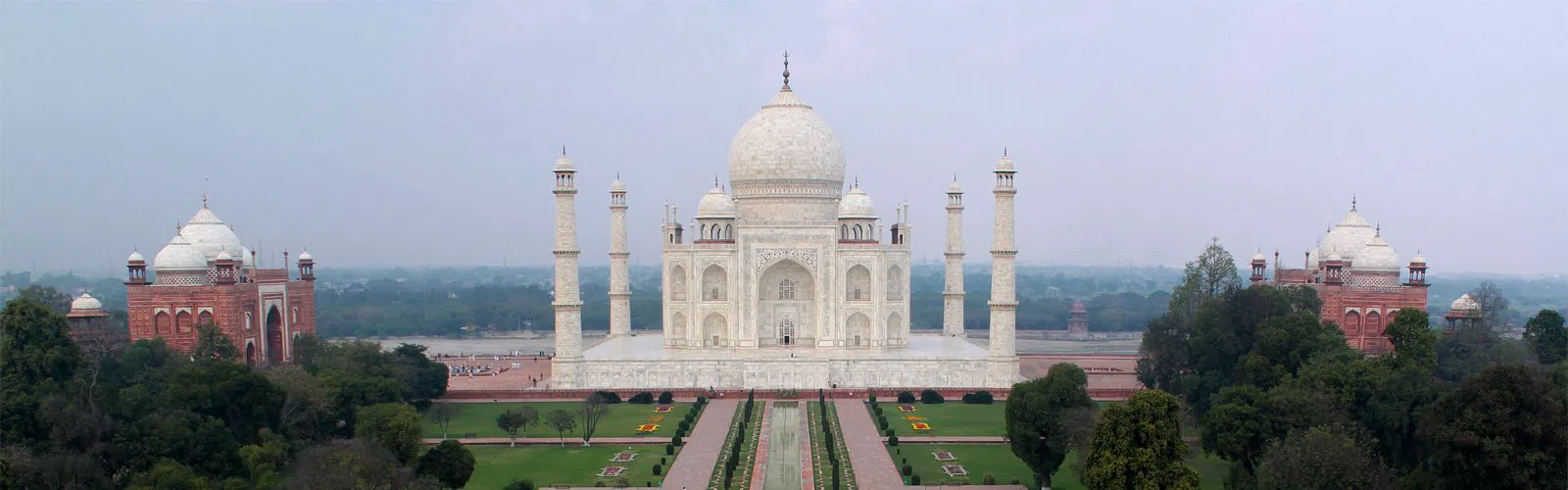
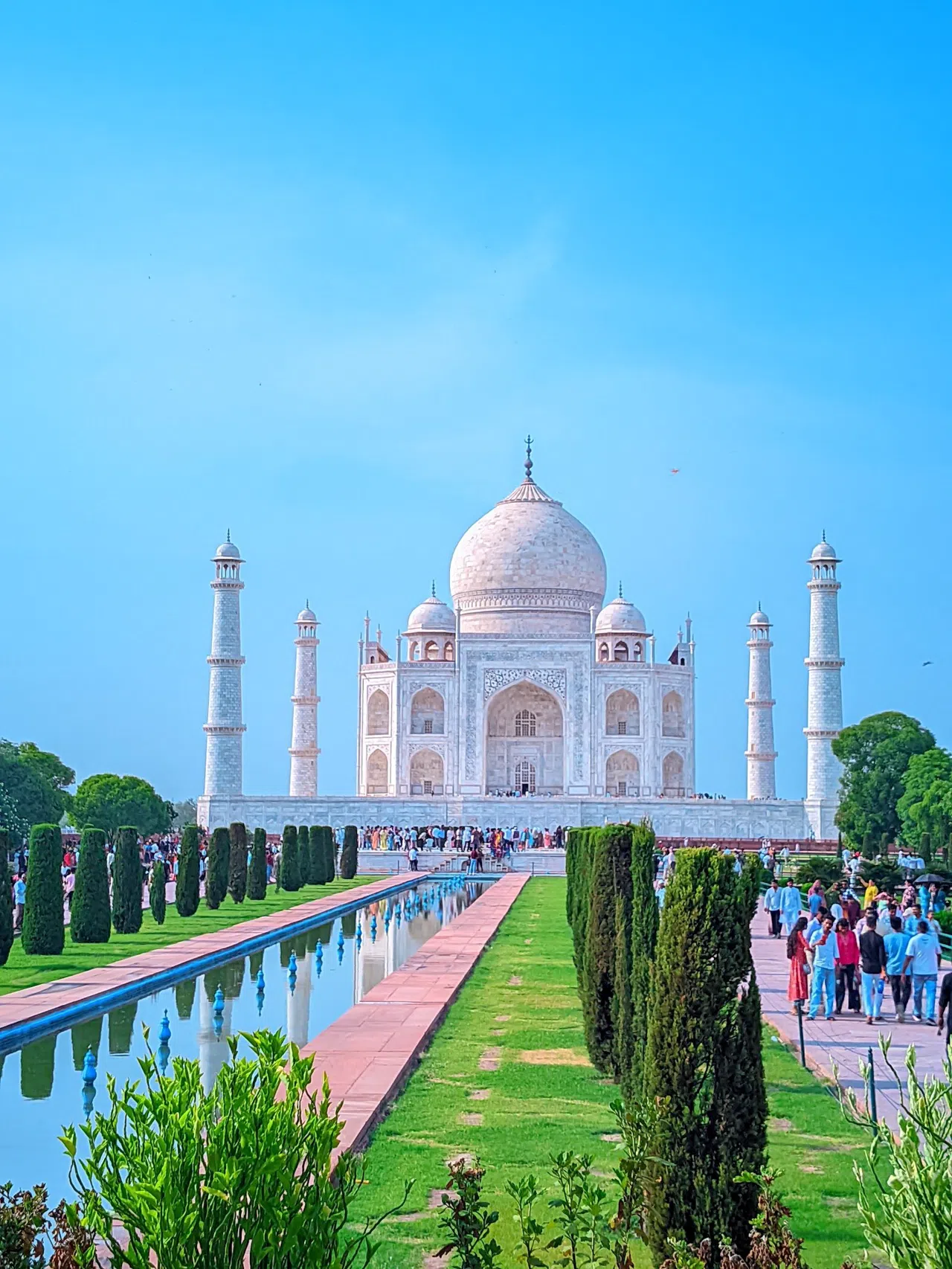
The gates on the east side open half an hour before sunrise, and for the next forty minutes the marble runs grey, then pink, then a flat white that no camera renders honestly. Most people standing in that queue are on their own or in a pair. Agra's reputation for being hard work alone is largely accurate: the touts, the fare arguments, the dead evenings. It is also almost entirely fixable, and the fixes are dull, cheap and take about ten minutes to arrange.
Two mornings cover the monuments
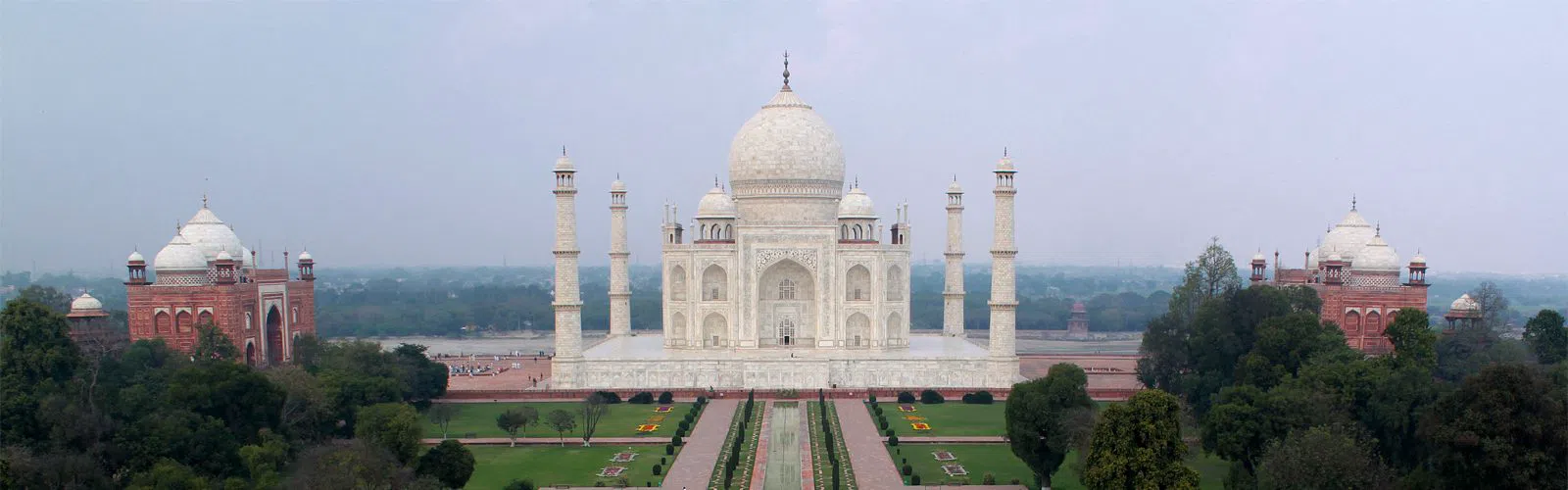
Taj Mahal (Taj Ganj, the walled quarter pressed against the south wall) is closed every Friday. That one fact ruins more first visits than anything else in the city, because trains and flights get booked around a weekend without anyone checking. The rest is manageable. A foreign adult ticket is ₹1,100, with ₹50 off if you buy online, and the dedicated online-ticket lane at the gate moves faster than the cash windows, which run separately for Indian and foreign visitors. The mausoleum itself, meaning the plinth, the inlay and the cenotaphs, is a further ₹200, sold as an add-on.
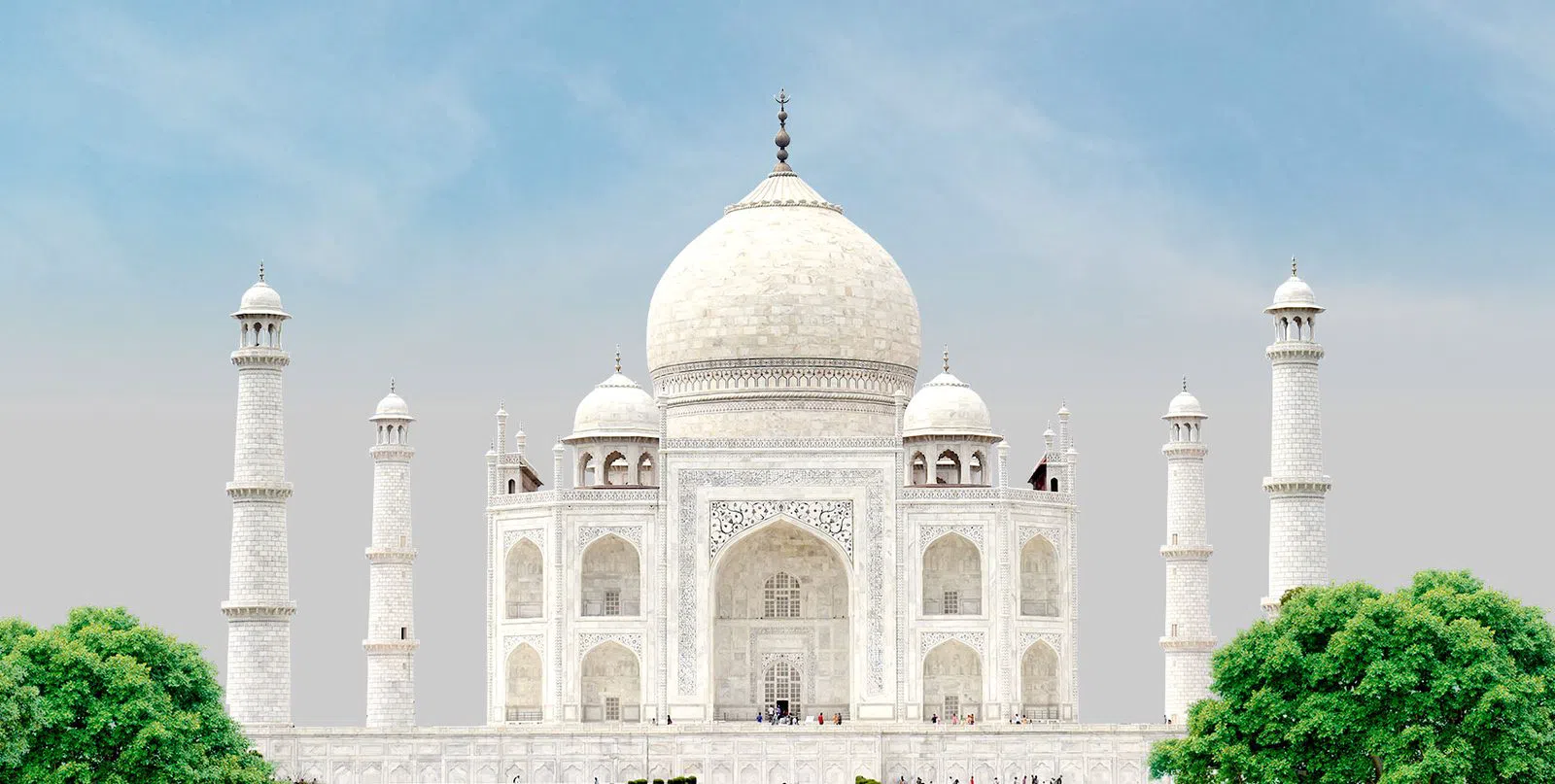
Go at opening, which means being at the East Gate thirty minutes before sunrise; it has the shortest queue of the three gates. The plinth is the one genuine bottleneck at that hour, because everybody who has just watched the light come up wants to go inside at the same moment. Travelling alone helps here: one person threads through security and the shoe-cover queue far quicker than a group of eight. If the plinth line looks long, walk the garden, come back an hour later, and go up once the first coach parties have moved through.
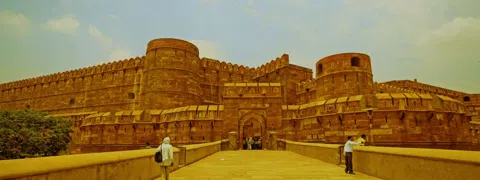
Give it two and a half hours rather than a full day, and put Agra Fort (Rakabganj, a ten-minute ride upriver) into the same morning. Entry is ₹650 for a foreign adult, gates 6:00 to 18:00 with last entry at 17:30, and roughly half the fort is still a working army cantonment and closed to the public, so ninety minutes covers what you can actually see. Licensed ASI guides tout at the gate for a fixed hourly rate and will take one person as readily as ten, which is unusual; if you want the Mughal succession story told properly, this is where to pay for it. There is more on the wider city in the Agra guide.
Plan your Agra trip
Live prices from our booking partners.
Free cancellation on many rooms. We may earn a commission when you book.
What to do when the Taj is shut
A Friday is not a write-off, and neither is a slow second afternoon.
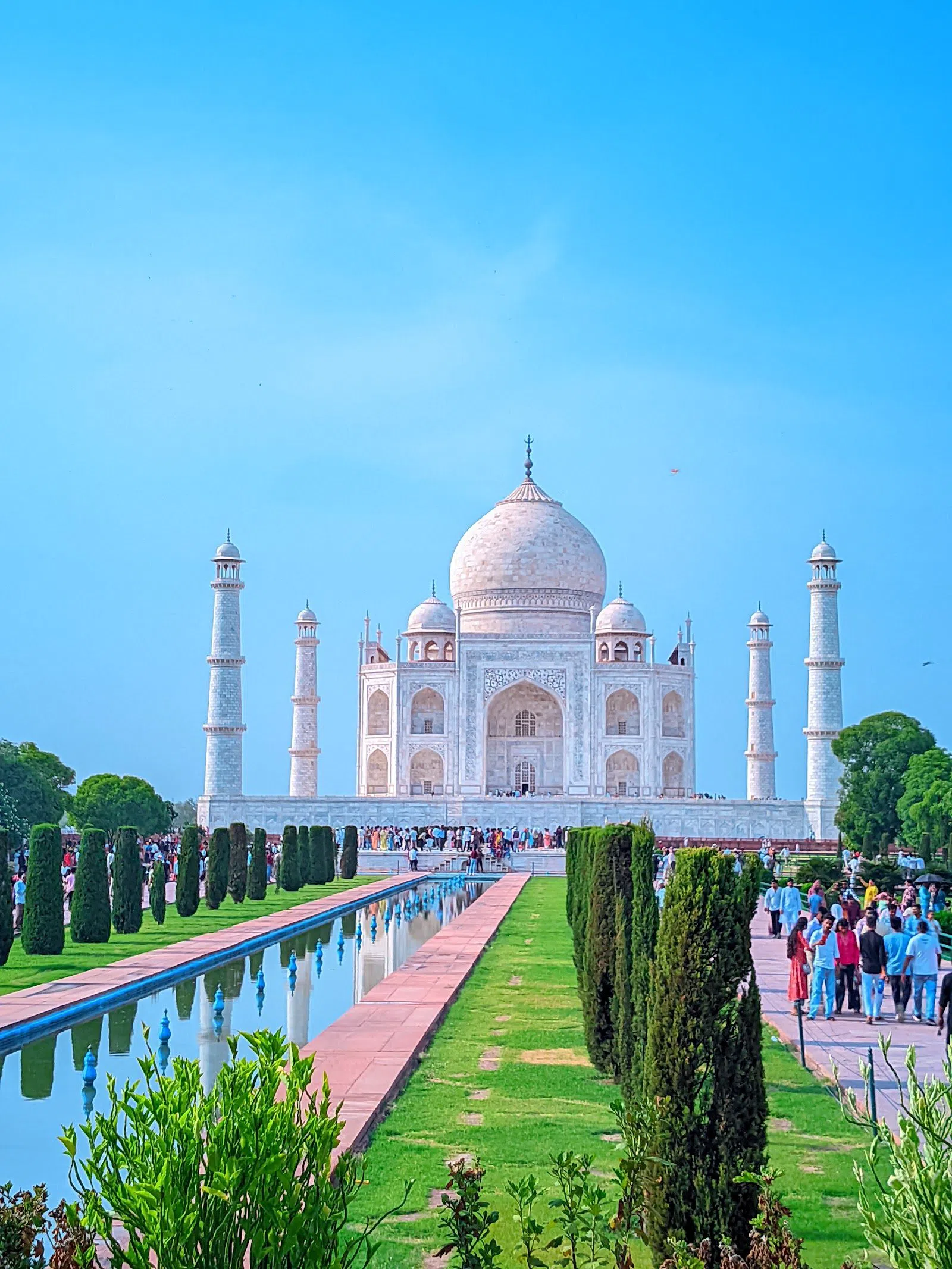
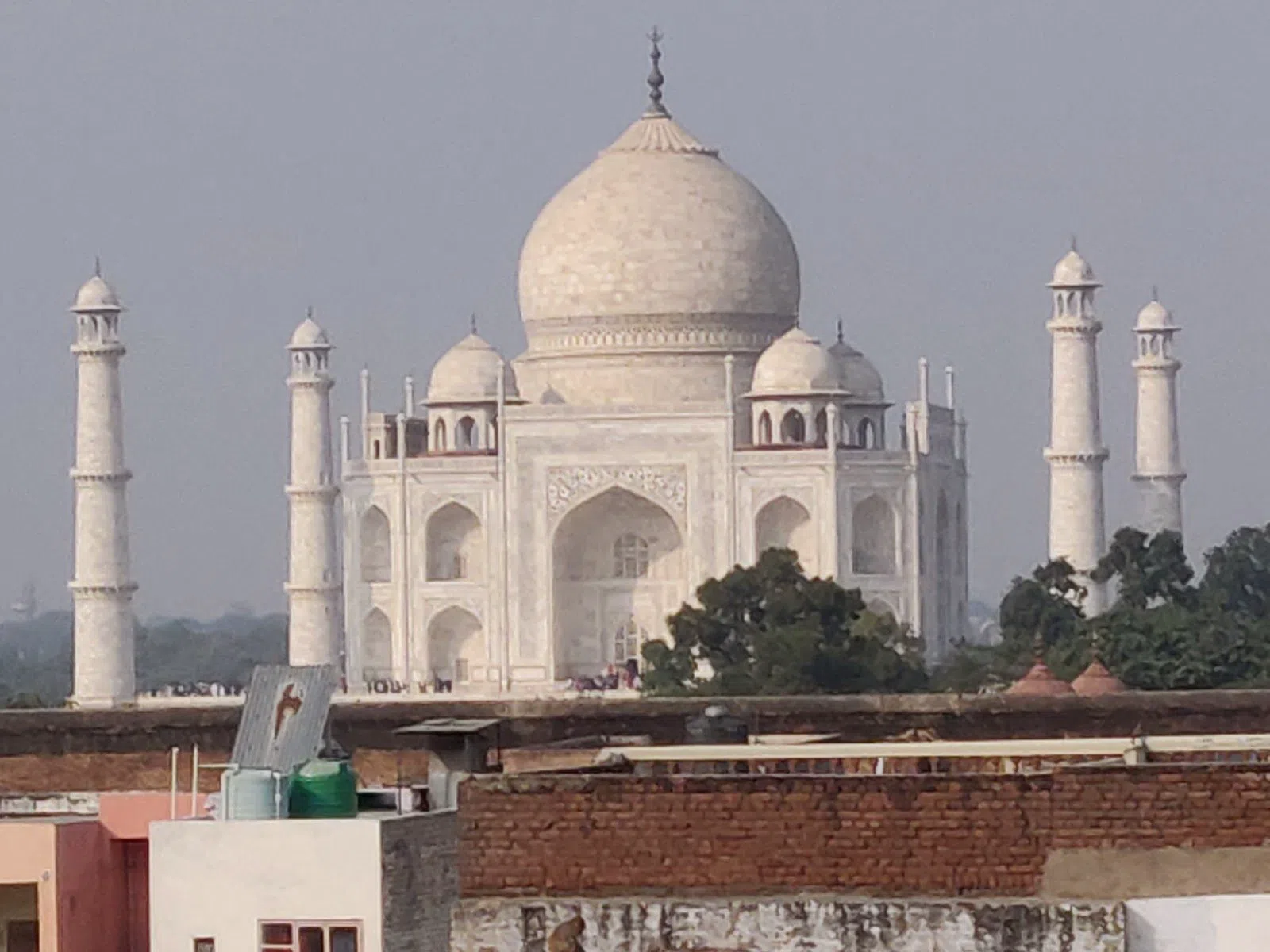
Mehtab Bagh (Nagla Devjit, the north bank directly opposite the mausoleum) costs ₹300, opens sunrise to sunset, and runs seven days a week, including the day the Taj does not. It is the one place you get a clean, unobstructed photograph of the building without handing your phone to a stranger, which matters more when you are alone than it sounds. The site is small and fills with sunset groups from about 17:00, but there is room along the riverfront wall if you walk to the far end.
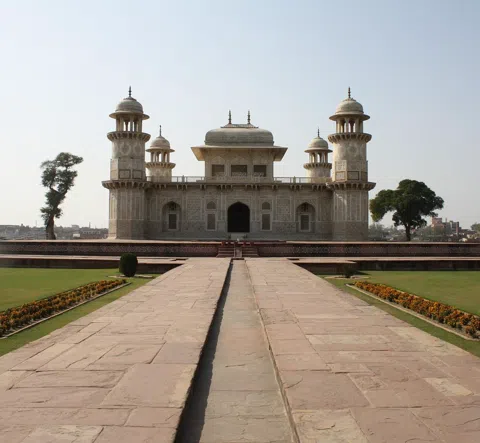
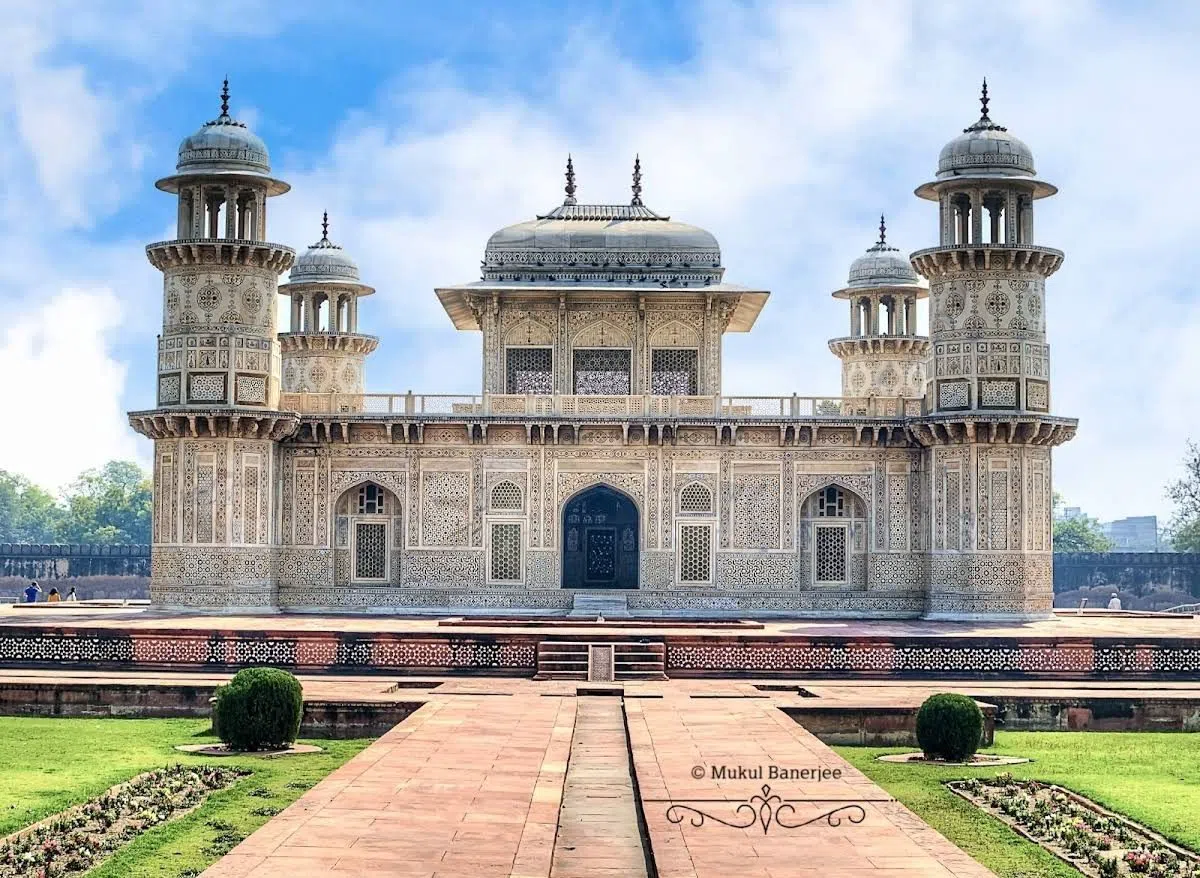
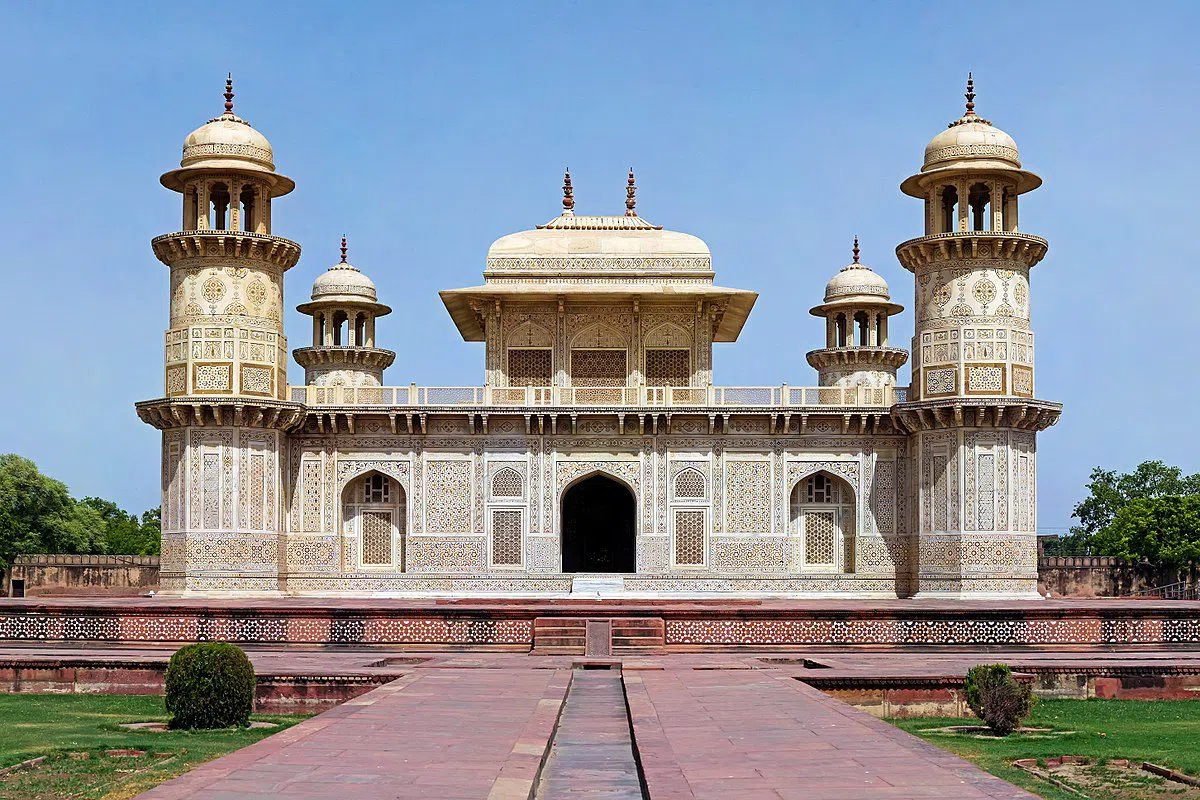
Itimad-ud-Daulah (Moti Bagh, east bank, universally called the Baby Taj) is ₹250 and open every day, and the inlay work is finer than anything on the Taj itself. There are rarely more than a handful of visitors. Twenty unhurried minutes here does something a monument with a queue cannot: nobody is moving you along.
The metro removes most of the arguing
Agra Metro (Yellow Line) runs six stations from Taj East Gate along Fatehabad Road to Agra Fort and Mankameshwar, 06:00 to 22:00, ₹10 to ₹30 a journey on a token or QR ticket bought at the gate. It is the single biggest change to how this city feels alone. Nearly every point of friction a solo visitor meets here happens in an auto-rickshaw: the fare negotiation at the hotel door, the driver who wants to add a marble emporium to the route, the surcharge because you are one and not four. The metro corridor now covers the Taj, most of the hotel strip and the fort.
What it does not cover is the far bank. Mehtab Bagh, the Baby Taj and the Kachhpura side all need a rickshaw. Fix the price before you sit down, expect ₹150 to ₹300 for a short hop, and be direct about not stopping at shops. Nobody takes offence.
One half-day out, not two
Fatehpur Sikri (about 40 km west, an hour each way) is the outing worth making. Shared buses and taxis run from Idgah bus stand, the ASI complex is ₹610 for a foreign adult, the monuments open 6:00 to 18:30, and Salim Chishti's tomb 5:00 to 21:00. No booking, no group logistics, no reason a single traveller cannot do it on a whim.
Be ready for the Jama Masjid courtyard. The shrine attracts persistent unofficial "guides" and firm donation pressure, and someone on their own gets worked harder than a family does. The method is simple and it works: agree to nothing, accept nothing, keep walking and keep answering. It is not aggressive, only relentless, and after the fourth refusal it stops.
The alternative half-day is Wildlife SOS Elephant Conservation and Care Centre (about 50 km north), which is appointment only. Book ahead, guided slots run 10:00 to 17:00, and there is no riding and no bathing with the elephants as a matter of policy. It is the straight answer to the ride touts you will be offered near the monuments. If your schedule is tight, their Agra Bear Rescue Facility sits much closer to town and opens 09:00 to 18:00, Tuesday to Sunday.
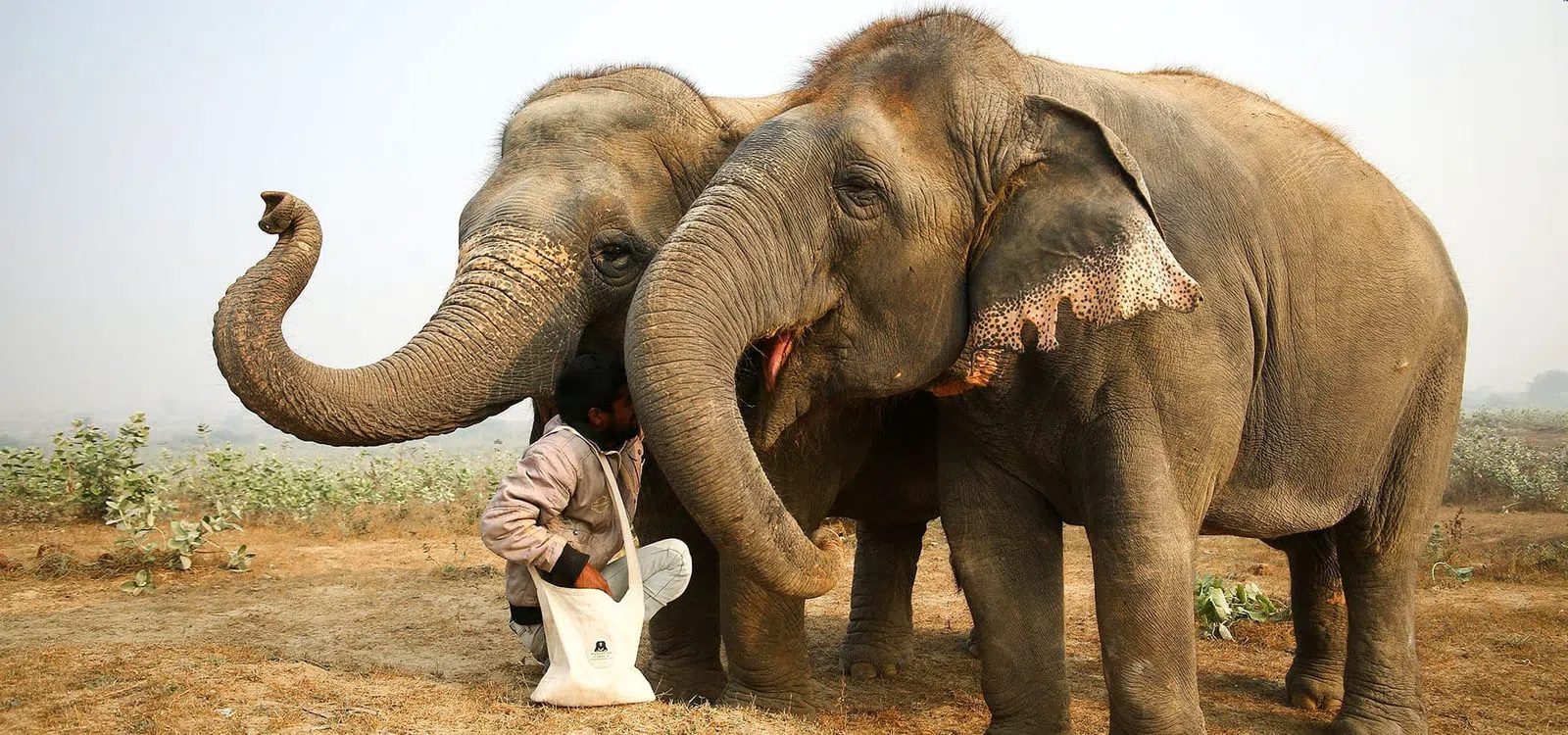
Do one of these, not both. Two long road trips inside a two-night stay is how people end up seeing Agra through a windscreen.
A walk that is not a monument
Mughal Heritage Walk (Kachhpura, the village on the north bank behind Mehtab Bagh) is the only structured route into everyday Agra rather than monument Agra. Local youth guides trained under the Heritage Footprints programme run it, you book a day ahead by phone, and it takes about two hours. A private walk starts around US$45 (roughly ₹4,000) and costs less if you join others. Ask when you call, because a solo booking on a quiet day is exactly the case where they will pair you with someone else.
It finishes at Mehtab Bagh, which makes the shape of the afternoon obvious. Walk mid-afternoon, be at the river wall for sunset, eat afterwards.
Eating alone without it being a project
This is where solo Agra is easier than almost anywhere with a reservations culture.
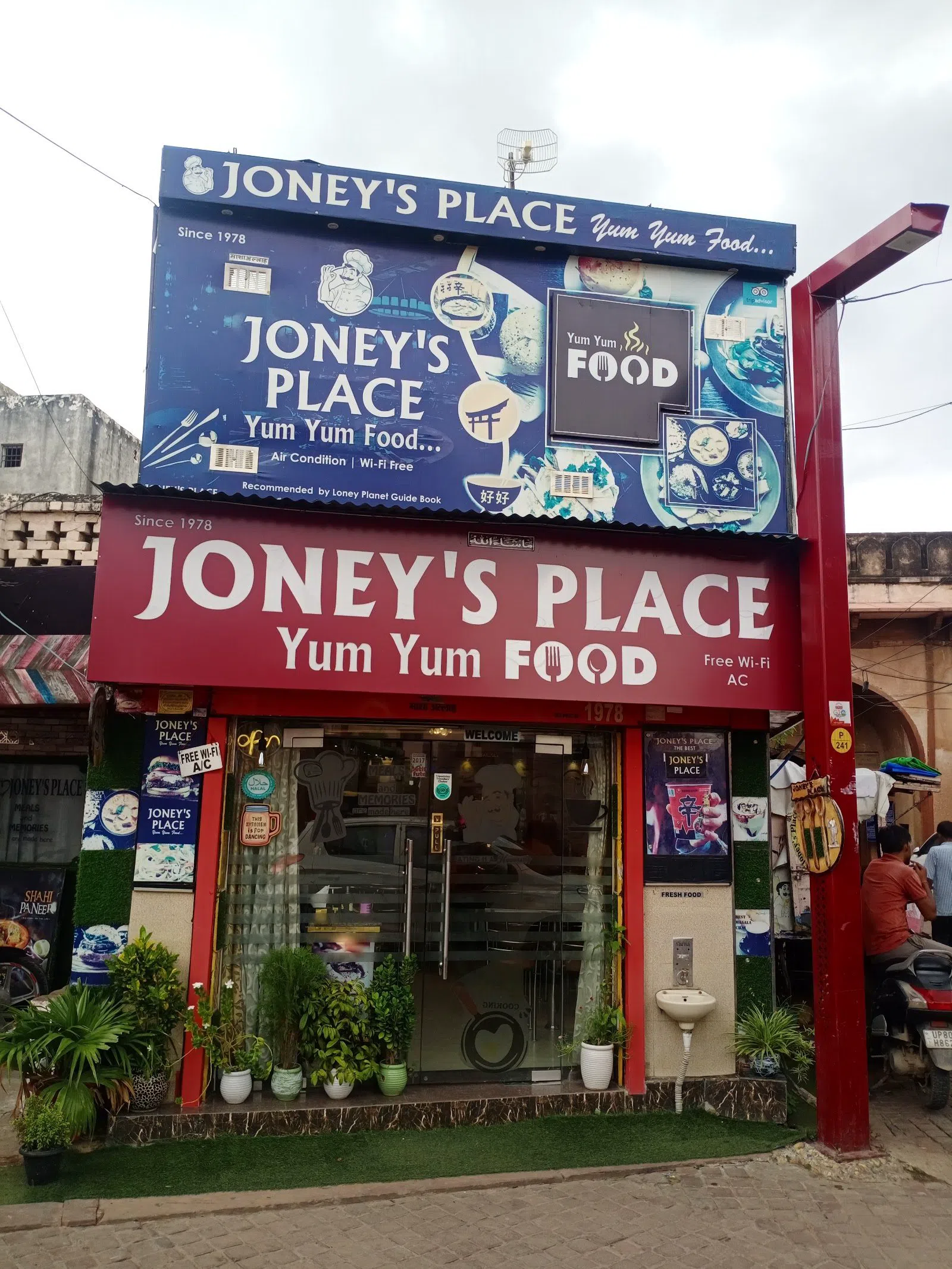
Joney's Place (Taj Ganj, a few minutes from the South Gate) has been running since 1978 and physically seats about six people. That makes it unworkable for a party of more than four and close to ideal for one. Meals run ₹100 to ₹300, it stays open until roughly 22:30, and the banana lassi and malai kofta are the reason to walk over. It is the friendliest room in the quarter for eating by yourself.
Mama Chicken Mama Franky House (Sadar Bazaar) is the landmark non-veg street counter: ₹150 to ₹400, open roughly 13:00 to 23:30, with stand-and-eat counters plus a sit-in area. There is no door policy of any kind and it absorbs groups without effort. Order at the counter, eat standing, and nobody looks twice at a person on their own.

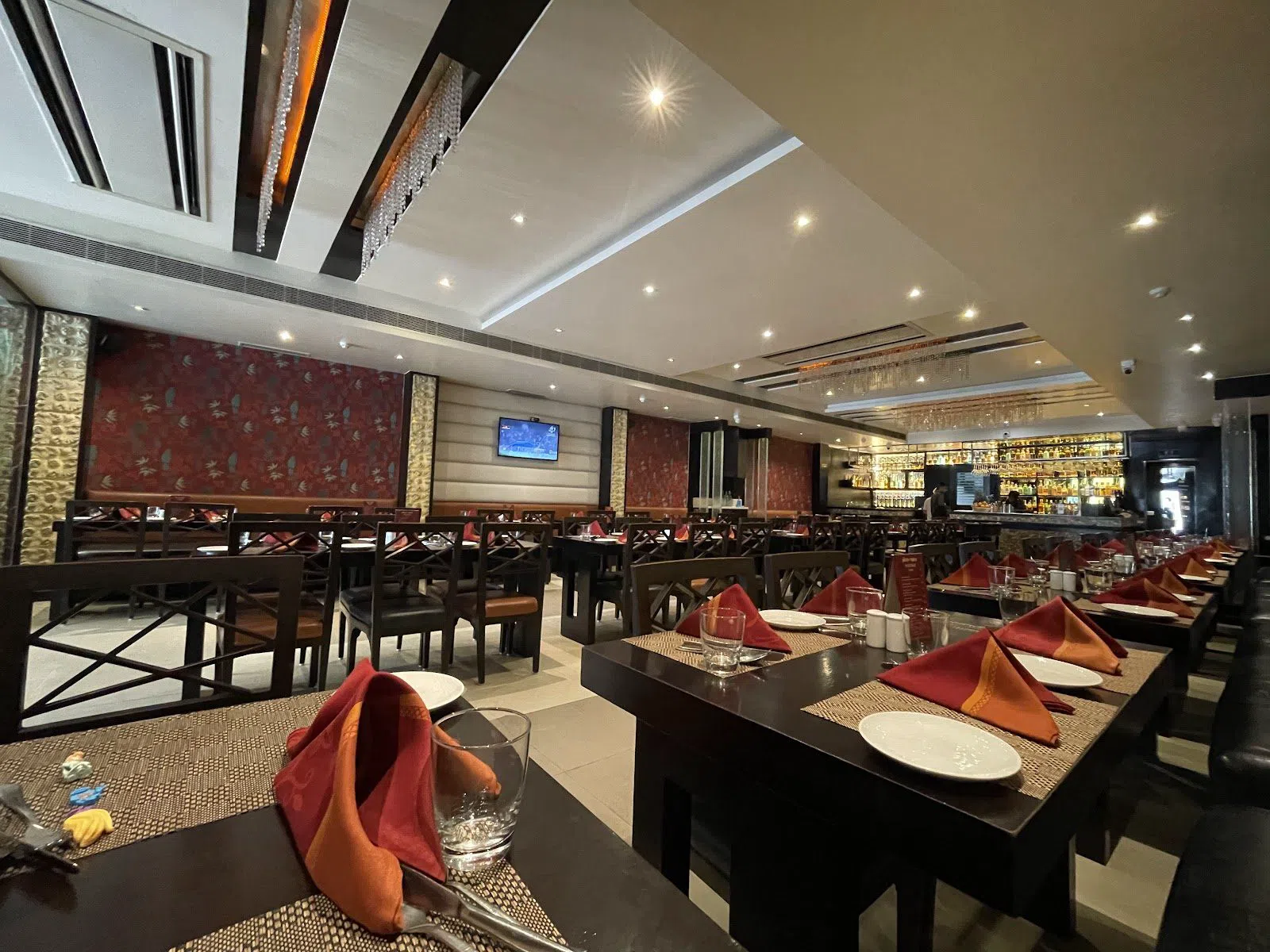
Pinch of Spice (Fatehabad Road, opposite ITC Mughal) is the dependable proper dinner: a large, properly staffed North Indian room at ₹800 to ₹1,500 a head, open until 23:30, taking walk-ins and big tables, though weekends want a booking. Use the Fatehabad Road branch rather than the Sanjay Place one.
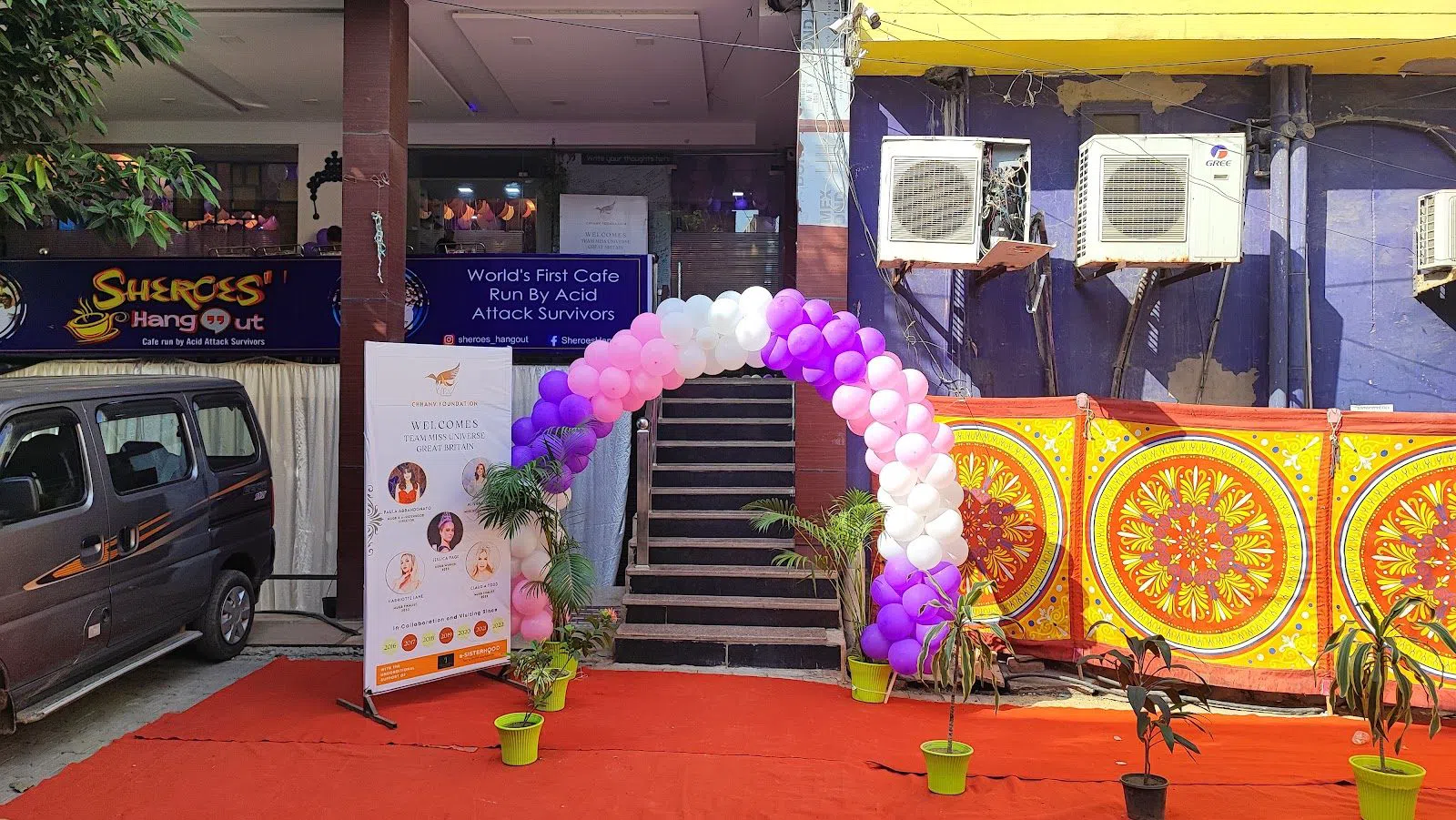
Sheroes Hangout (Fatehabad Road) is a café run as a social enterprise on a pay-what-you-think-it's-worth basis, 10:00 to 22:00, walk in, no booking. The room is small, so a large party should come off-peak. Go for the coffee and the conversation. It is not a sight, and treating it as one is the wrong way to spend an hour there.
Esphahan at The Oberoi Amarvilas (Taj East Gate Road) is the splurge worth planning around: ₹5,000 and up a head, two seatings a night at roughly 19:00 and 21:30, reservations essential. As a solo diner, book several days ahead, because the seat count is fixed and one person does not get squeezed in at the door. Larger groups should call the hotel directly. The terrace has the best framed view of the Taj in the city, and without a booking you will not be on it.
The one dependable evening
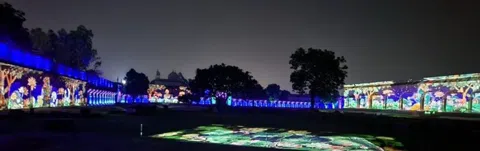
Agra shuts early and has very little nightlife, which is the part of a solo trip here that catches people out. Kalakriti Cultural & Convention Centre (Fatehabad Road) runs Mohabbat the Taj nightly: doors 18:30, show at 19:30, ninety minutes. Tickets start at ₹600 and rise to about US$30 with transfers, hotel pickup comes with most booked tickets, and they sell single seats without fuss alongside the coach parties. The headsets carry the narration in nine languages, so the story lands whether or not you follow Hindi. It is theatre rather than a night out, and it is the reliable alternative to an evening spent on a hotel bed.
Where to sleep, and why it matters more alone
Two areas make sense. Taj Ganj puts you inside walking distance of the East and South Gates, which is what you want for a pre-dawn start. Fatehabad Road has the larger hotels, the metro and most of the restaurants above.
Joey's Hostel Agra (Taj Ganj, eight minutes' walk from the monument) is the low-friction base for a first solo visit: dorms around ₹500 to ₹800, private rooms from about ₹1,500, a 24-hour desk, organised walking tours and film nights, and a rooftop with a view that removes any need to pay for a sunset spot. It takes small groups too, but it is built around people arriving on their own. For the rest of the price range, start with the Agra hotel search and filter for something within reach of a metro station.
Practical notes
November to February is the comfortable window to come. December and January bring fog that can delay trains and flatten the sunrise entirely, so if the light is the point, aim for late February 2026. April to June regularly passes 40°C and makes a 6am start non-negotiable. July to September is monsoon: lower prices, fewer people, wet marble.
Trains arrive at Agra Cantt and Agra Fort stations, both a short rickshaw ride or a metro hop from the hotel strip. Two nights is the honest length for a first visit; three if you want Fatehpur Sikri or the elephant centre without rushing.
UPI is accepted almost everywhere and larger restaurants take cards, but carry ₹2,000 to ₹3,000 in small notes for entry tickets, rickshaws and the smaller cafés. Ticket windows do not always have change.
A day covering the Taj, the fort and a good dinner runs roughly ₹2,500 to ₹3,500 in tickets and food, before your room. A quieter day of Mehtab Bagh, the Baby Taj, street food and the metro comes in under ₹1,000. Budget the Esphahan dinner separately, or not at all.
The one thing to book is your Taj ticket, online, for the ₹50 saving and the faster lane. Everything else here takes a phone call the day before, or nothing at all.
Before you go
How many days do I need in Agra on my own?
Two nights is the honest answer for a first visit: one morning for the Taj Mahal and Agra Fort together, one afternoon for Mehtab Bagh and Itimad-ud-Daulah, and evenings for eating and the Mohabbat the Taj show. Add a third night only if you want Fatehpur Sikri or the Wildlife SOS elephant centre without rushing.
Which day is the Taj Mahal closed, and what should I do instead?
It is closed every Friday, which wastes more first visits than anything else in Agra. Mehtab Bagh (₹300) and Itimad-ud-Daulah (₹250) are both open seven days a week, and Mehtab Bagh gives you a clear view of the mausoleum across the river, so a Friday becomes the north-and-east-bank day rather than a lost one.
Do I need to book Taj Mahal tickets in advance?
You do not have to, but you should. A foreign adult ticket is ₹1,100 with ₹50 off online, and the online-ticket lane at the gate moves faster than the cash windows. The ₹200 mausoleum add-on is separate and worth taking; the plinth queue is the bottleneck at sunrise, so go up an hour after opening if the line is long.
Is it easy to get around Agra alone without hiring a driver?
Yes, more so than it used to be. The Agra Metro Yellow Line links Taj East Gate, Fatehabad Road, Agra Fort and Mankameshwar for ₹10 to ₹30 a journey, 06:00 to 22:00, which removes most of the auto-rickshaw haggling. Mehtab Bagh, the Baby Taj and Kachhpura still need a rickshaw. Agree the fare before you sit down and say clearly that you are not stopping at shops.
Where can I eat alone in Agra in the evening without it being awkward?
Joney's Place in Taj Ganj seats about six people and is built for solo diners at ₹100 to ₹300 a meal. Mama Chicken Mama Franky House in Sadar Bazaar is a stand-and-eat counter with no door policy at all. For a proper sit-down dinner, Pinch of Spice on Fatehabad Road takes walk-ins at ₹800 to ₹1,500 a head, and Esphahan at The Oberoi Amarvilas needs a booking several days ahead.