The Agra issue
Agra Food Tours: From Street Eats to Night Markets
A tried-and-eaten route through Agra's chaat lanes, petha counters and Mughlai kitchens — with honest notes on who each place actually suits.
By Farah QureshiEvery lane in Agra has a plate worth stopping for
Most people come to Agra for a white marble dome and leave without tasting the city that surrounds it. That is a mistake. Agra eats like a Mughal capital still does — spiced clay-pot chai steaming under a tarpaulin in Seth Gali, golgappe cracking open in Chaat Gali at dusk, a warm slab of petha handed over a counter that has been trading since long before your grandparents were born. This is a guide to eating Agra properly: where to start, what to order, which lanes reward a nervous first-timer and which suit only the adventurous. Every place below I have eaten at more than once, and every one earns its line.
Start with a guided walk — it earns its price
If this is your first time navigating an Indian street-food scene, do not wing it. Book a walk. A good guide is not a luxury here; it is the person who quietly vets which stall boiled its water and which one you should photograph but not eat from.
The gentlest way in is the Agra Street Food Walking Tour, Spice Market & Tuk-Tuk Ride, which runs across the old city with hotel pickup and drop-off. It is built for small groups and scales easily from a couple to a family-sized party, and at roughly £7–13 per person it is the best-value entry point in the city. Your guide steers you to Seth Gali chaat, a good samosa and that clay-pot masala chai without the traveller's-tummy gamble — the whole point is that someone local has already decided each stall is clean enough to hand you a plate. Nervous parents travelling with older kids: this is the one.
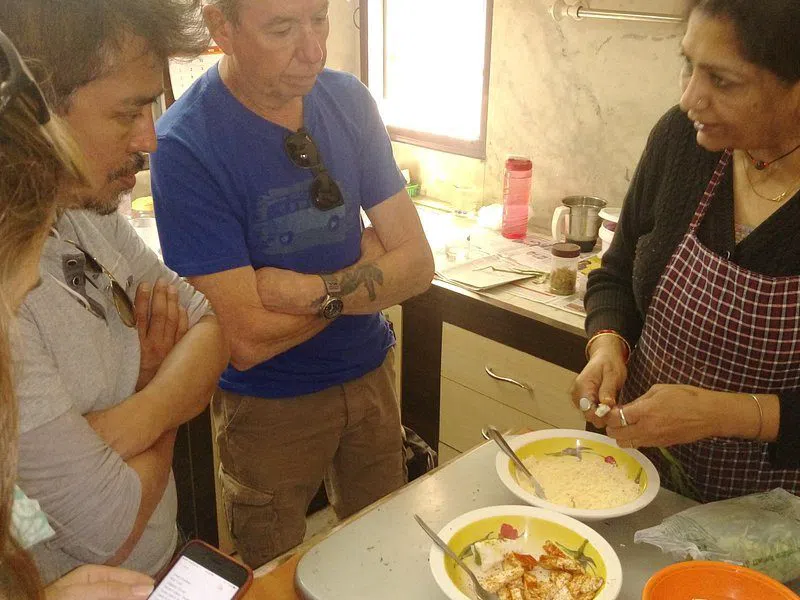
For a meatier deep-dive, the Flavours of Agra Food Walk (J2S Tour & Travels) is the serious eater's choice. Capped at fifteen people, it runs an old-city leg and a new-city leg, with veg and non-veg options that make it genuinely workable for a mixed-diet UK group where one person eats everything and another eats none of it. At around £38 per person it costs a good deal more than the budget walk, but the money buys three hours, smaller-group attention and both halves of a city that independent visitors rarely see whole. If you only have one food morning in Agra and you take your eating seriously, spend it here.
A note on both: guided walks in Agra tend to converge on the same beating heart after dark, so if you have booked a tour you will likely end up in Sadar Bazaar anyway. Which is exactly where you want to be.
Plan your Agra trip
Live prices from our booking partners.
Free cancellation on many rooms. We may earn a commission when you book.
Sadar Bazaar and Chaat Gali after dark
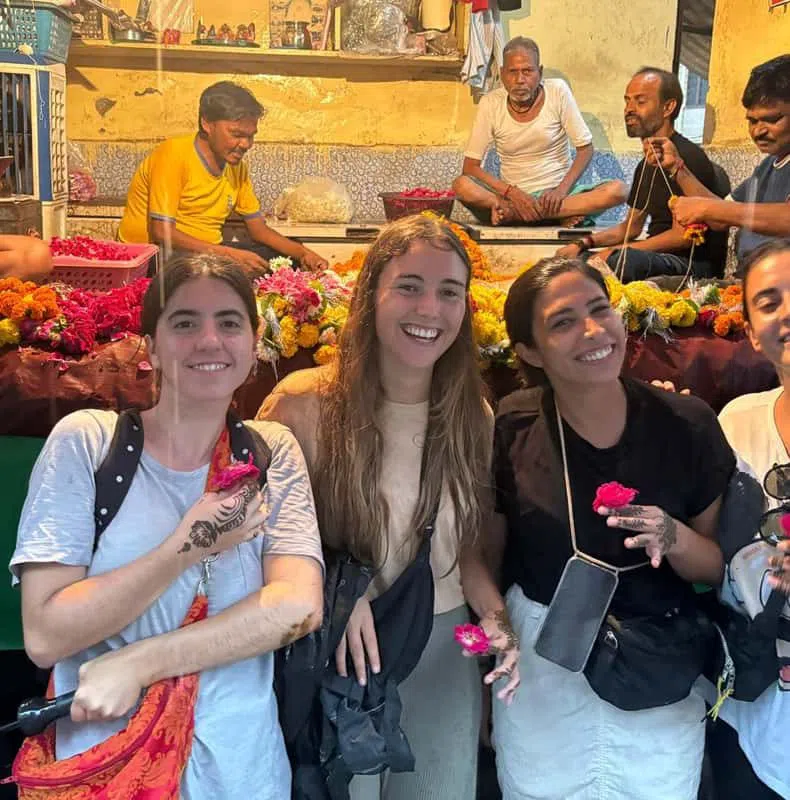
Sadar Bazaar & Chaat Gali is the beating heart of any Agra food tour and the place most guided walks funnel into by evening. It is an open public market — no door policy, no bookings, no airs — and it only truly comes alive after the light softens. Groups roam it freely; you pay per stall, a few pounds each, and graze. Go at dusk for bhalla chaat, the soft fried-lentil dumplings drowned in cool yoghurt and tamarind, and for gol gappa eaten standing up until you lose count. One firm rule I give every reader: buy your petha only from the named, branded shops. The copycats here are relentless.
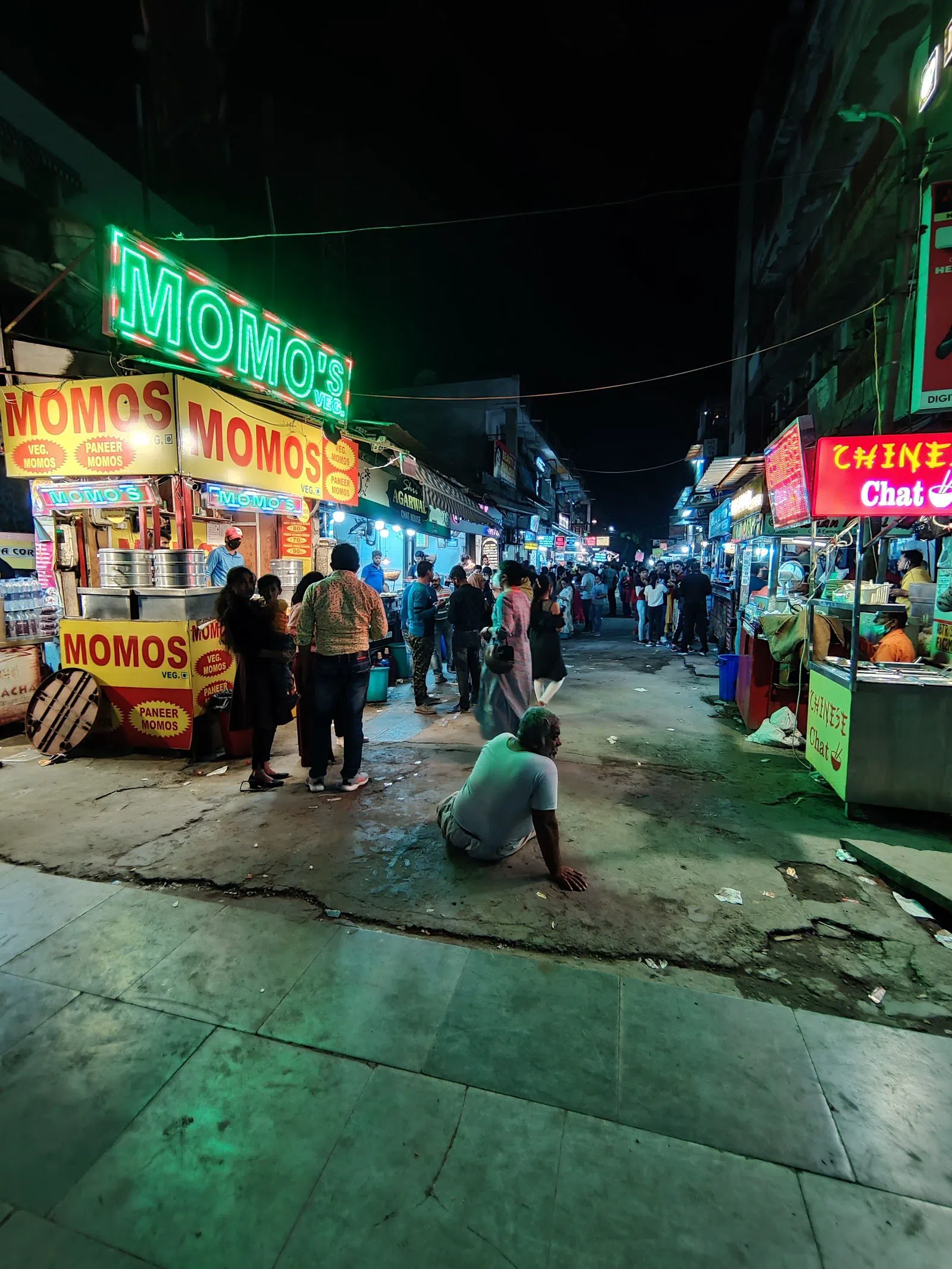
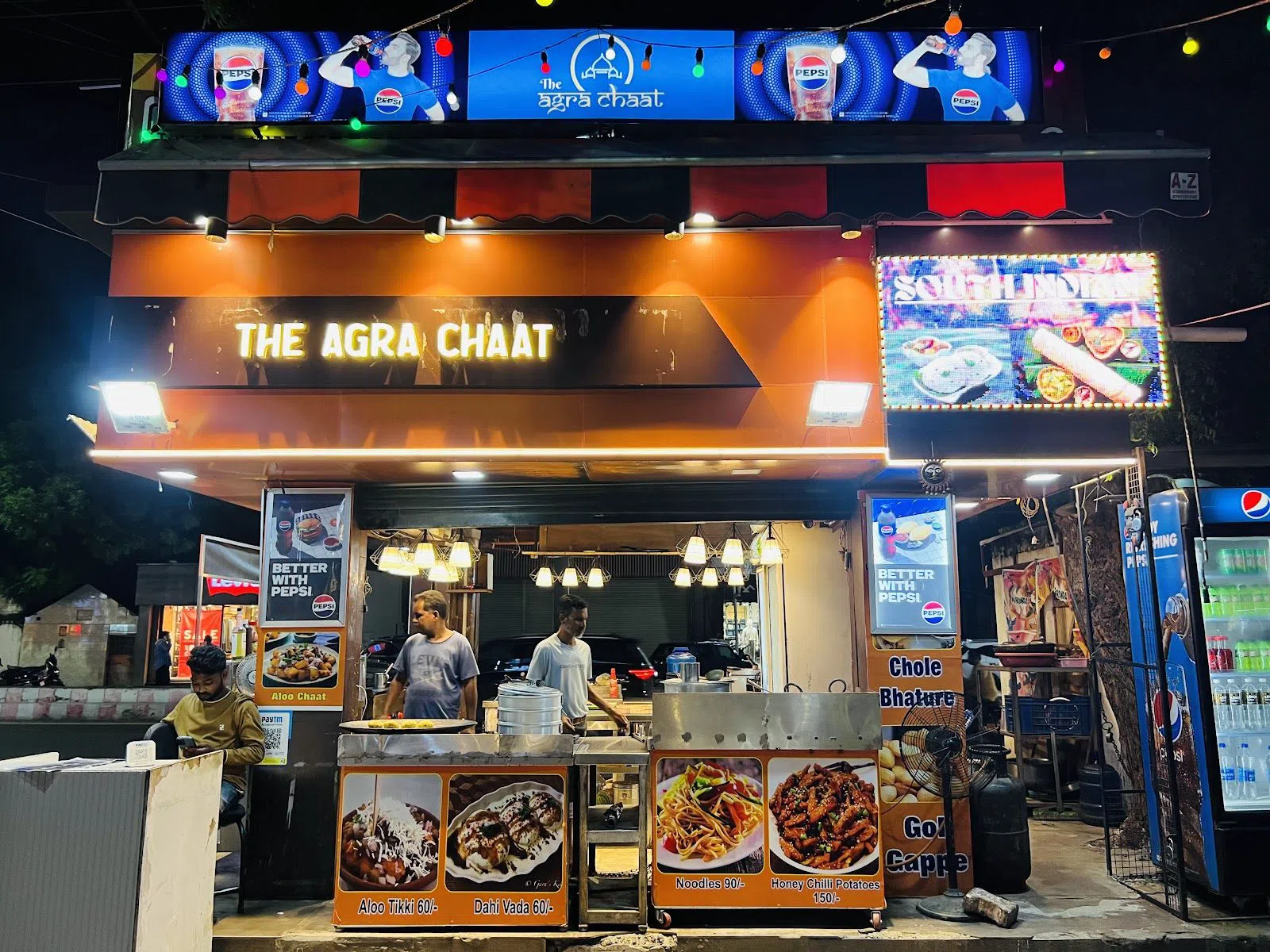
Inside the same warren sits Agra Chaat House, a tiny legacy corner in Chaat Gali that bills itself as the oldest chaat spot on the lane (4.2 stars across 2,600-plus reviews, for what star ratings are worth). It is standing-room and informal, so a group works best in relays rather than all at once — send two in, let them come back with plates. The golgappe and aloo tikki here are the reference point locals quietly measure every other stall against, and at roughly £1–3 a head it is as cheap as good eating gets. This is a stop for the curious, not the squeamish: it is a cramped corner, not a café.
For the non-veg crowd, Mama Chicken Mama Franky House in Sadar Bazaar is Agra's most famous street institution for crunchy fried chicken, kebabs and frankies rolled to order. It is a busy casual dhaba; groups are accommodated but expect a wait at peak, and I will be straight with you — quality can be inconsistent and hygiene is dhaba-standard, not restaurant-standard. It suits adventurous eaters with a settled stomach and a bit of patience, and at around £3–7 per person the reward-to-risk maths usually works. If your group includes anyone with a delicate constitution, admire it from the queue and eat elsewhere.

Agra's sweet counters — and the petha you must get right
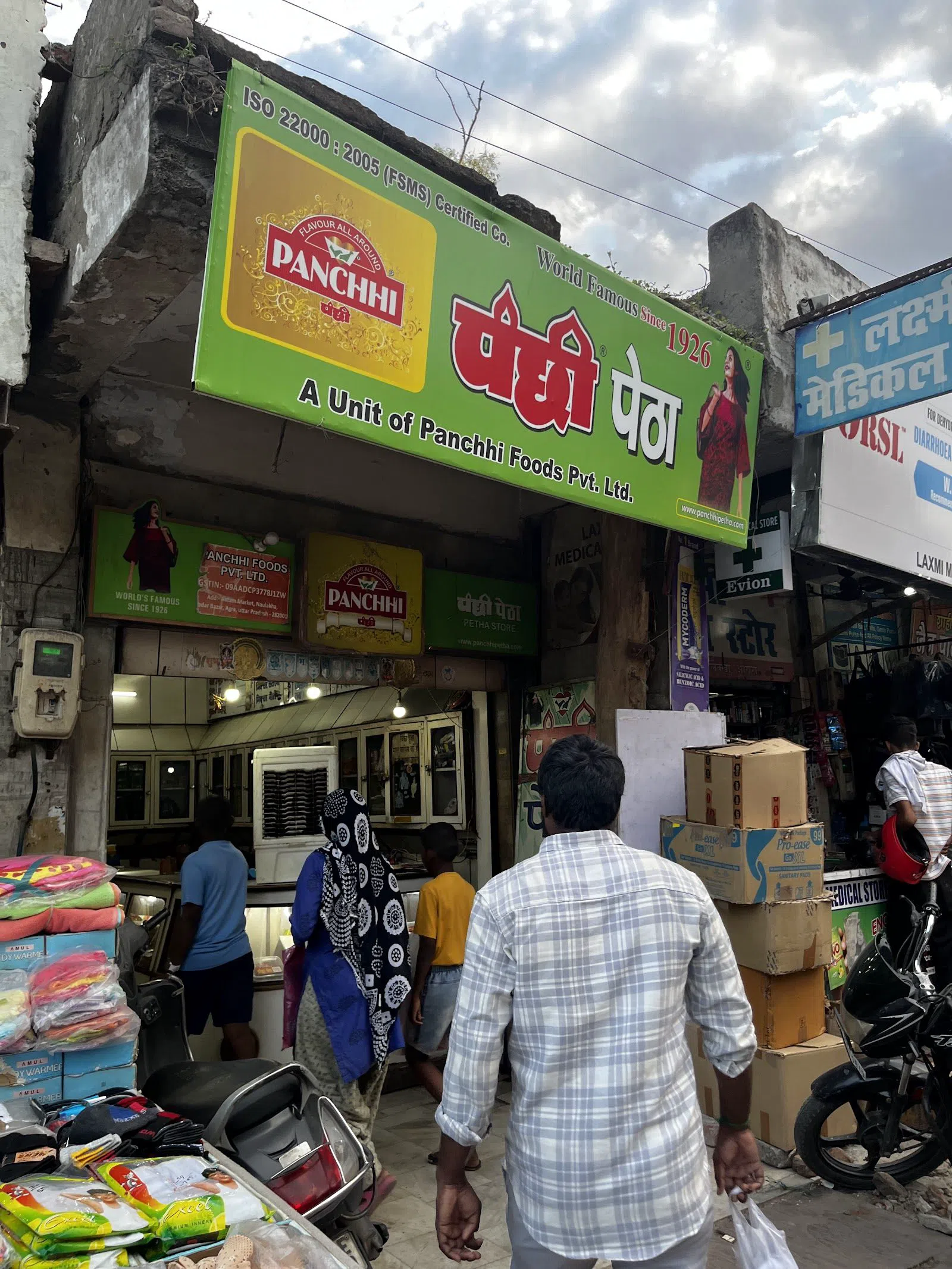
Agra's signature sweet is petha, a translucent ash-gourd confection born in the Mughal courts, and the one address that matters is the Panchhi Petha (original Sadar Bazaar store). This is a retail counter, not a sit-down — a quick, efficient group stop for boxed sweets to carry home, at roughly £2–5 a box. I cannot stress this enough: dozens of near-identical 'Panchhi' shops trade on the name across the city, and the difference in quality is real. This is the authorised original; buy here, keep the box, and do not be talked into a 'branch' by a tuk-tuk driver with a commission. Try the plain and the kesar (saffron), and if you want the modern version, the paan-flavoured one travels surprisingly well in hand luggage.
Breakfast the Agra way
Agra does breakfast with conviction, and the classic plate is bedai — a puffed, crisp puri — with a fierce spiced potato sabzi and a coil of hot jalebi on the side. Three places do it honestly, at three different comfort levels.
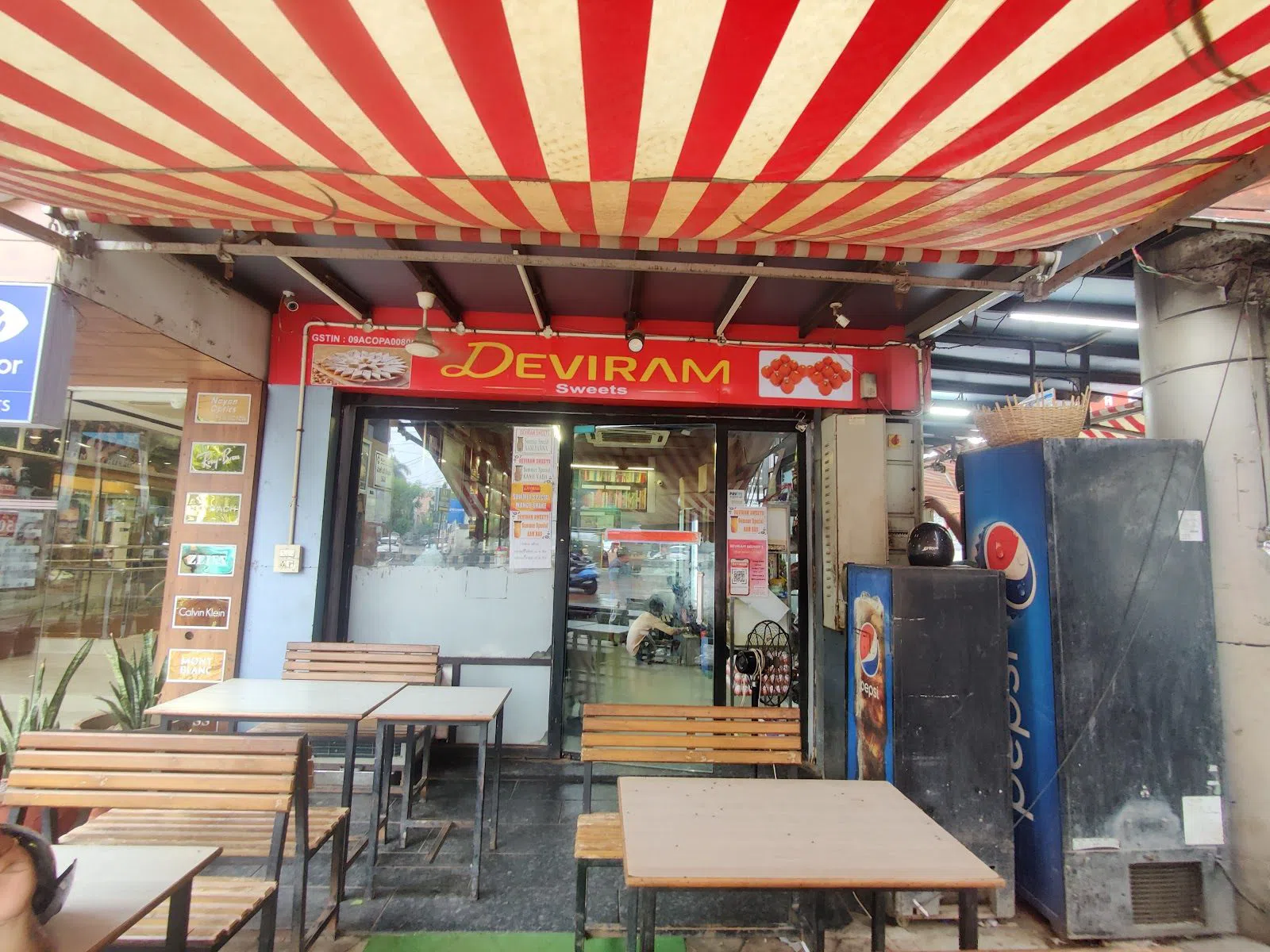
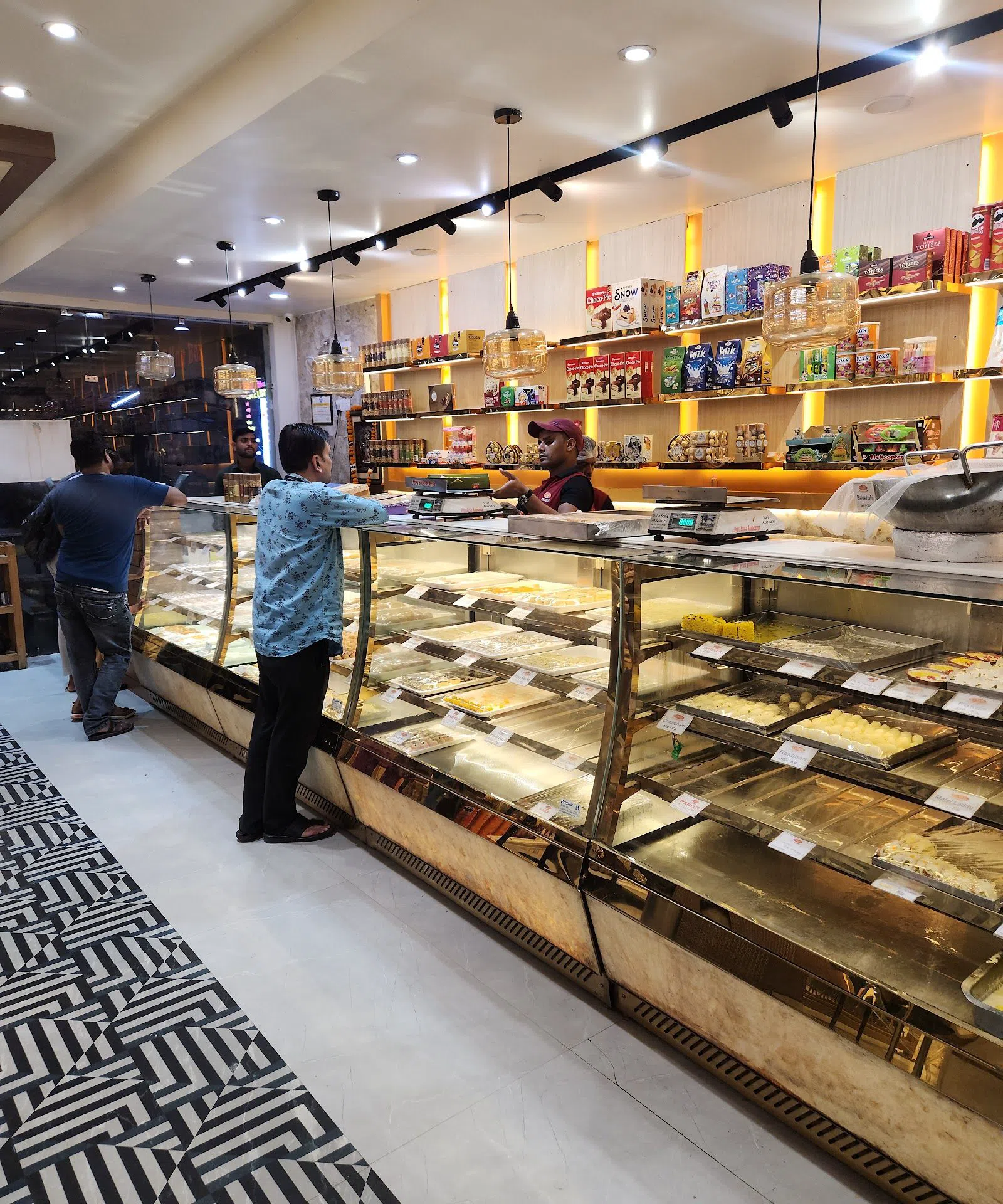
Deviram Sweets & Restaurant is the easiest on a cautious stomach: a large sweet-shop-cum-restaurant with proper banquet space that comfortably seats a group, clean and sit-down, at around £3–7 per person. Order the bedai puri with sabzi and a plate of jalebi and you have the quintessential Agra morning without setting foot on the street. If your travelling companions are nervous about street food but do not want to miss the flavours, start them here.
GMB – Gopika Mishthan Bhandar, open 7:30am to 11pm daily near the Taj, is the more local, more chaotic option (4.1 stars, and a landmark for good reason). The mustard-oil kachoris are the real thing and the bedai-and-jalebi is a proper local ritual — but I will warn you, as I warn everyone: service can be brusque, pricing leans a touch touristy given the location, and the breakfast rush is a scrum. Come outside peak if you are a group, and do not expect to be coddled. The food answers for itself.
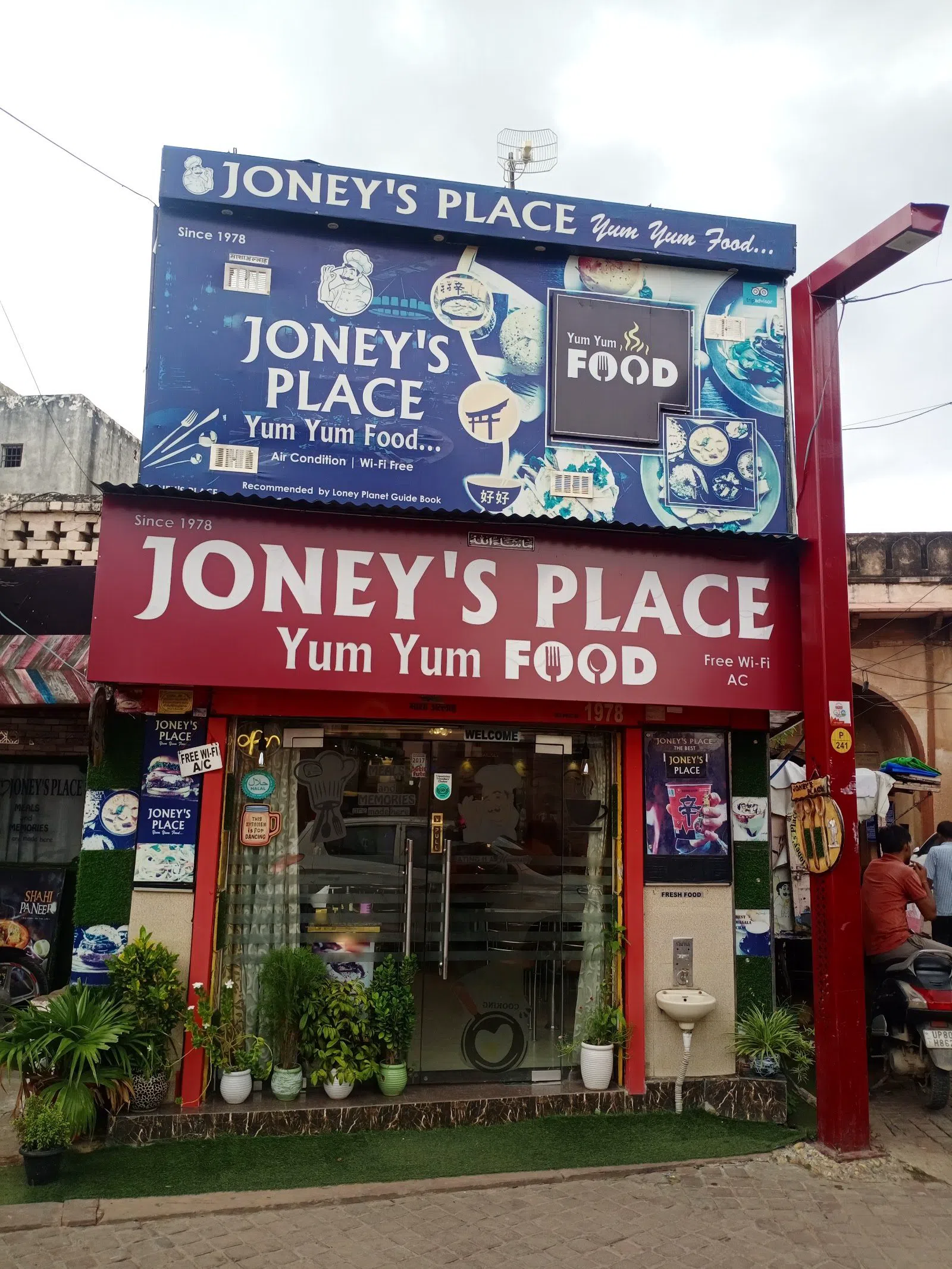
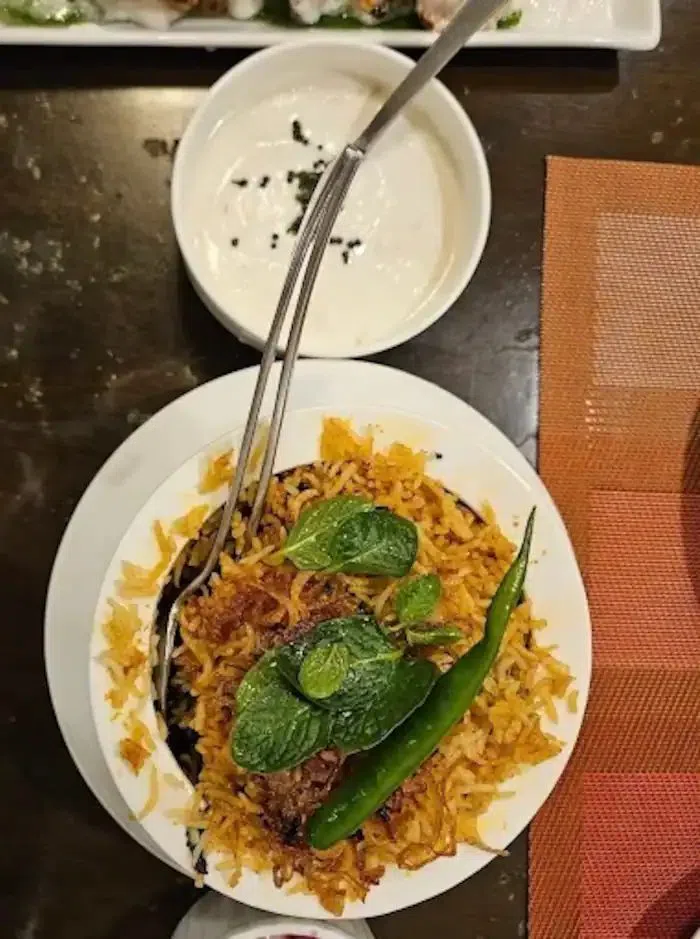
And then there is Joney's Place, the cult backpacker cafe in the lanes near the Taj that has been feeding pre-dawn visitors since 1978. This one comes with a firm expectation-setter: it is genuinely tiny, a handful of tables, and larger groups will simply not fit — it is a place for couples and pairs, or for a small group willing to split across turns. Go before the Taj opens, order the malai kofta and, above all, the legendary banana lassi that has kept the place famous for nearly fifty years. It is charmingly cramped, a little rough around the edges, and utterly itself. Roughly £2–5 a head.
Sit down, cool down
Even the most committed street-eater needs an air-conditioned hour in an Agra afternoon. Pinch of Spice, with branches in Civil Lines, Tajganj and Sanjay Place, is the reliable Mughlai sit-down for exactly that — rich, well-balanced curries in generous portions, consistently top-ranked (4.3 stars on TripAdvisor), and happy to take a group booking. Around £15–28 for two buys you the flavours of the street with tablecloths, a working loo and a bill you can put on a card. It is the place I send readers who want the cuisine but have had their fill of plastic stools.
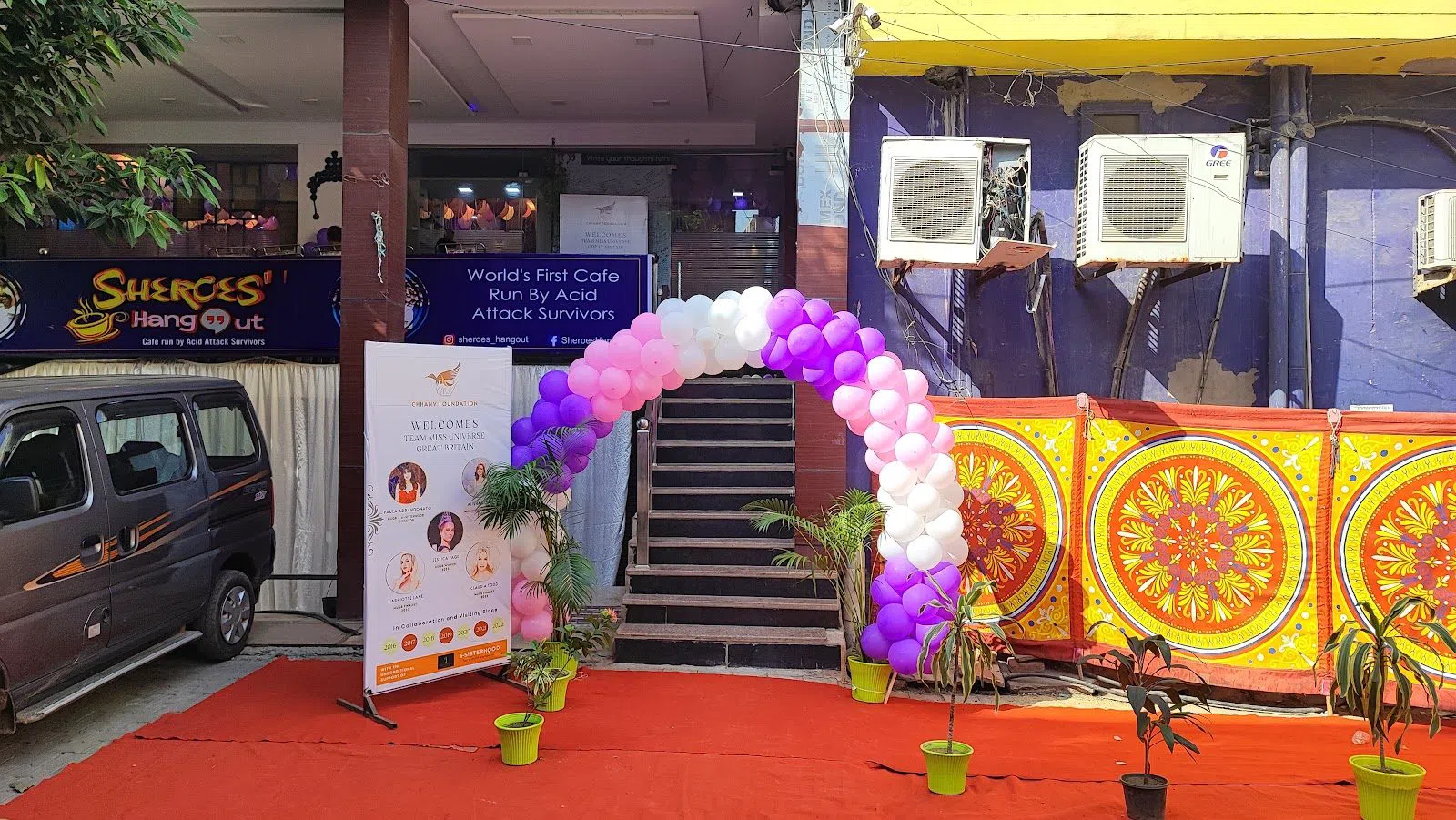
For something with a conscience as well as a kitchen, make time for Sheroes Hangout Cafe, run by the Chhanv Foundation and staffed by survivors of acid attacks, whose rehabilitation the profits fund. It welcomes tour groups and walk-ins, the atmosphere is warm and communal, and there is no fixed price — you pay what you feel. Let me be honest in the way this place deserves: the food is simple, home-style, unshowy. The story and the ethics are the draw, and for UK readers especially this stop lands hard and stays with you. Come for what it stands for, order generously, and leave more than you think you should.
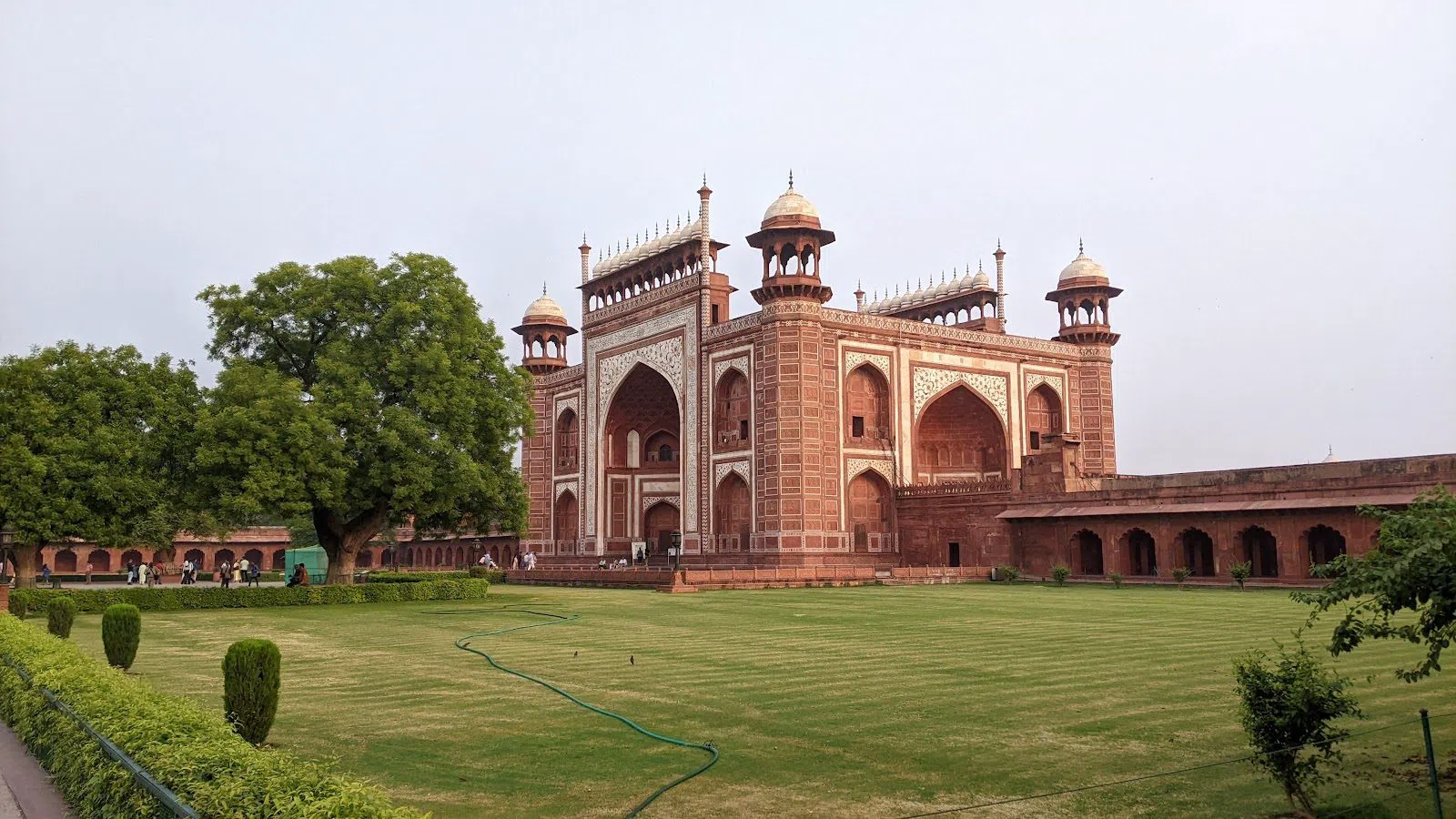
To close a day on a high note rather than a full stomach, climb up to the Saniya Palace Inn Rooftop Restaurant near the Taj's south gate. I include it for the view rather than culinary fireworks — a small, plant-filled rooftop with one of the best free panoramas of the Taj Mahal you will find anywhere, over an easygoing Indian and continental menu at roughly £4–9 per person. It seats a group and is at its best at dawn or dusk; time it for sunset, order a chai and a simple thali, and let the marble turn gold. It is a photograph you will keep.
The splurge finale
If you want to bookend a street-food trip with its opposite, there is only one address: Esphahan at The Oberoi Amarvilas. This is Mughal-court cooking done at the highest level — refined recipes, live classical music, and only two seatings a night at 7pm and 9:30pm. Reservations are essential, the dress code is smart-casual, children must be eight or older, and any group needs to book well ahead. At £60-plus per person it is a genuine luxury, not a casual dinner, but as the aspirational full stop to a week of chaat and clay-pot chai it is worth every rupee. Book it the day you book your flights, not the day you arrive.
Practical notes
Getting around. Agra's food is scattered across Sadar Bazaar, the old-city lanes and Tajganj near the south gate, and a tuk-tuk is your workhorse — agree the fare before you climb in, or use a metered app where you can. If you have booked either walking tour, pickup and drop-off is handled, which takes the haggling off your plate. Distances are short but traffic is not, so budget more time than the map suggests.
Cash. Carry small notes. Street stalls, Chaat Gali corners and the petha counters are cash-first, and change for a large note is a genuine hassle. Only the sit-down restaurants — Pinch of Spice, Esphahan — reliably take cards.
Timing. Chaat Gali and Sadar Bazaar are evening affairs; do not turn up at 3pm expecting atmosphere. Breakfast joints open early and are busiest from about 8 to 10am. If you are eating before a sunrise Taj visit, Joney's Place is built for exactly that pre-dawn window. Esphahan's two fixed seatings mean dinner is a decision, not a stroll-in.
Budget. You can eat superbly in Agra for very little — a full day of guided street food, chaat, sweets and a rooftop chai runs well under £30 a head if you skip the fine-dining finale. Add Esphahan and you have doubled the week's food budget in one night, which is rather the point of a splurge.
One rule to leave you with. Eat what is cooked hot in front of you, buy petha only from the named original, and when a local guide steers you away from a stall, trust them. For where to base yourself between meals, start with the Agra hotel search, and for everything beyond the food — the Taj, the fort, the timings — see the wider Agra guide.
Before you go
Is street food in Agra safe for UK visitors?
Yes, if you are sensible. Eat what is cooked hot in front of you, stick to busy stalls with high turnover, and for a first outing book a guided walk like the Agra Street Food Walking Tour, where a local vets each stall for hygiene. Sit-down spots such as Deviram and Pinch of Spice are the safest bets for delicate stomachs.
What is the best time of day for an Agra food tour?
Dusk. Sadar Bazaar and Chaat Gali only come alive in the evening, which is when to go for bhalla chaat and gol gappa. Reserve mornings for the classic bedai-puri breakfast at Deviram, GMB or Joney's, and save Esphahan's 7pm or 9:30pm seating for a special dinner.
Where should I buy authentic Agra petha?
Only from the original Panchhi Petha store in Sadar Bazaar. Dozens of near-identical copycat shops trade on the 'Panchhi' name across the city with noticeably lower quality, so buy from the authorised original, keep the box, and ignore any tuk-tuk driver steering you to a 'branch'.
Are Agra food tours suitable for groups or better for couples?
It depends on the venue. Guided walks, Sadar Bazaar, Deviram, Pinch of Spice and the Saniya Palace rooftop all handle groups well. Joney's Place is tiny and best for couples or pairs, and Agra Chaat House is a standing-room corner where a group is better sent in relays.
How much does a food tour in Agra cost?
The budget walking tour runs about £7–13 per person and the longer Flavours of Agra walk around £38. Grazing the markets yourself costs only a few pounds per stall. A full street-food day stays under £30 a head — unless you add the Esphahan fine-dining finale at £60-plus per person.