The Agra issue
Give Fatehpur Sikri Its Own Day and Agra Works
Two UNESCO sites forty kilometres apart, a three-hour ticket and a Friday closure: this is how an unhurried Agra divides up.

By Matteo FerraroAgra is a Mughal city, not a single monument
The Taj Mahal shuts to visitors every Friday, and Fatehpur Sikri sits 40 km west of the city, an hour out and an hour back on a road shared with freight. Those two facts shape an Agra trip more firmly than anything you arrive intending to do. Fold both into one day and most of that day goes on a car seat, reaching each gate at the same hour the coaches reach it.
The two facts that set the shape
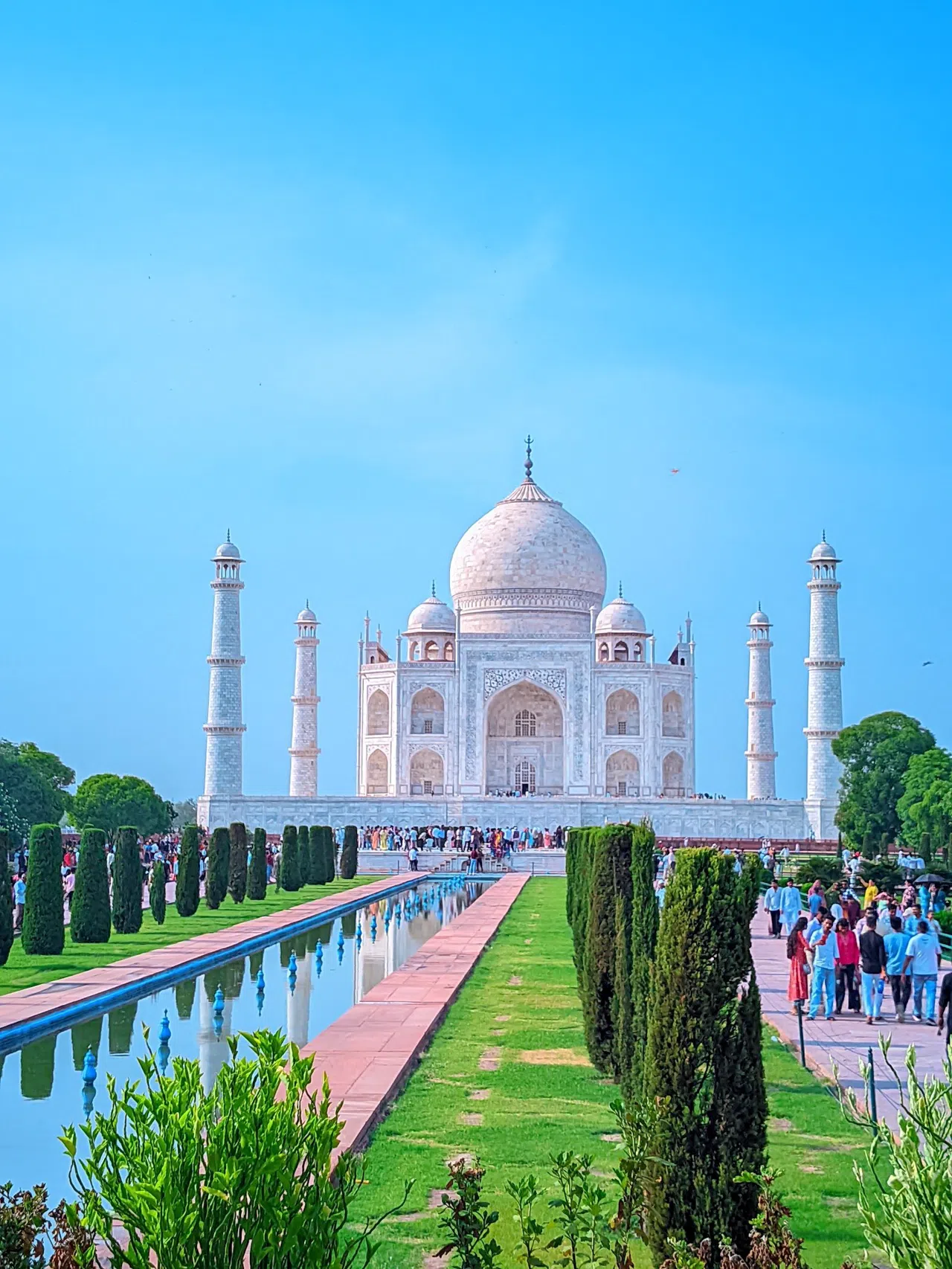
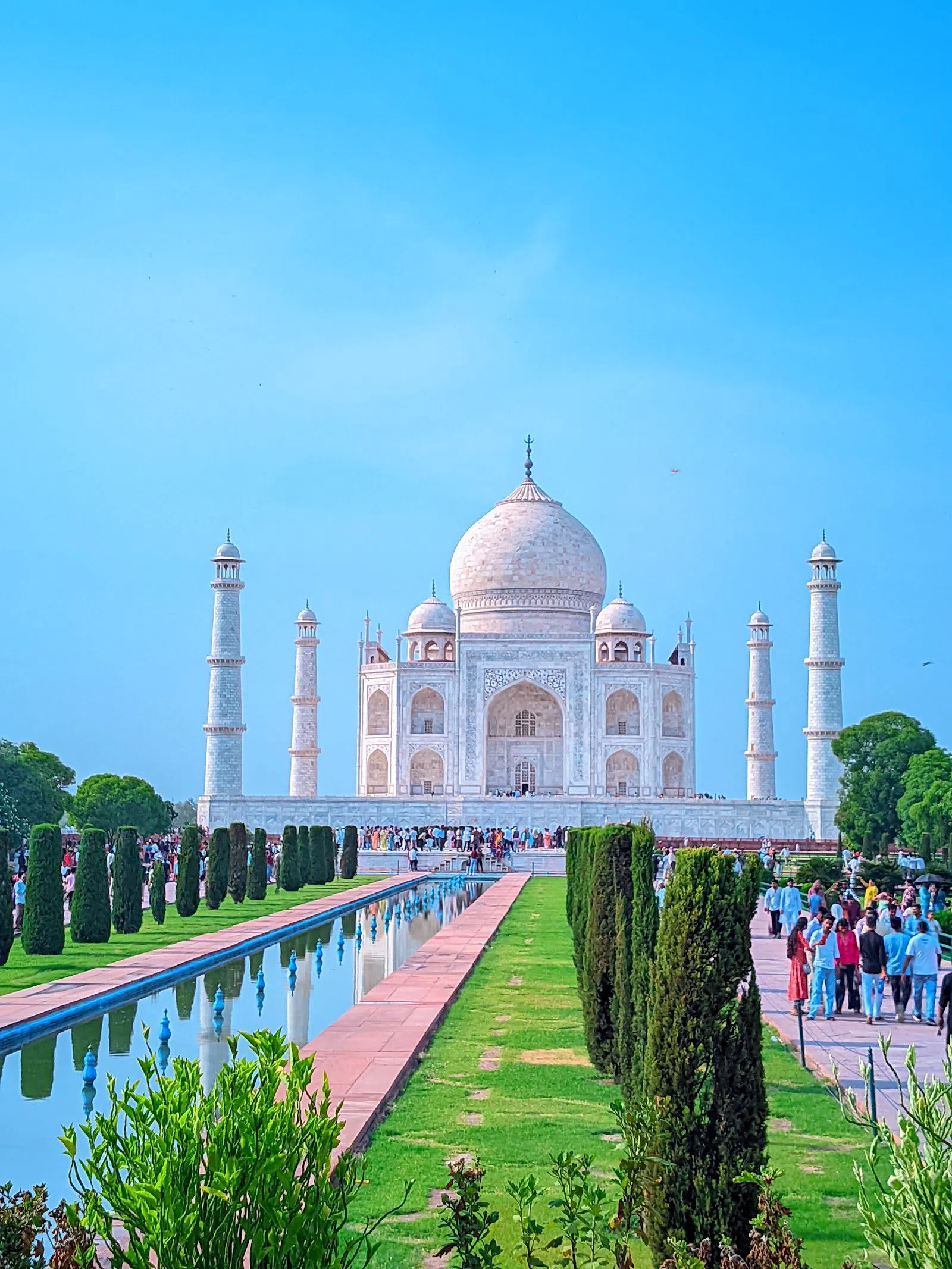
The Taj Mahal (Tajganj, on the right bank of the Yamuna) opens 30 minutes before sunrise and closes 30 minutes before sunset, and it closes to tourists all day Friday for congregational prayer. That wrecks compressed itineraries more often than traffic does: someone arrives late on a Thursday, has exactly one full day, and the one full day is a Friday.
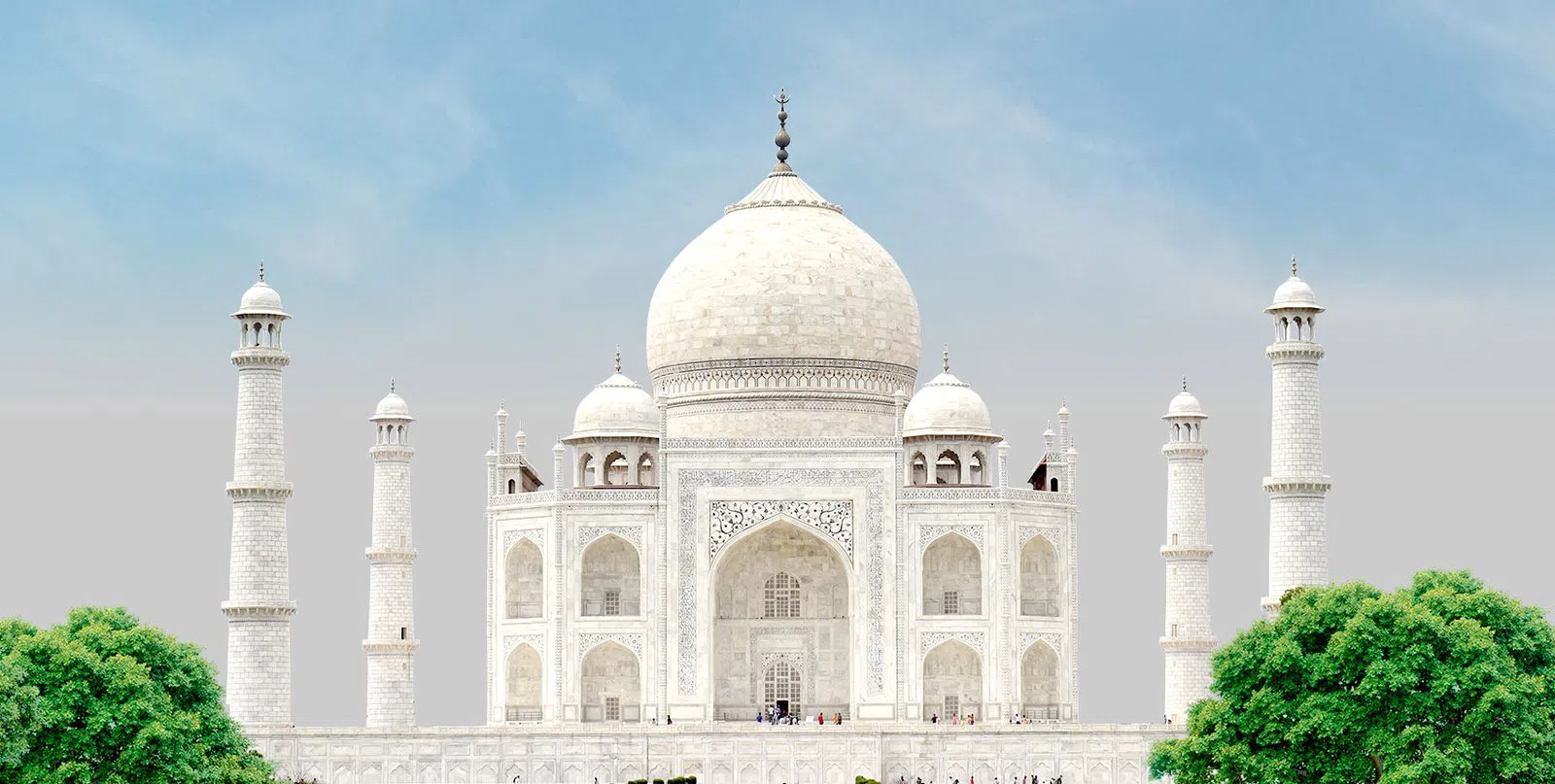
The second constraint is the ticket. A foreign ticket is ₹1,100, plus ₹200 to enter the mausoleum chamber itself; ₹540 for SAARC and BIMSTEC nationals, ₹50 for Indian and OCI holders, free for under-15s, and ₹50 off every foreign ticket bought online. It is valid for three hours from entry, and overstays are charged at the exit, so the visit carries a clock whether you wanted one or not. Three hours is generous if you walk in at opening and leave by mid-morning. It is tight if you arrive at 11:00, queue, and then decide you want to sit on the garden benches for a while.
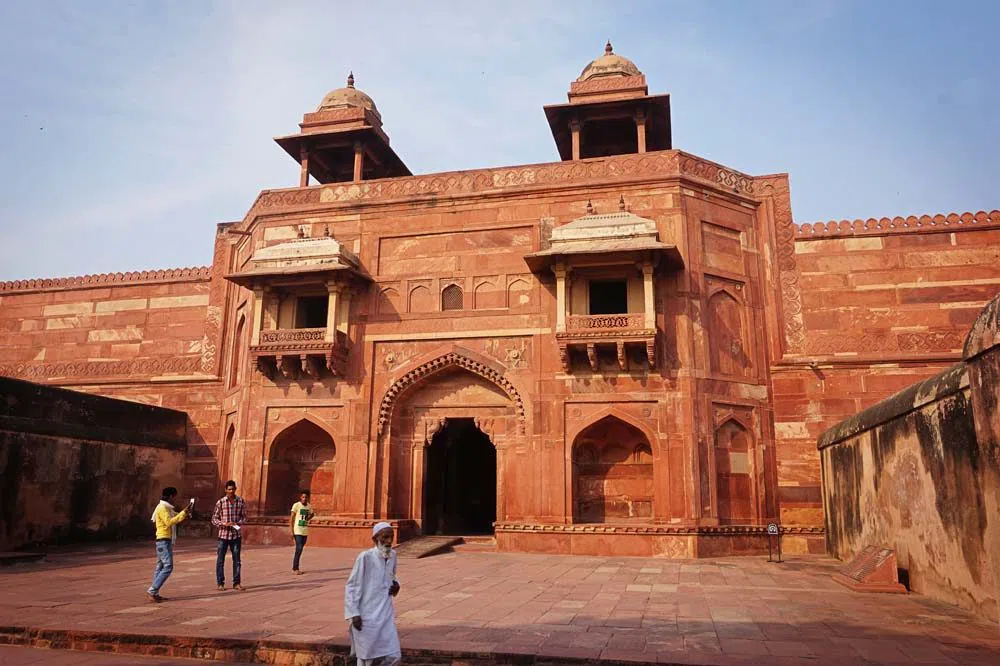
Now lay the second UNESCO site against that. Fatehpur Sikri Royal Palace Complex (40 km west, reached from Agra Gate car park) is ₹610 for foreigners, ₹40 to ₹50 for Indian visitors, free for under-15s, and the site alone wants two to three unhurried hours. Add two hours of driving. A sunrise Taj that ends at 09:30 puts you at the Fatehpur Sikri ticket counter around 10:45, in full sun, with a coach-park shuttle queue and a persistent unofficial-guide gauntlet on the approach. Leave at 13:00 and you are back in Agra at 14:15 for an afternoon at the fort, overheated and out of attention. It is physically possible, and it is the version of Agra that people describe afterwards as exhausting and somehow thin.
Plan your Agra trip
Live prices from our booking partners.
Free cancellation on many rooms. We may earn a commission when you book.
A sunrise Taj and a fort afternoon
Give the first day to the right bank and it relaxes immediately. Be at the West or East gate before opening (queues are separated by ticket type, and online tickets move faster) and use the first hour, when the marble goes from grey to cream and the crowd is still thin along the central water channel. Groups are entirely routine here; guides and coach parties are absorbed without much friction. Come out by 09:30 and you have used your three hours honestly.
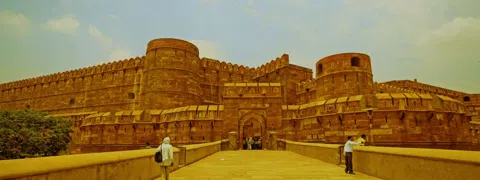
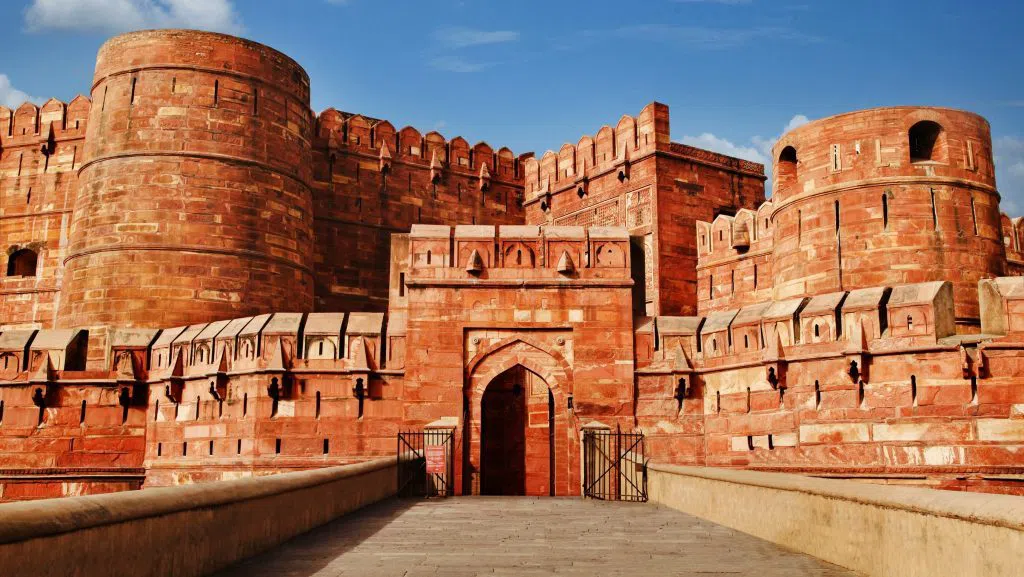
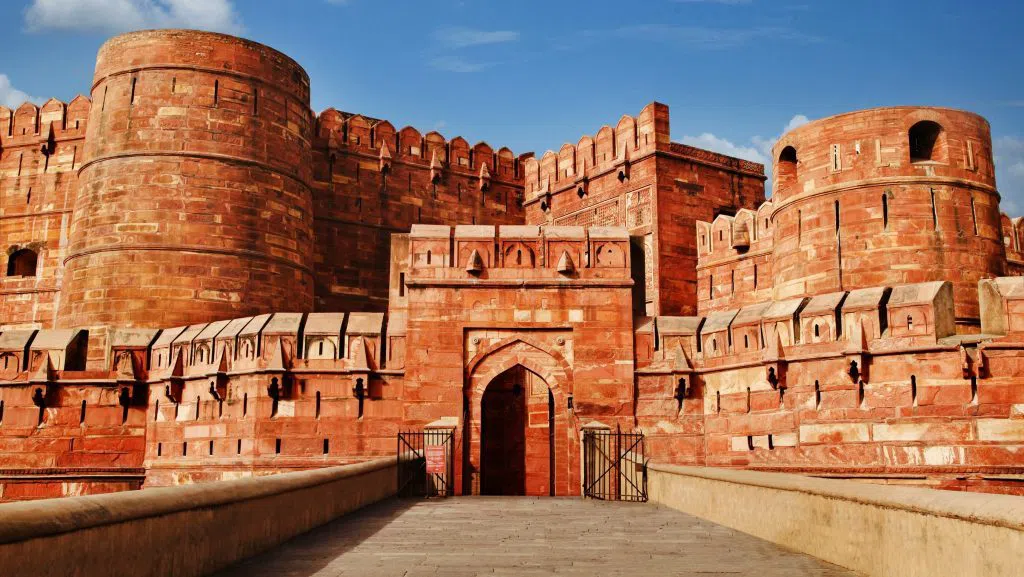
Afternoon belongs to Agra Fort (Rakabganj, a ten-minute drive upriver), ₹650 for foreigners and ₹600 on Fridays, ₹90 SAARC and BIMSTEC, ₹50 Indian, under-15s free. Only about a quarter of it is open, since the army still holds the rest, which surprises people who expect a full day's fort. What is open is enough. The wide courtyards at Diwan-i-Aam swallow coach parties without feeling crowded, licensed guides wait at Amar Singh Gate, and Musamman Burj, the octagonal tower where Shah Jahan spent his confinement, gives the view downriver that makes the whole city legible: the Taj at a distance, the river bend, the bank where the rest of the Mughal city sits. Two hours is right, three if you take a guide.
Between the two, eat at Sheroes Hangout (Taj Nagari Phase 1, Tajganj, about ten minutes from the Taj). It moved from the old Fatehabad Road address that many sites still list, so check where your driver is going. It is a café run by survivors of acid attacks; there are no fixed prices, and you pay what you think the meal was worth, plus a donation. The room is modest, so call ahead for more than eight people. It is a genuine lunch stop rather than the shopping-emporium detour a driver may propose instead.

Friday changes the order
If your Friday is fixed, invert the plan rather than mourning it. Agra Fort is open daily including Friday, and at ₹600 that day, so Friday is the natural fort day. Fatehpur Sikri also runs on Friday, and the shrine beside it is at its most alive on the congregational day: busier, but the point of that precinct is that it is used rather than preserved.
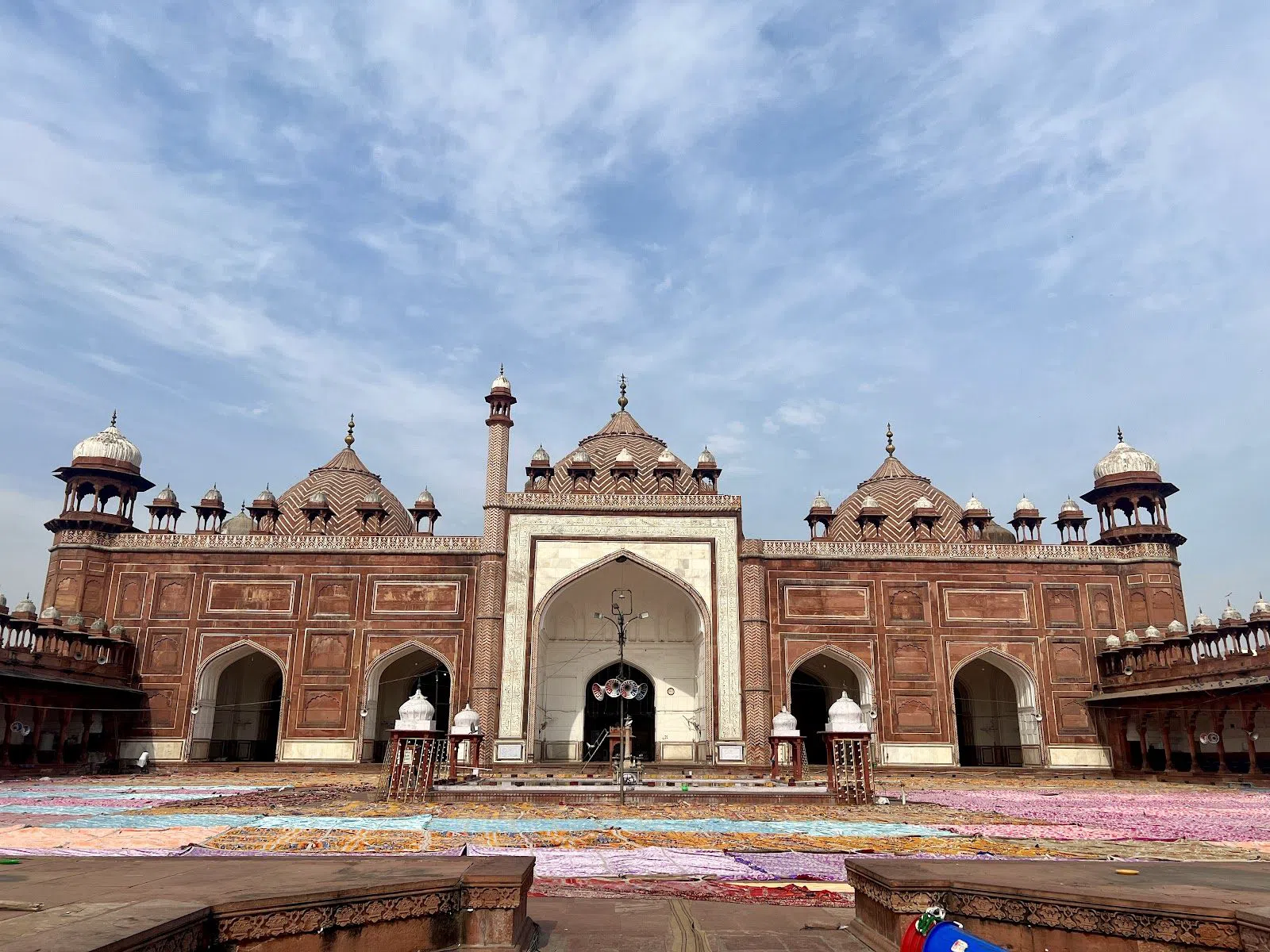
One caution for Friday in the old city: Jama Masjid, Agra (opposite Agra Fort station, at the mouth of the Kinari Bazaar lanes) is closed to non-worshippers on Fridays and over the midday prayer. On any other day it is free to enter with a photography charge, and it takes small groups only. Jahanara Begum built it in 1643, and it is the one stop that puts a working city around the monuments: the bazaar lanes behind it sell wedding trim, brass and sweets to people who live here, not to visitors.
Giving the western road its own day
The second day goes west, and it earns the drive because there are three things on that road, not one.
Fatehpur Sikri itself is Akbar's imperial city, built and largely abandoned within about fifteen years. The ASI ticket covers the palace complex (the Diwan-i-Khas with its extraordinary central pillar, Panch Mahal, the Turkish Sultana's house), and a shuttle runs from the car park. Take two to three hours and walk it slowly; the layout only starts making sense once you have crossed the courtyards a couple of times.
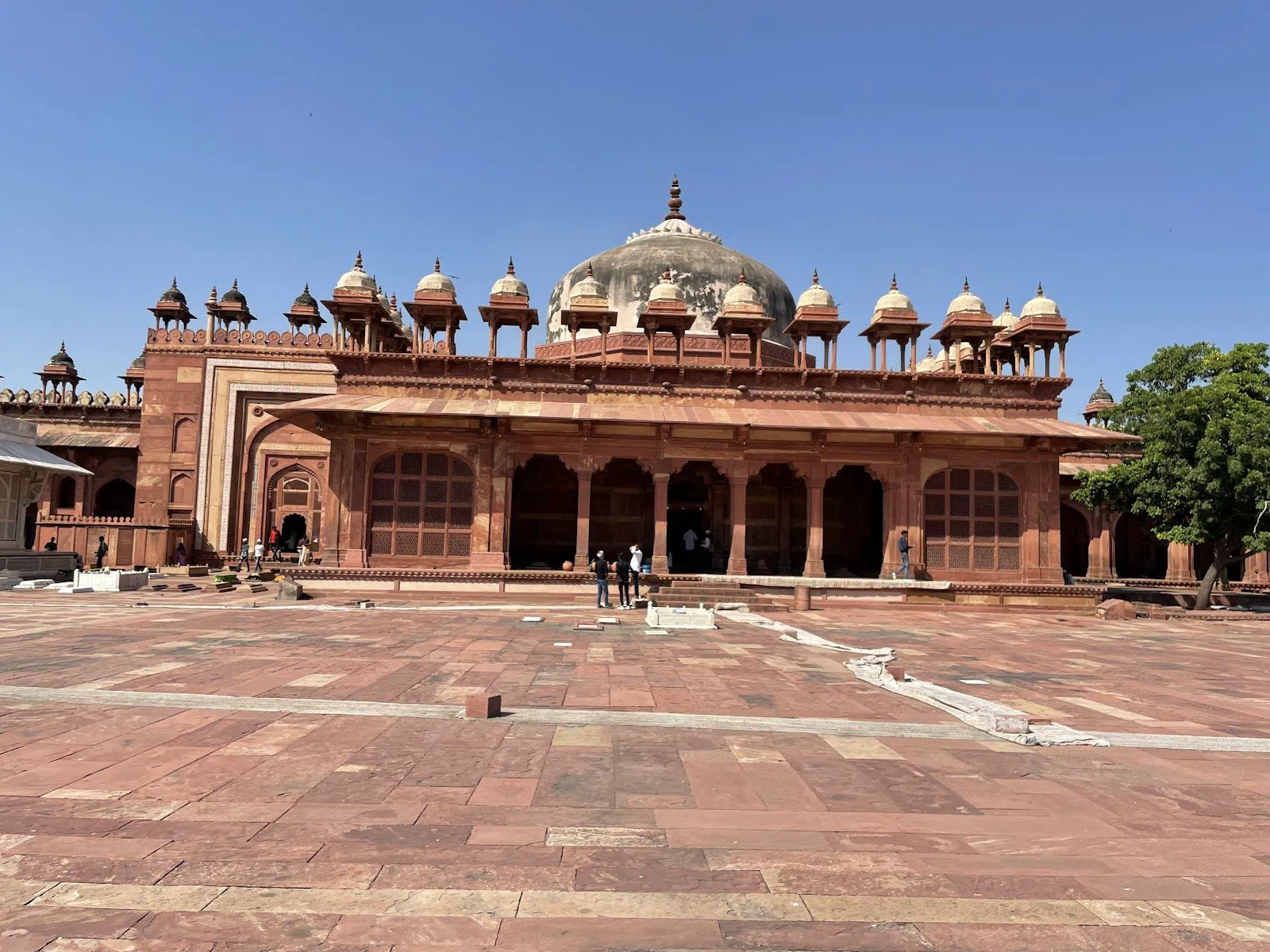
Next door, and separate, is Jama Masjid and Tomb of Sheikh Salim Chishti, Fatehpur Sikri (immediately north of the palace complex, through the Buland Darwaza). It is free, it is not ASI-run, and there is no closing bell. It is also a working Sufi shrine: heads covered, shoes off, and expect firm approaches from shoe-minders and sellers of offerings. A small charge to leave your shoes is normal; larger demands are not. Time it for late afternoon, when the coaches have gone and the qawwali singers settle in against the marble screens. That hour is the reason to be out here without a return deadline.
On the same road, 17 km west of Agra inside Sur Sarovar at Keetham Lake, the Wildlife SOS Agra Bear Rescue Facility takes visits by prior appointment only: small, keeper-led groups, roughly two to three hours on site. Admission is ₹500 for foreigners and ₹50 for Indian visitors to the Forest Department, plus a requested donation to the facility. It is the world's largest sloth bear rescue centre, and it is a half-day commitment, which only works if Fatehpur Sikri has stopped competing for the same hours.
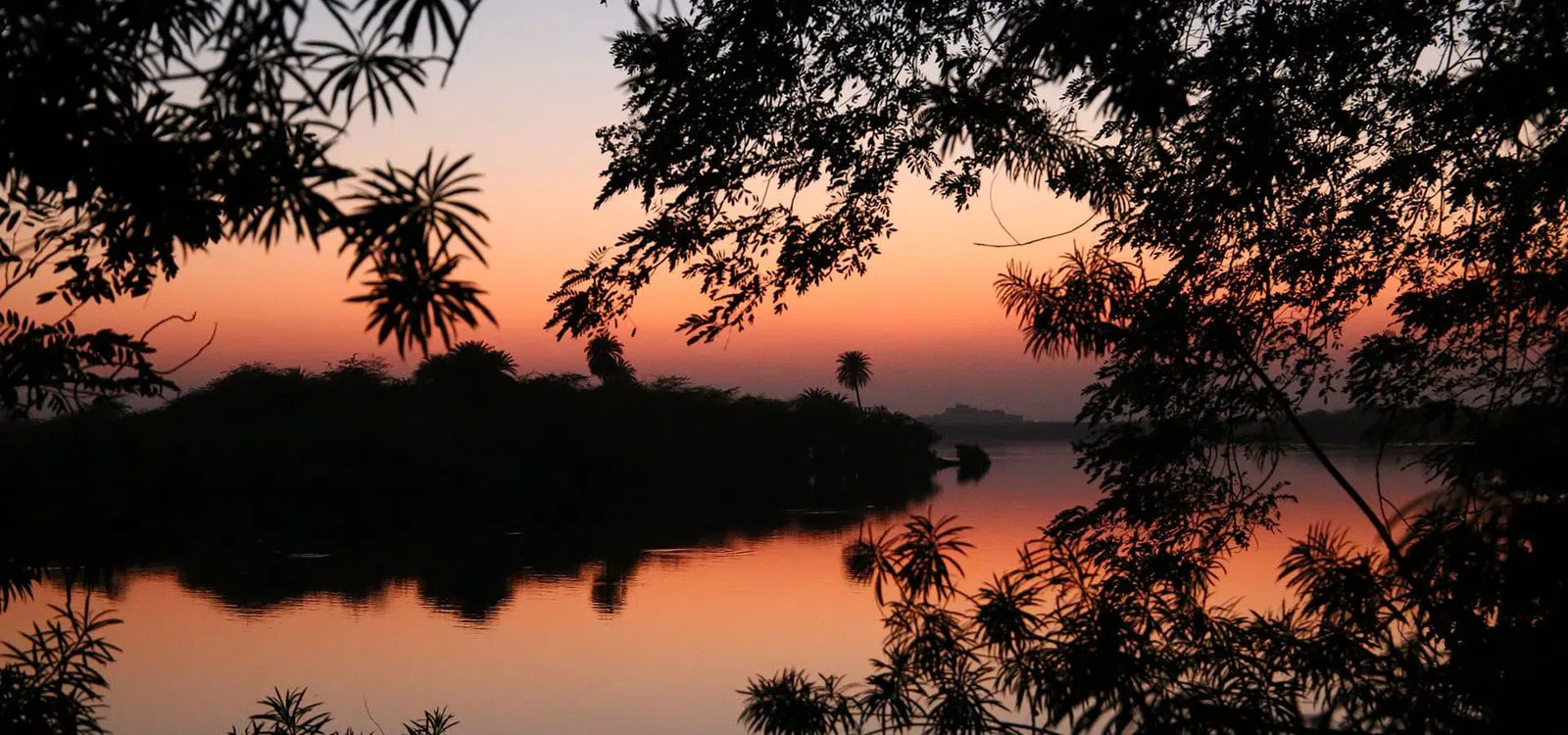
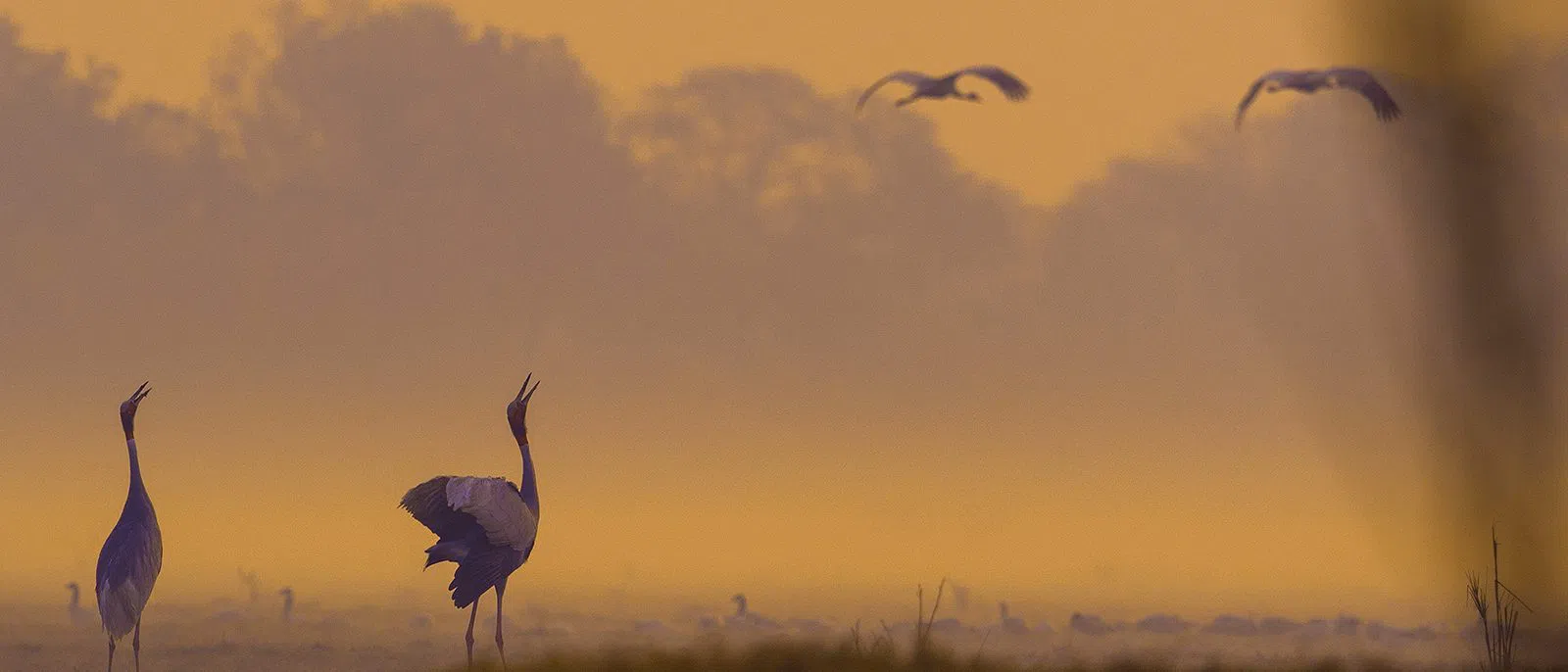
Further out, 25 km beyond Fatehpur Sikri, Keoladeo National Park (reached from the same western highway) is a third UNESCO site and the strongest single argument for the two-day split. Entry is ₹500 for foreigners and ₹75 for Indian visitors, with cycle-rickshaws, cycles or golf carts hired at the gate and guides charged hourly on top. Rickshaws take two passengers each, so a group of twelve travels as six vehicles and should agree a meeting point before setting off. It is best at first light between October and March. Nobody sees it properly at 15:00 after a morning at the Taj.
You will not do all three in a day. Pick two: palace complex plus shrine for the architecture; palace complex plus bear rescue for a family with restless children; Keoladeo at dawn plus Fatehpur Sikri afterwards for anyone who came for birds.
The left bank, which most people skip
The far side of the river is where an unhurried Agra pays out, and it is the half the one-day version deletes entirely.
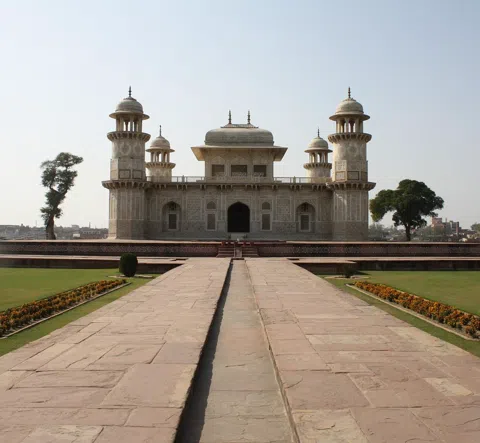
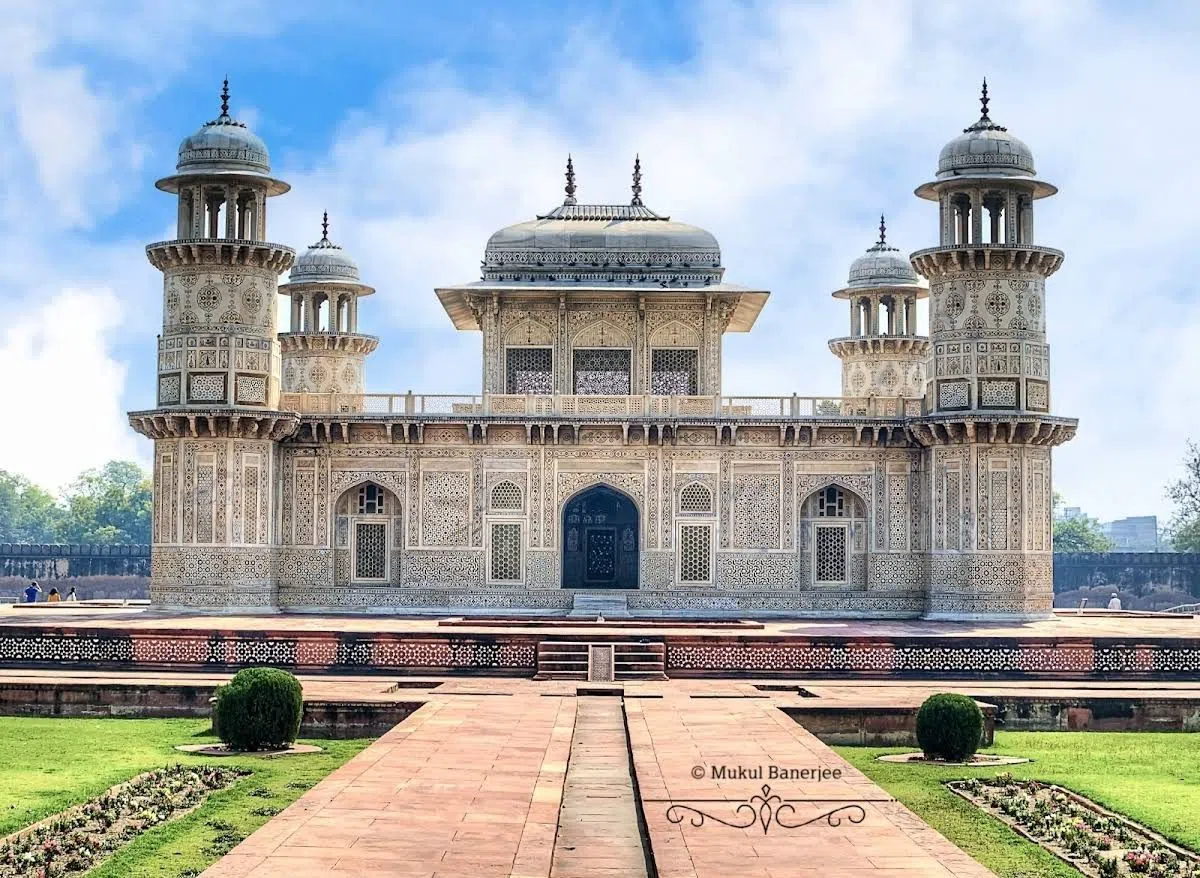
Start at the Tomb of I'timad-ud-Daulah (Moti Bagh, left bank), ₹310 foreigners, ₹30 Indian, under-15s free. It is the first Mughal building faced entirely in marble and the rehearsal for the inlay work that made the Taj possible. Allow 30 to 45 minutes; there is no queue system, so a group of twenty should stagger its arrival rather than walk in as one body.
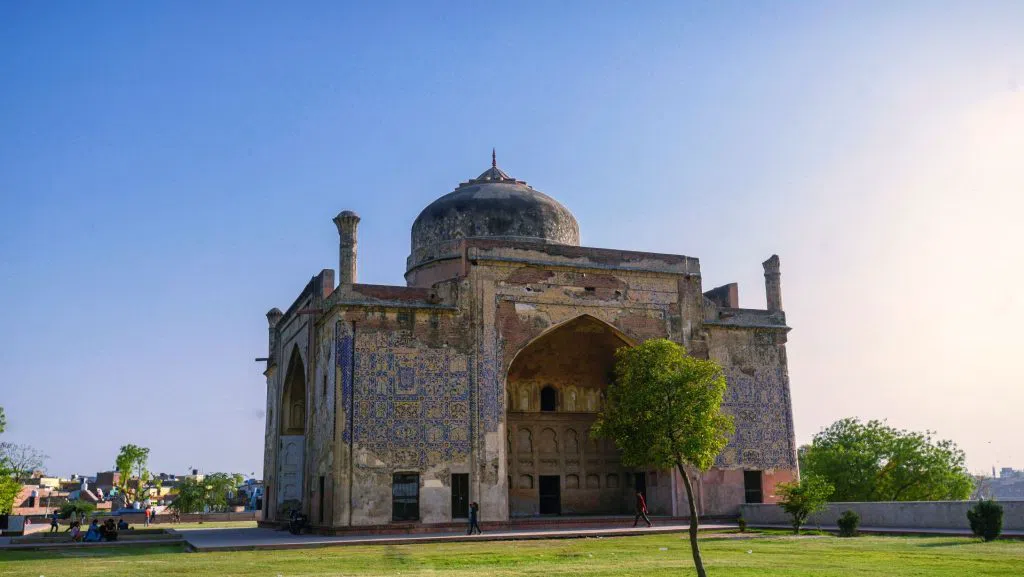
A kilometre north is Chini ka Rauza (Katra Wazir Khan, left bank), free and unstaffed. It is India's only building faced entirely in Persian kashi tilework, and it is a ruin, honest about it, patches of glaze against bare brick, usually empty. Send couples and small parties; a full coach would swamp the plot and be disappointed on arrival. Set expectations first.
Further upriver, Ram Bagh (Rambagh, left bank) is Babur's garden of 1526, the oldest surviving Mughal garden in India and the template every later charbagh copies. ₹250 foreigners, ₹20 Indian. There is ample space and almost nobody in it. It is architecturally important and visually austere, terraces and water channels and geometry rather than a flowering display, so pair it with the Baby Taj on the same morning rather than sending anyone out for it alone.
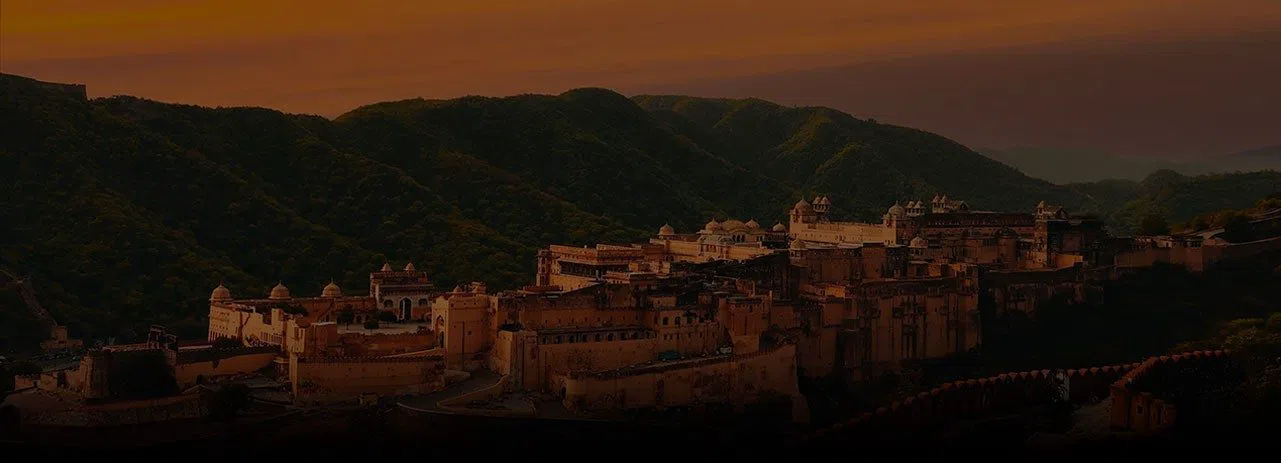
For the afternoon, the Mughal Heritage Walk (Kachhpura village, left bank) runs two hours with trained village guides who earn from it directly, at around ₹1,250 for adults and ₹750 for under-13s. Book ahead; six to twelve people is the comfortable size. It ends where you want to be anyway.
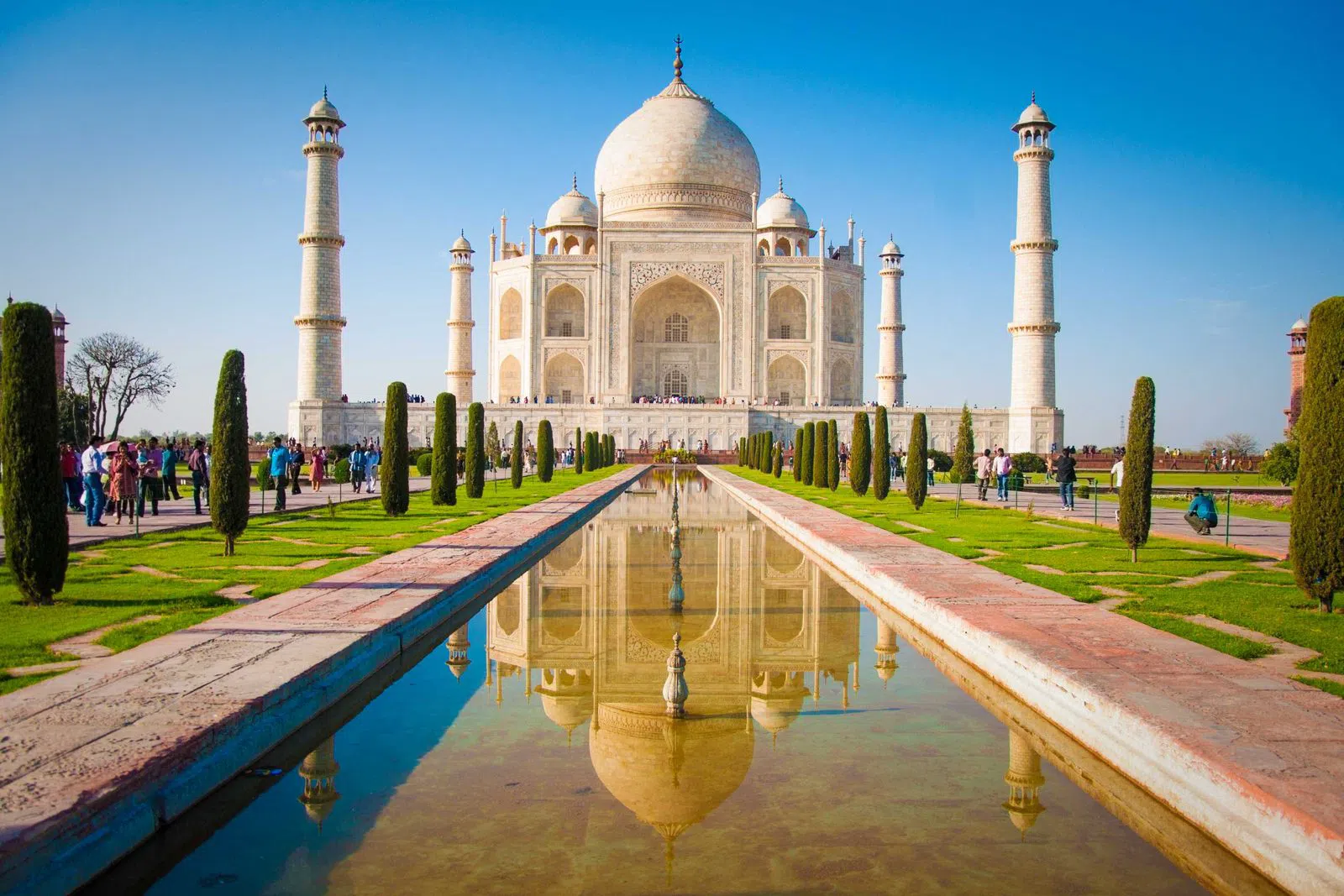
Mehtab Bagh (Nagla Devjit, directly across the river from the Taj) costs ₹300 for foreigners, ₹25 Indian, under-15s free. It is the only place you see the Taj from behind, across the water, at the hour it is closed to visitors. The river terrace is narrow and jams at golden hour, so arrive 45 minutes before sunset and take a position. This is the reason to keep an Agra evening free rather than starting a long drive at four in the afternoon.
An evening with a shape
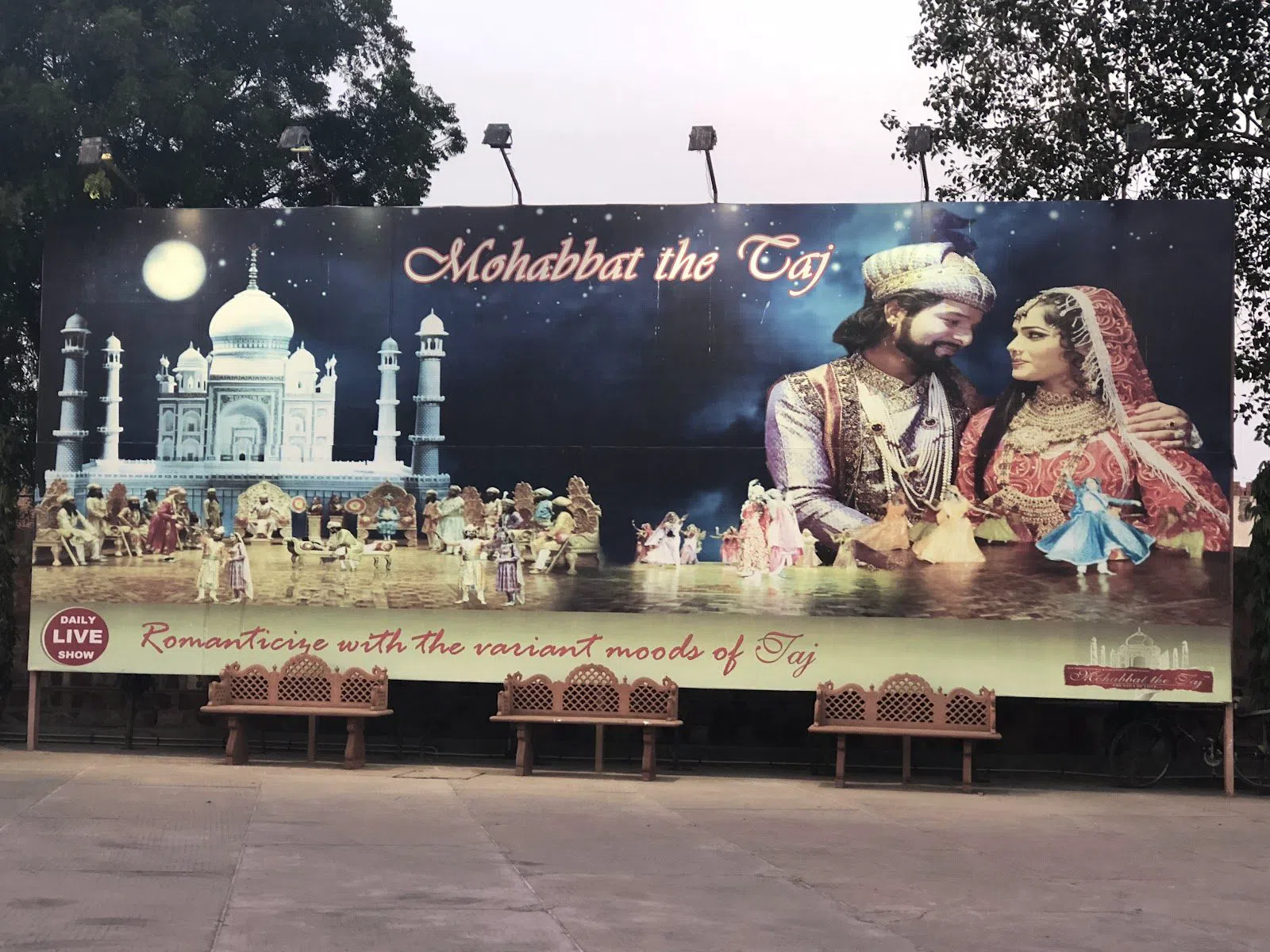
If the group wants something after dark, Kalakriti Cultural & Convention Centre (Fatehabad Road) runs the 'Mohabbat the Taj' show at around 19:00, with a second sitting in peak winter season. Seats run roughly ₹600 to ₹1,500, and multilingual headsets are available in English, French and German. It is frankly touristic and purpose-built for coach parties. It also gives the evening a shape and a fixed end time, which suits families and mixed-age groups; couples who want a quiet dinner should skip it without guilt.
Arrival and departure days
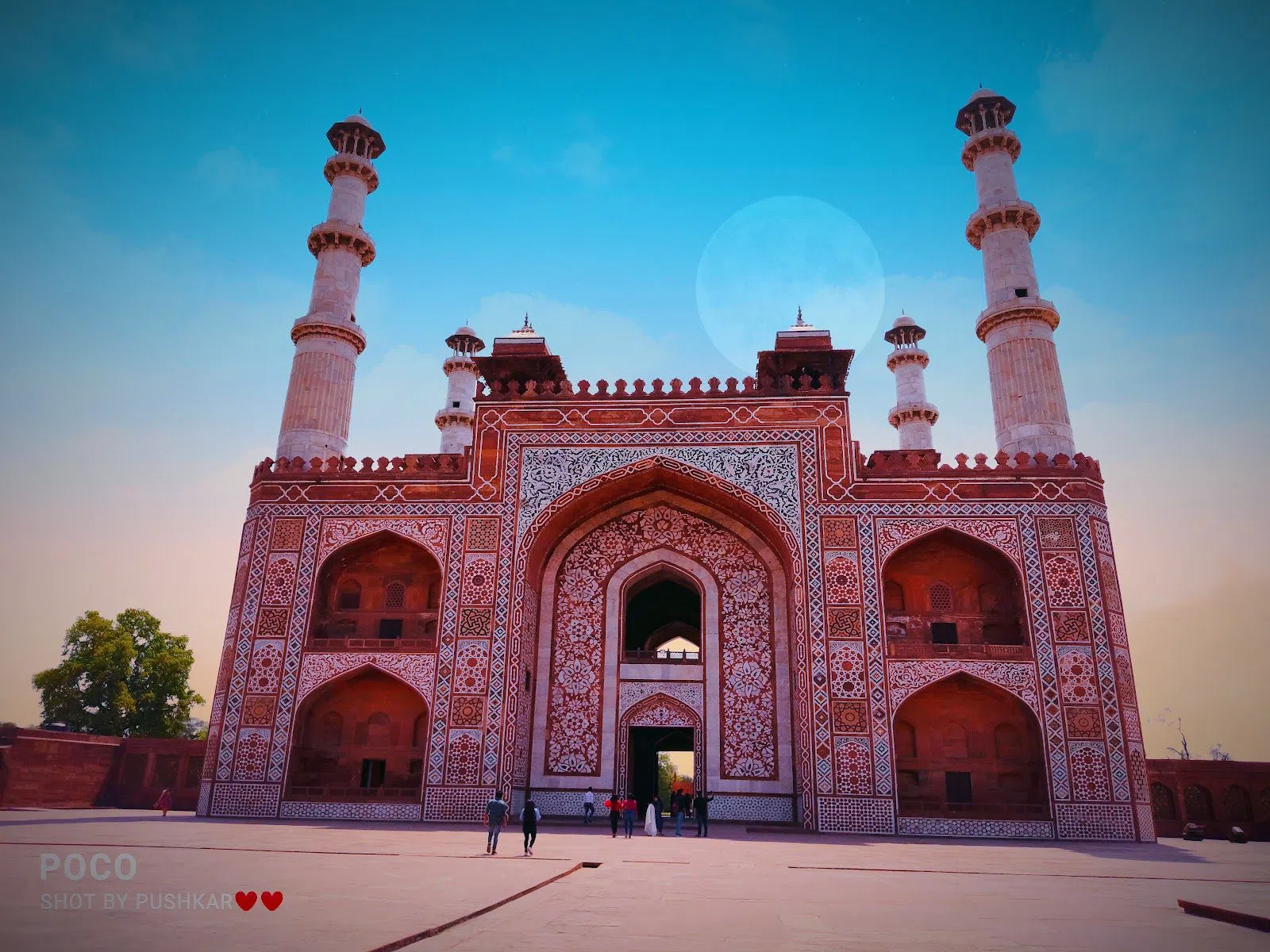
Akbar's Tomb, Sikandra (Sikandra, 10 km out on the northern highway) is ₹310 foreigners, ₹30 Indian, under-15s free, with a large car park and rarely a crowd. Because it sits on the way in and out of the city, it belongs to an arrival or departure morning rather than competing with the centre. Resident deer and langurs move around the lawns. It is the most relaxed monument in Agra, and 45 minutes there is a better use of a departure day than another hurried hour in traffic.
Who each of these places actually suits
Groups of twenty and up: the Taj, Agra Fort, Fatehpur Sikri, Akbar's Tomb and Kalakriti absorb you without strain. Ten to twelve: the Mughal Heritage Walk and the bear rescue facility, both booked ahead. Under eight: Sheroes Hangout and Jama Masjid in the old city. Twos and threes: Chini ka Rauza, and the Baby Taj if you want it quiet. At the Fatehpur Sikri shrine every size works, but it is a place of worship before it is a sight, so dress and behave accordingly, and decline the guides who attach themselves at the gate if you did not hire them.
Practical notes
Transport. A car with driver for a full day, including the Fatehpur Sikri round trip, is the standard arrangement and typically runs ₹2,500 to ₹4,000 depending on vehicle and season; agree the itinerary in writing and state plainly that you are not stopping at marble workshops or emporiums. Autos and e-rickshaws handle short hops within the city; petrol and diesel vehicles are barred from the immediate Taj zone, so the last stretch to the gates is electric shuttle or on foot either way. The left-bank cluster (Baby Taj, Chini ka Rauza, Ram Bagh, Mehtab Bagh) is one loop; do not cross the bridge twice in a morning.
Cash. Monument tickets are card- and UPI-friendly online, and buying the Taj ticket online saves ₹50 per foreign ticket. Carry small notes anyway: shoe-minders, rickshaw hire at Keoladeo, the donation box at the bear facility and the pay-what-you-think model at Sheroes all work better in cash.
Timing. October to March is the comfortable window and the only sensible one for Keoladeo. Sunrise entry is worth the alarm in any month. Fridays remove the Taj, so plan the fort, the left bank or the western road instead. Avoid stacking two ticketed sites either side of midday between April and June.
Budget. Two unhurried days of monuments for one foreign visitor comes to roughly ₹3,300 to ₹4,000 in entry fees including the mausoleum chamber, plus car hire, plus optional extras: the heritage walk at ₹1,250, the show from ₹600, the bear facility at ₹500. Indian and SAARC visitors will pay a small fraction of that. For where to sleep, Tajganj puts you inside walking reach of the East gate for a sunrise start, while Fatehabad Road trades that for more restaurant choice. Compare rates and locations on Agra hotel search, and the rest of the city's practicalities sit in the Agra guide.
The summary is short. Two nights is the minimum that works; three lets the left bank and the western road each have their own morning. One day gets you the Taj and the fort, properly, and nothing else, which is a fair trip as long as you choose it rather than discover it at 14:00 on a highway.
Before you go
Can you see the Taj Mahal, Agra Fort and Fatehpur Sikri in one day?
Physically possible, but not comfortable. A sunrise Taj visit ends around 09:30, Fatehpur Sikri is 40 km west and needs two to three hours plus two hours of driving, and you would reach Agra Fort in the mid-afternoon heat with little attention left. Two days works better: the Taj and the fort on one, the western road on the other.
Is the Taj Mahal really closed on Fridays?
Yes. It shuts to tourists every Friday for congregational prayer. Agra Fort is open daily including Friday, at a slightly lower ₹600 foreigner rate, so it is the obvious Friday substitute, along with Mehtab Bagh, the left-bank tombs or the Fatehpur Sikri day. Jama Masjid in the old city is also closed to non-worshippers on Fridays.
How long is a Taj Mahal ticket valid?
Three hours from the moment you enter, with overstays charged at the exit gate. A foreign ticket is ₹1,100 plus ₹200 to enter the mausoleum chamber, ₹540 for SAARC and BIMSTEC nationals, ₹50 for Indian and OCI holders, and free for under-15s. Booking online takes ₹50 off each foreign ticket and puts you in a faster queue.
How much time does Fatehpur Sikri need?
Two to three unhurried hours for the ticketed palace complex, plus the free Jama Masjid and Sheikh Salim Chishti shrine next door, which has no closing bell and is best in the late afternoon once the coaches have left. With an hour of driving each way, that is a half to three-quarters of a day before you add the bear rescue centre or Keoladeo on the same road.
Is Mehtab Bagh worth the crossing?
Yes, and it works best as the fixed end of a day rather than an add-on. It is the only place you see the Taj from behind, across the river, at the hour the monument itself is closed. Entry is ₹300 for foreigners and ₹25 for Indian visitors; the river terrace is narrow and jams at golden hour, so arrive about 45 minutes before sunset.