The Agra issue
The old city between Agra Fort and Jama Masjid
Dawn at Agra Fort, a working mosque up on its plinth, the trimmings lanes behind it, and breakfast counters that have been frying since the 1840s.

By Matteo FerraroAgra is a Mughal city, not a single monument
Agra Fort stays open on Fridays, the day the Taj Mahal shuts. Four hundred metres from Agra Fort railway station, Hathi Ghat shows the Taj as a pale silhouette far downstream at sunrise. Behind the Jama Masjid, the trimmings lanes of Kinari Bazaar are too narrow for a car.
Agra Fort at 6 a.m.
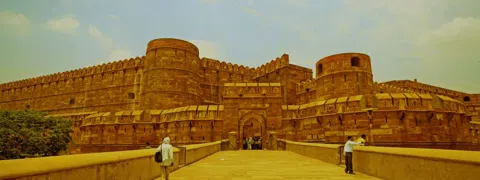
Agra Fort is on a bend of the Yamuna behind double red-sandstone curtain walls, and you go in up the ramped Amar Singh Gate. Arrive at 6 a.m., when the marble is empty. Licensed guides tout at the gate.
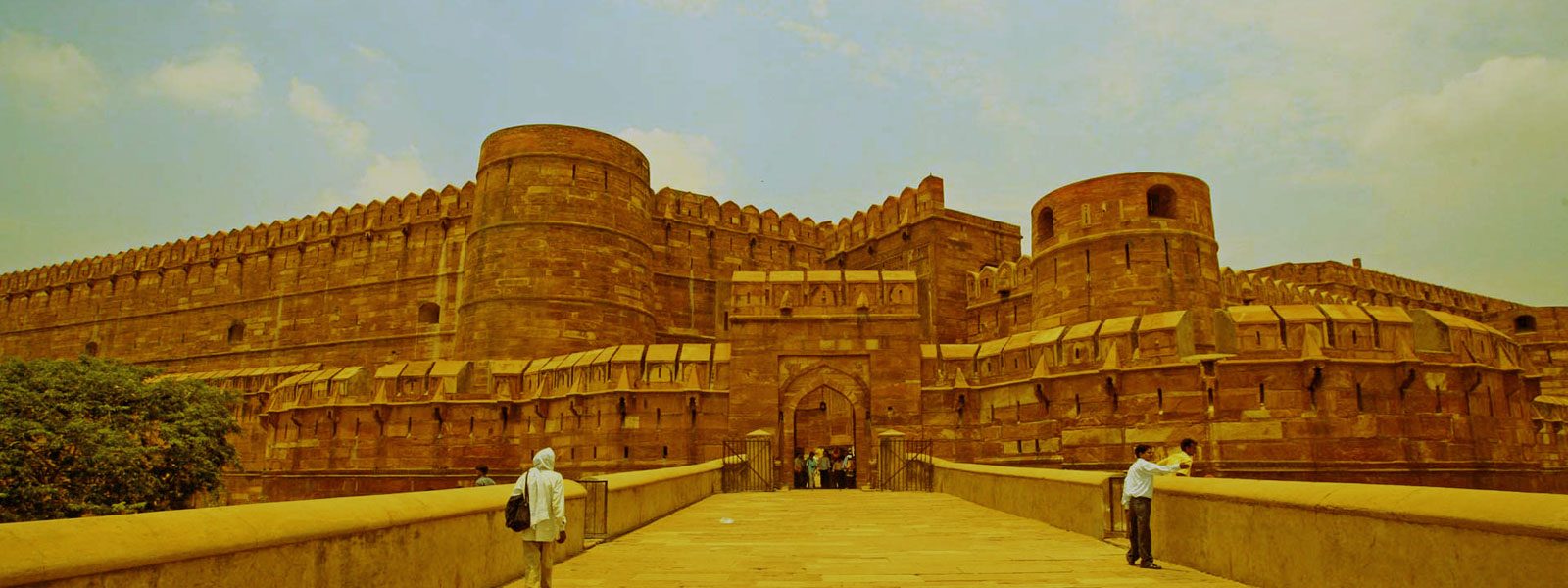
Walk the carved courtyard of Jahangiri Mahal first, then Musamman Burj, the white marble octagonal tower where Aurangzeb imprisoned Shah Jahan. Its pierced lattice screens frame a distant Taj Mahal. Coaches and tour groups arrive all day after that.
Entry is ₹650 for foreign visitors, ₹550 booked online, and ₹50 for Indian visitors. Under-15s go free. Book an ASI or ADA e-ticket ahead and you miss the counter queue.
Plan your Agra trip
Live prices from our booking partners.
Free cancellation on many rooms. We may earn a commission when you book.
Jama Masjid and the Rawatpara temple
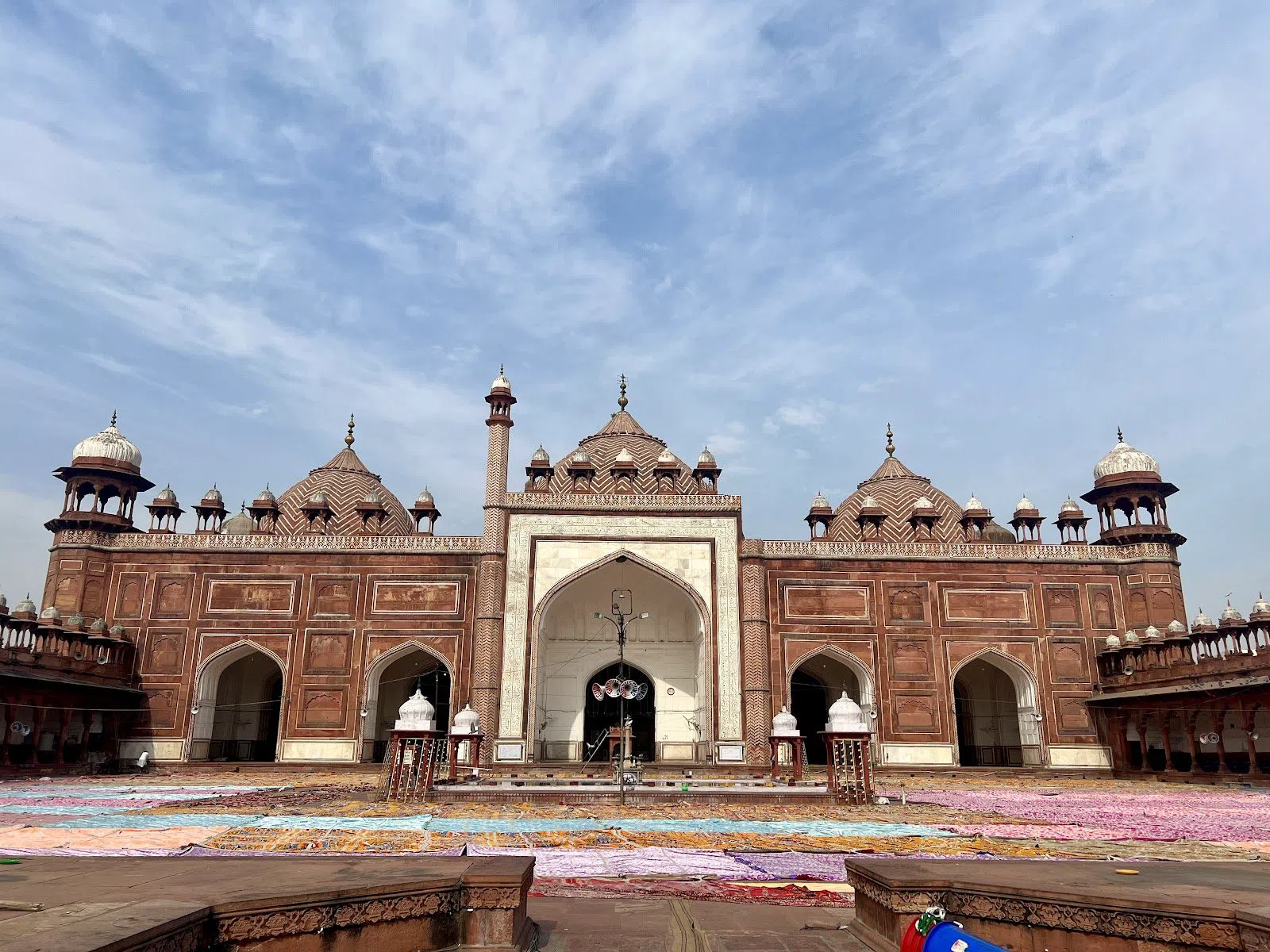
Shahi Jama Masjid is raised on a plinth above the bazaar, three bulbous domes striped with white-marble herringbone zigzags, washing lines of market colour below and a scrum of cycle rickshaws at the foot of its steps. Jahanara Begum, Shah Jahan's eldest daughter, built it between 1643 and 1648. It is a working mosque rather than a ticketed monument.
Entry is free and unticketed; the shoe-minder takes ₹10 to ₹20. Cover knees and shoulders, women cover their heads, and leave your shoes at the edge. Visitors stay out during Friday congregational prayers. The plinth gives a free view over the old city's rooftops.
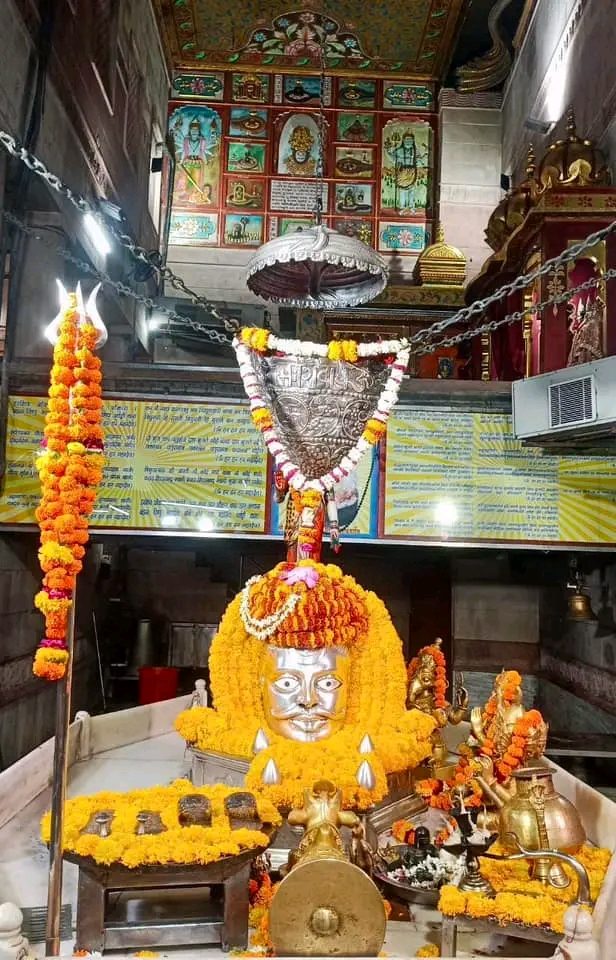
Shri Mankameshwar Mandir is down a tight Rawatpara lane behind the spice shops, a silver-clad Shiva lingam under a silver-sheeted canopy with marigold garlands and bells. It is open to all and takes no ticket; offerings run ₹20 to ₹100. Hours are 5 a.m. to 12 p.m. and 4 p.m. to 10 p.m., with evening aarti at 8:30 p.m.
You leave phones and shoes at the door, and the deposit counter queue is longest on Mondays and during Shivratri. The metro station here opened as Jama Masjid and has since been renamed Mankameshwar Mandir. It is the easiest way into the old city.
Kinari Bazaar and the spice lanes
Kinari Bazaar runs directly behind the mosque, a canyon-narrow lane roofed by tangled electrical cable and shop awnings. The walls are gold zardozi trim, stacked lehengas and glass bangles, with a cycle rickshaw wedged between shopfronts. It has been the wedding-trimmings market since Mughal times.
Walking it costs nothing. Trims and bangles start at ₹50 and embroidered fabric from ₹300. This is a working wholesale lane and a group walks it single-file; most operators bring people through between 10 a.m. and 1 p.m. with a guide. No car gets in, so you do the lane end to end on foot.
Rawatpara Spice Market wraps around the temple, the pansari quarter of spice and dry goods. Men weigh out paper cones under hand-painted Hindi signboards, beside open sacks and brass scales of dried red chillies, black cardamom, cloves and almonds. Spices start at ₹40 per 100g and dried fruit from ₹150.
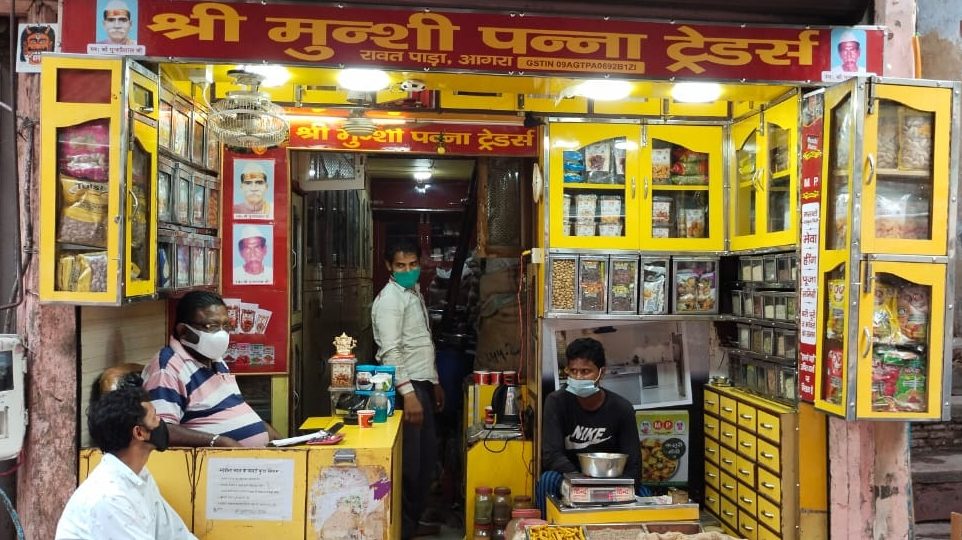
Shopkeepers here are used to walking tours stopping to smell and taste, so buy something small in return. Agra petha and dalmoth also sell here at local prices.
Breakfast on Belanganj and Daresi Road
Bhagat Halwai has been frying bedai in the same Belanganj lane since 1795. A vast blackened iron kadhai of ghee throws up bedai puris, coils of orange jalebi drain on a wire rack, and the crowd eats standing, off leaf plates. Order bedai with the fiery aloo sabzi, hot jalebi on the side, and rabri in winter.
A head costs ₹60 to ₹150. It is a standing counter with a permanent morning scrum; get there before 9 a.m.
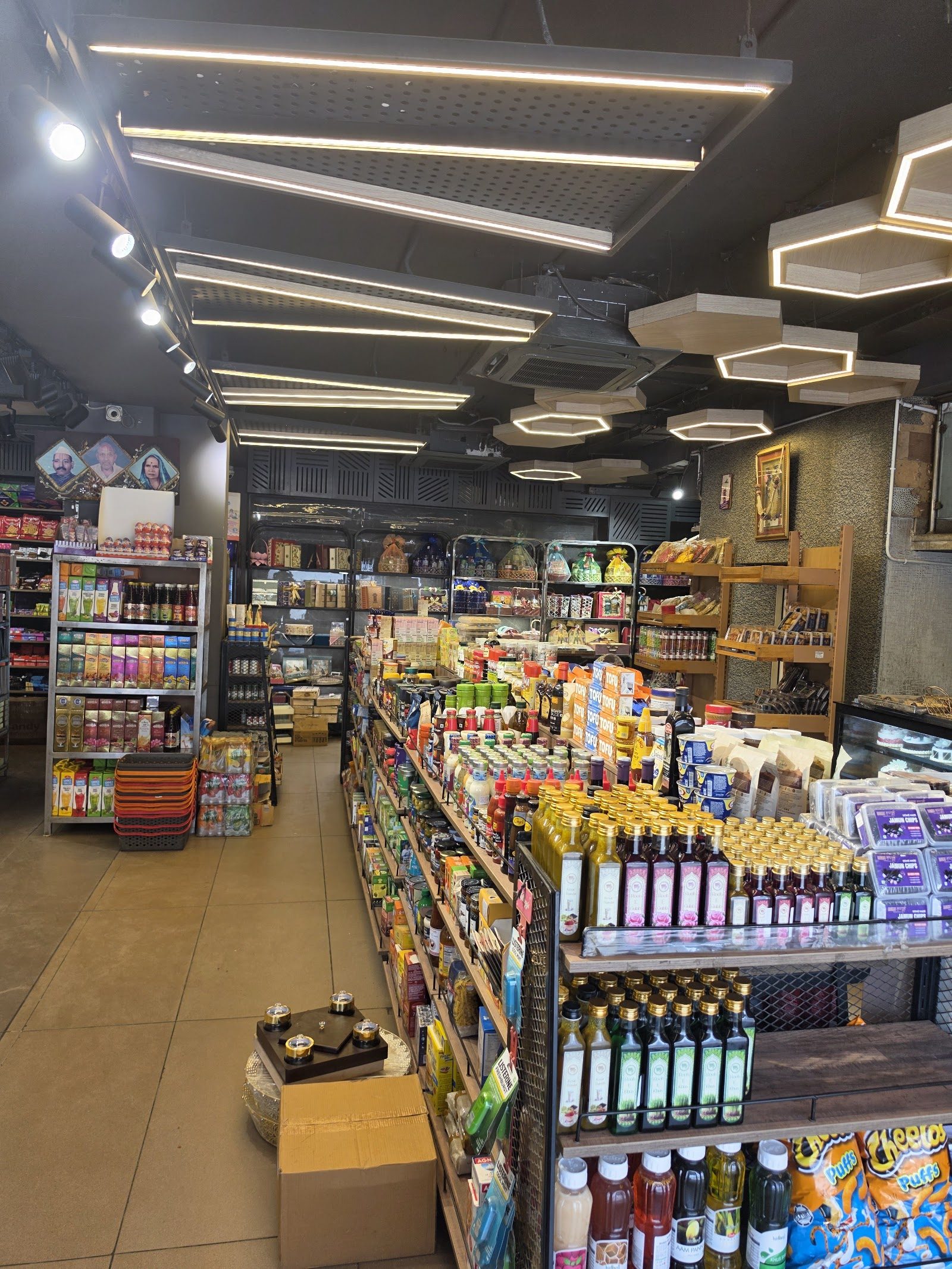
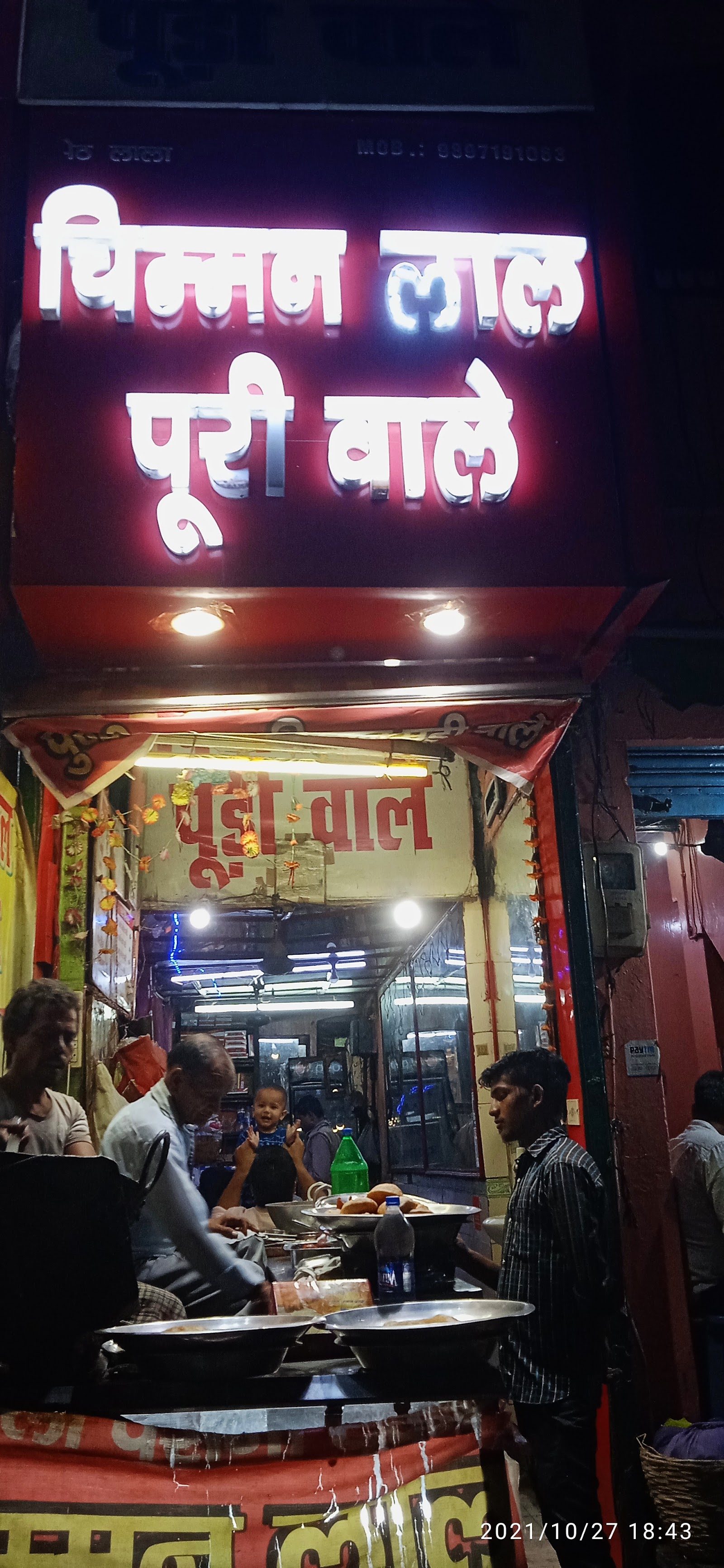
Chimman Lal Puri Wale is three minutes' walk from Jama Masjid on Daresi Road, a tiny six-stool shopfront with puris puffing in a shallow pan and steel buckets of asafoetida-scented potato curry. The hing-heavy puri-sabzi has been going since the 1840s. A plate is ₹40 to ₹120, and the hours are 7 a.m. to 10 p.m. Take it away if the stools are full.
Ram Babu Paratha Bhandar has been open since 1930, at the Belanganj crossing near Yamuna Kinara Road. Deep-fried stuffed parathas come up dripping from the ghee onto steel thalis crowded with dal, pumpkin, chutney and pickle, and the thali is refillable. The gobi and shakkar parathas are the ones to order.
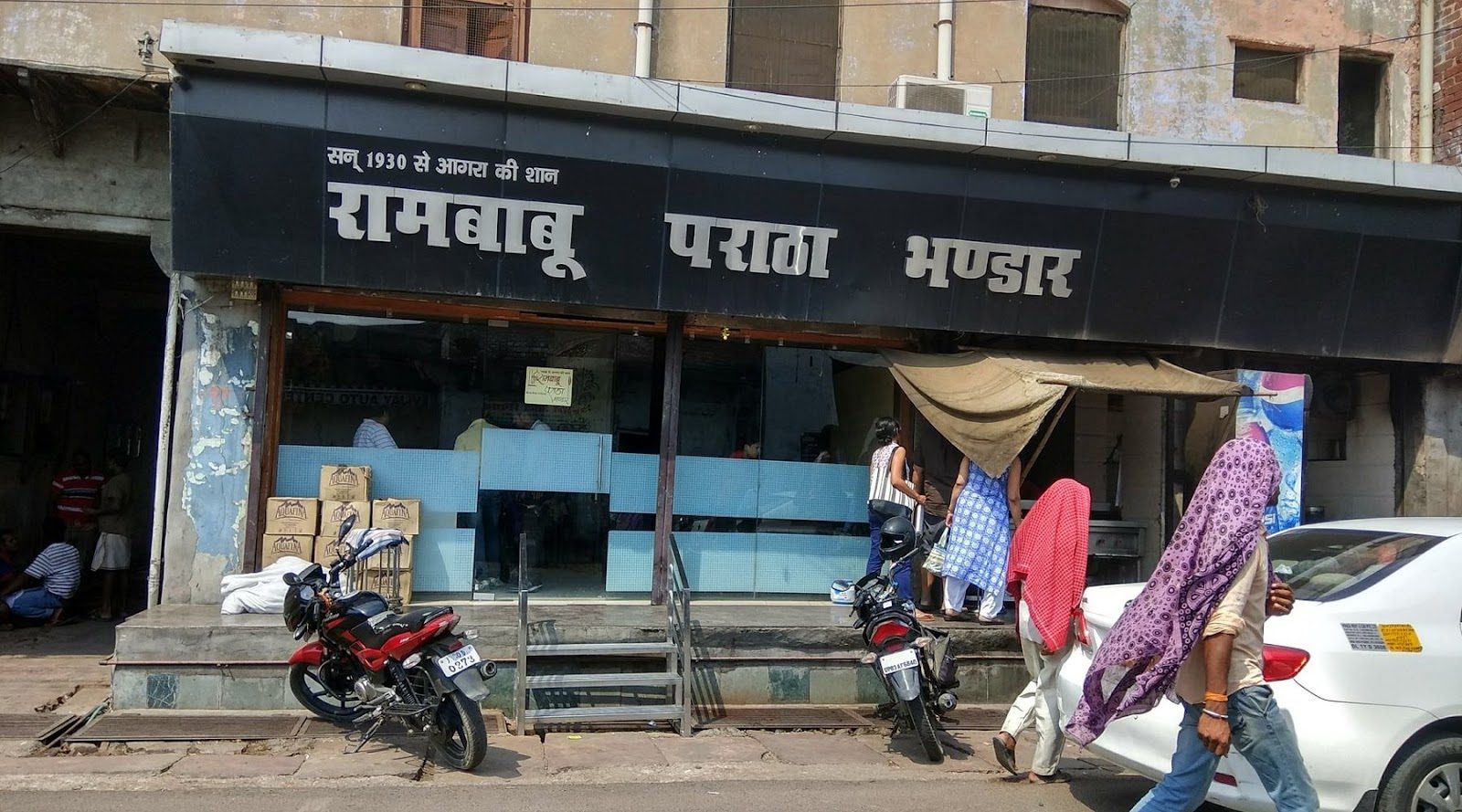
It is pure veg with no alcohol, and it has proper tables, which makes it the default lunch in the old city. A head runs ₹250 to ₹450. The food is rich, so split a thali if a Taj afternoon follows.
Petha and dalmoth to carry home

Panchhi Petha trades from its original 1926 shop at Noori Gate, a few minutes from Jama Masjid. Glass trays hold translucent ash-gourd petha, plain, saffron, paan-green and dry-crusted. A pack is ₹230 to ₹560, and sealed boxes travel.
The name is cloned all over the city. Check the signboard for the founder's black-and-white portrait before you buy.
Gopaldas Pethe Wale is a century-old name on Gopal Bazar, towards Johri Bazaar, a brightly lit showroom with a pyramid of dark peppery dalmoth beside trays of petha and winter gajak. Shopkeepers weigh into paper boxes and everything is pre-packed, so a queue clears fast. Dalmoth and petha run ₹250 to ₹600 per kg.

The peppery namkeen is as much Agra's own as petha, and it is the more interesting thing to carry out.
Hathi Ghat and Agra Fort railway station
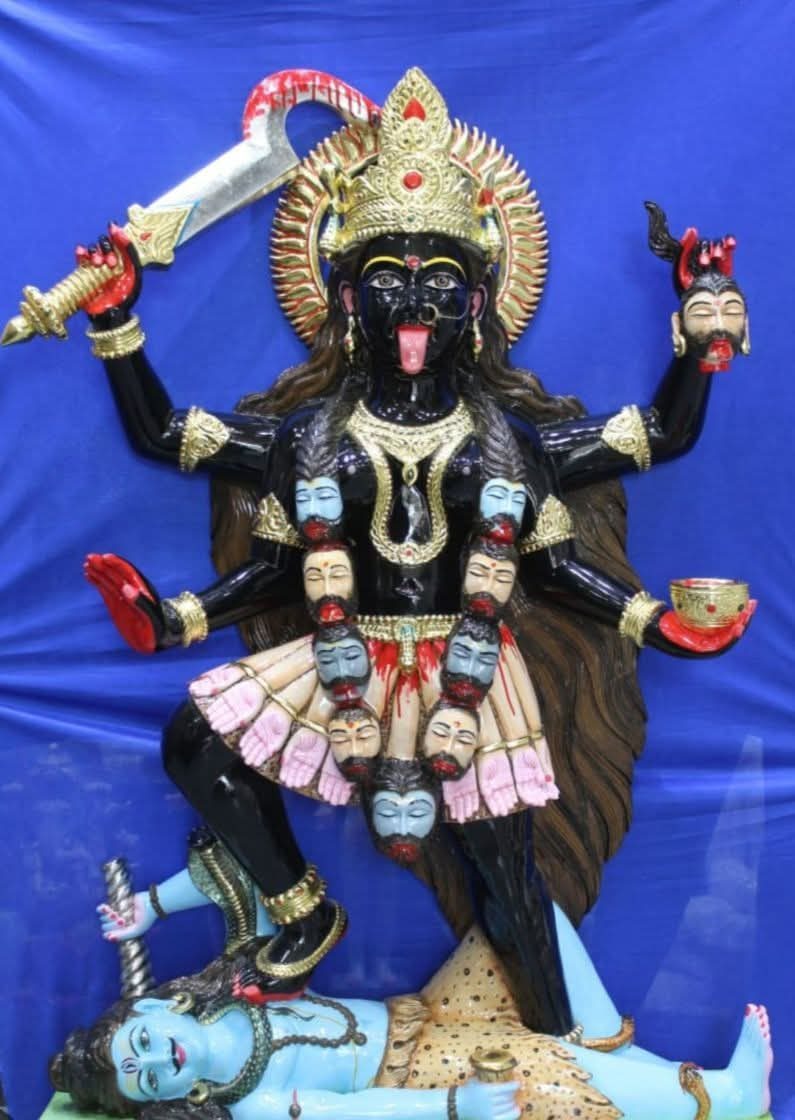
Hathi Ghat is the old elephant ghat, 400m from Agra Fort railway station and the one riverside walk in this part of town. You stand on bare sandy riverbank below the fort's river wall, among buffalo and parked trucks, with the Taj Mahal a pale silhouette far downstream.
It is free and open ground with no gate. Go at sunrise, and go with a local guide: the footing is rough and the place works as a transport yard. By daylight it is a muddy lorry park and you can skip it.
Agra Fort Railway Station was the city's first, a British-Raj building of 1891 with steep slate-pitched platform canopies on iron columns and French-chateau rooflines. Porters in red cross the concourse and the fort's walls show beyond the forecourt. The first Taj tourists arrived through it.
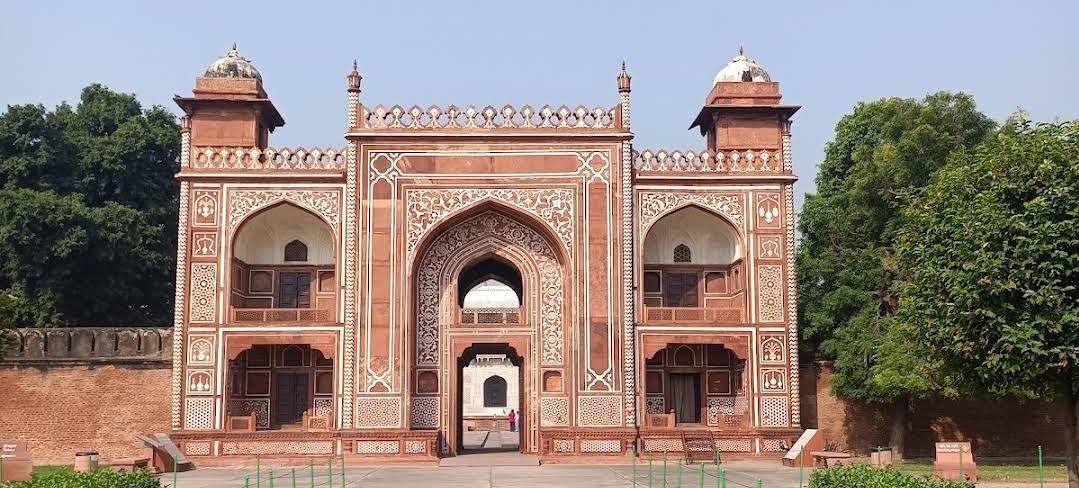
The concourse is free to walk and a platform ticket is ₹10. Ten minutes of looking up at the roof trusses is the visit, slotted in between the fort and the mosque that flank it.
Akbar's Church on Wazirpura Road
Akbar's Church, the Church of the Holy Martyrs, went up in 1600 on land granted by Akbar and was the first Catholic church in the Mughal Empire. Jahangir came here to look at the paintings. It is a whitewashed low-slung building with an arched colonnade and a modest bell gable, in the walled Padritola compound, with old Jesuit graves in the yard.
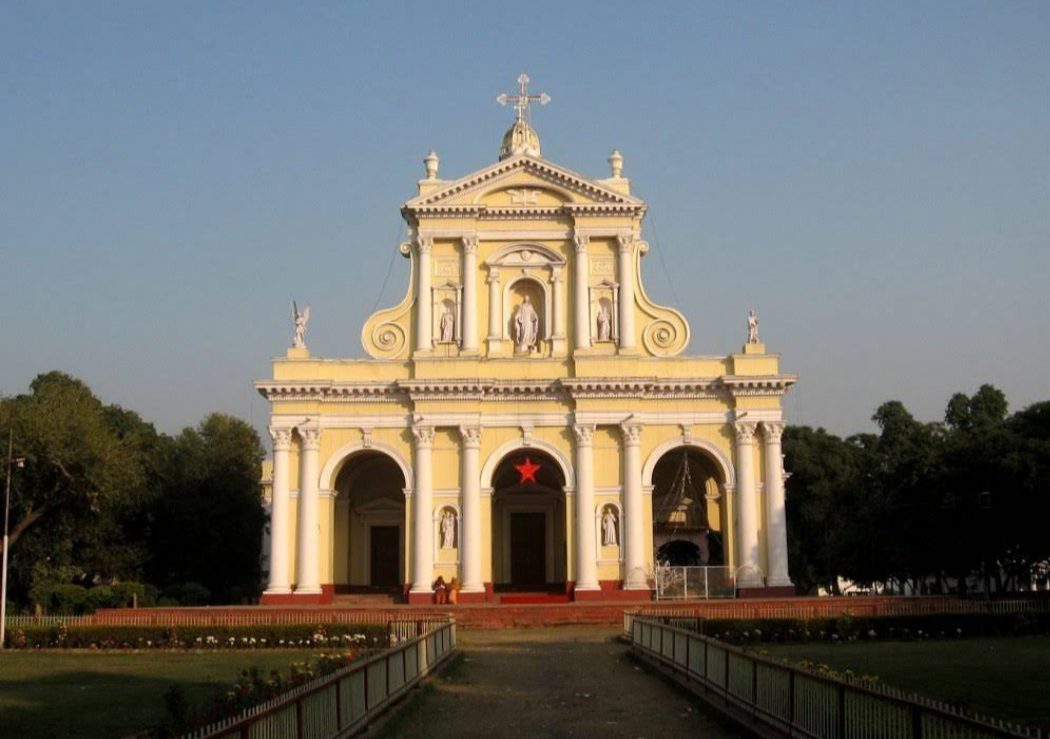
The parish is active and entry is free outside Mass; ask at the Archdiocese office next door first. It stands 1.5km north-west of Jama Masjid, a tuk-tuk hop away from the bazaar walk.
Walking the lanes with a guide
Soul Walks runs private and small-group walks through these streets, and its 'Agra Fort & the old city' route is the sensible way to read them. The old agrawalks.com now points to soulwalks.org after the rebrand from Agra Heritage Walks, and the same guides still lead. Guides work in English.
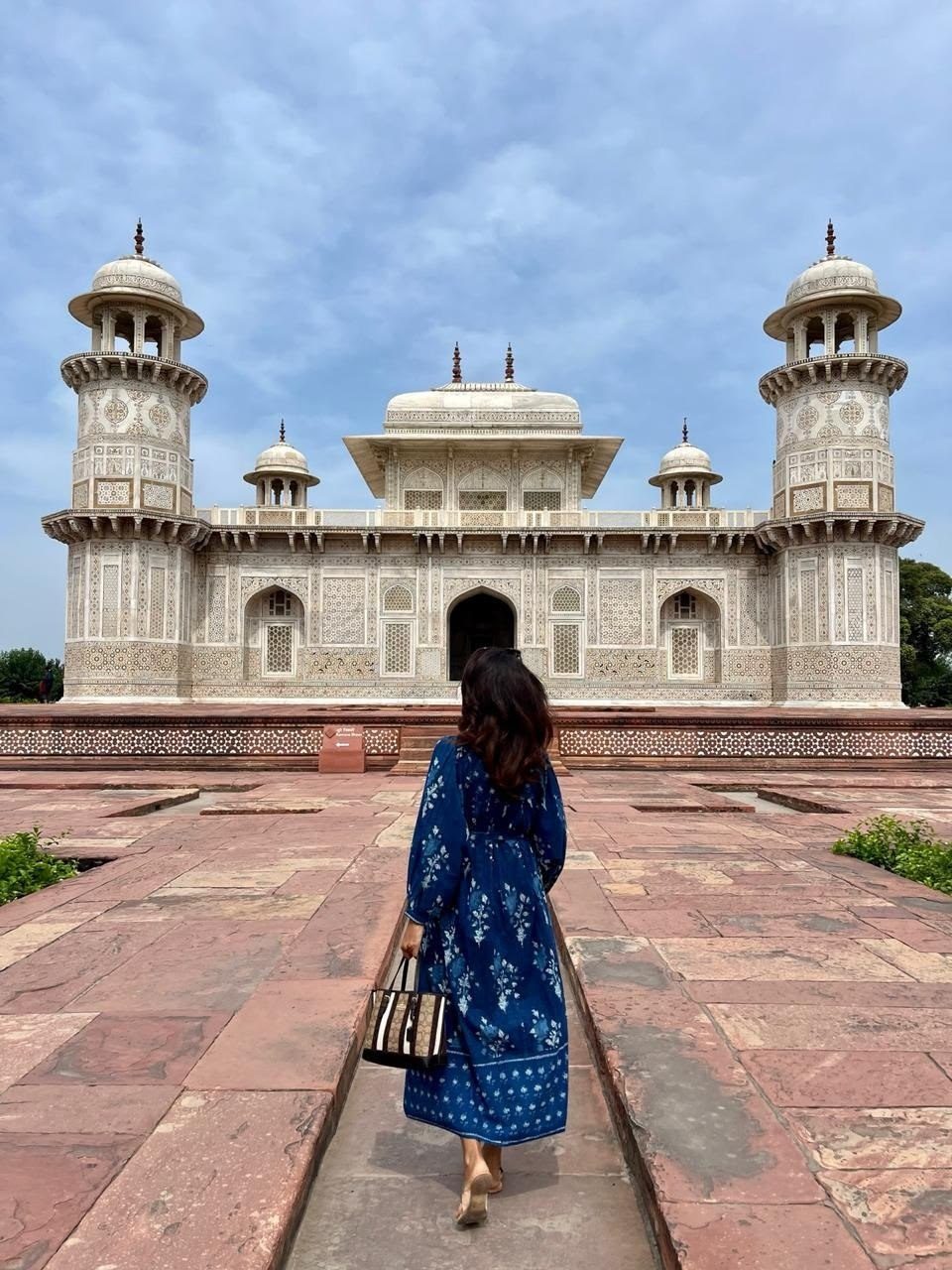
A walk costs ₹1,500 to ₹3,000 per person depending on the route and the size of the party. Book ahead, and give notice for more than eight people. You set off single-file at first light and stop at a kadhai of spitting ghee for bedai.
Where to stay in the old city
The Grand Imperial is a colonial mansion of the 1900s on M.G. Road in Rakabganj, 2km from Agra Fort, with deep arcaded verandahs, lawns and an outdoor pool. It is Grade-II listed and the surviving British-era hotel in the city. The rooftop Taj View Terrace takes in the Taj Mahal, Agra Fort and Jama Masjid at once.

Rooms run ₹2,500 to ₹6,500 a night, and drinks and snacks on the terrace ₹500 to ₹1,500. The bar is licensed and it is the nearest reliable drink to the old city. The 50 rooms and event lawns absorb tour groups, weddings and corporate parties.
Hotel Ajay International is the in-the-neighbourhood option, a plain multi-storey block at the Jama Masjid crossing with a rooftop terrace over corrugated old-city roofs and the station canopies one street away. Jama Masjid is three minutes' walk and Agra Fort station seven. Rooms are ₹700 to ₹1,500 a night, with a 24-hour front desk and a tour desk.
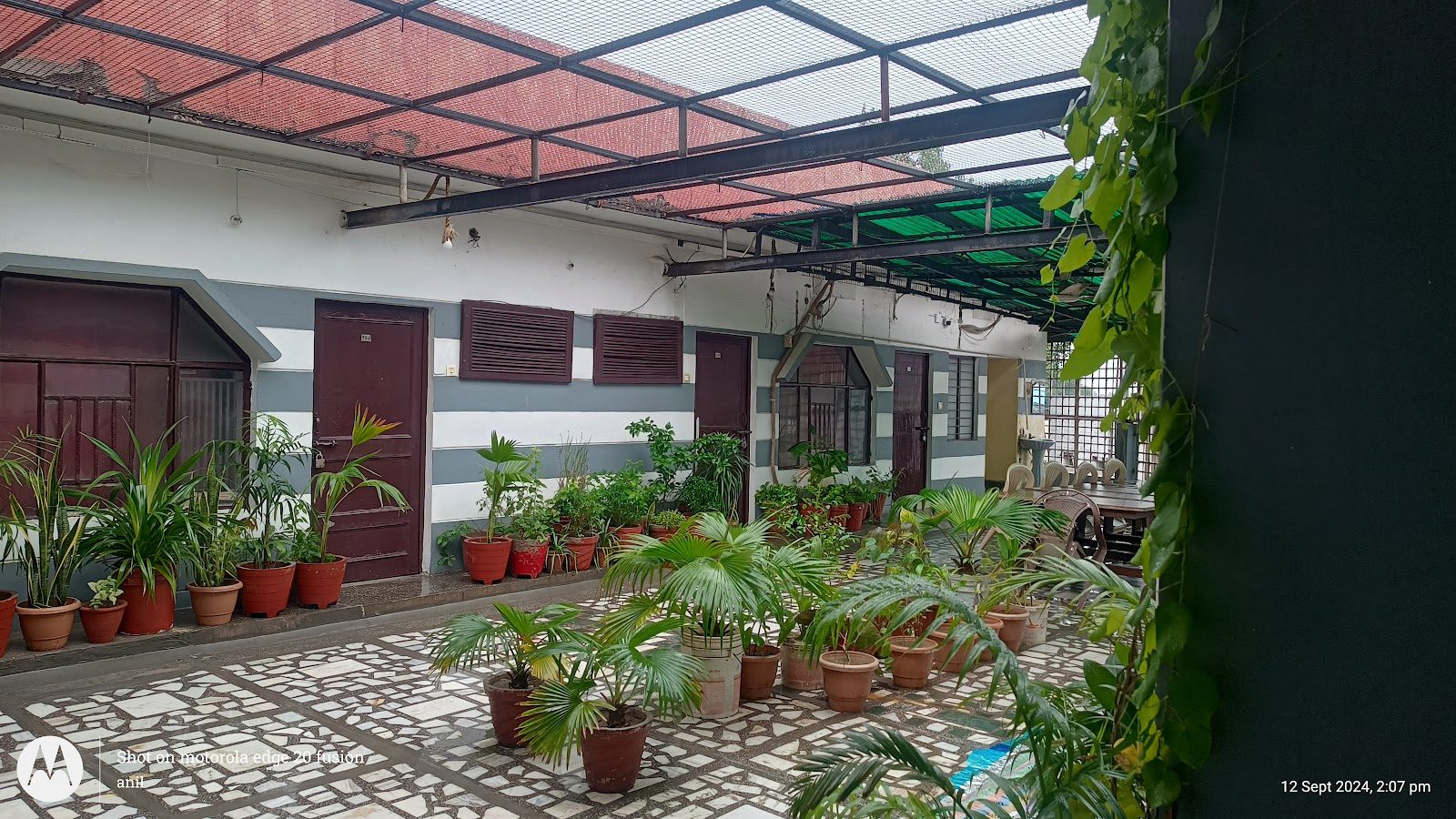
It is loud. Tuk-tuks, the station tannoy and train horns run all night, and housekeeping is hit-and-miss. Take it for the position. No coach comes down these lanes, so arrive by tuk-tuk or on foot.
Planning notes
Friday is the day to give to the fort, and visitors keep out of the mosque during congregational prayers. Book the fort's e-ticket and any guided walk before you arrive, and keep small notes for the shoe-minder and temple offerings. See the Agra guide and the Agra hotel search.
Gallery
Agra Fort–Jama Masjid in pictures
Agra Fort–Jama Masjid — your questions
Can I visit Agra Fort on a Friday?
Yes. Agra Fort is open on Fridays, when the Taj Mahal closes, so Friday is the day to see it. Entry is ₹650 for foreign visitors, ₹550 booked online, and ₹50 for Indian visitors; under-15s go free.
Do I need a ticket for the Shahi Jama Masjid?
No. It is a working mosque, free and unticketed. Cover knees and shoulders, women cover their heads, and leave your shoes with the minder for ₹10 to ₹20. Stay out during Friday congregational prayers.
How do I get into the old city by metro?
Use the Mankameshwar Mandir metro station, which opened as Jama Masjid and was renamed after the temple. That is the easiest way in; the temple sits down a tight Rawatpara lane behind the spice shops.
Where should I eat breakfast near Jama Masjid?
Chimman Lal Puri Wale is three minutes' walk away on Daresi Road, opens at 7 a.m. and serves puri-sabzi at ₹40 to ₹120. Bhagat Halwai in Belanganj fries bedai with aloo sabzi and jalebi at ₹60 to ₹150 a head; its standing counter has a morning scrum, so go before 9 a.m.
Is Hathi Ghat worth the detour?
At sunrise, from the riverbank below the fort's river wall, with the Taj Mahal a pale silhouette downstream. There is no gate and no charge. It is 400m from Agra Fort railway station, rough underfoot and used as a transport yard, so take a local guide and skip it by daylight.