Agra-nummeret
Walking Fatehpur Sikri, Akbar's Abandoned Capital Near Agra
Akbar's red sandstone capital has 93 protected monuments, and half of the best ones sit outside the ticket gate.

Af Matteo FerraroAgra is a Mughal city, not a single monument
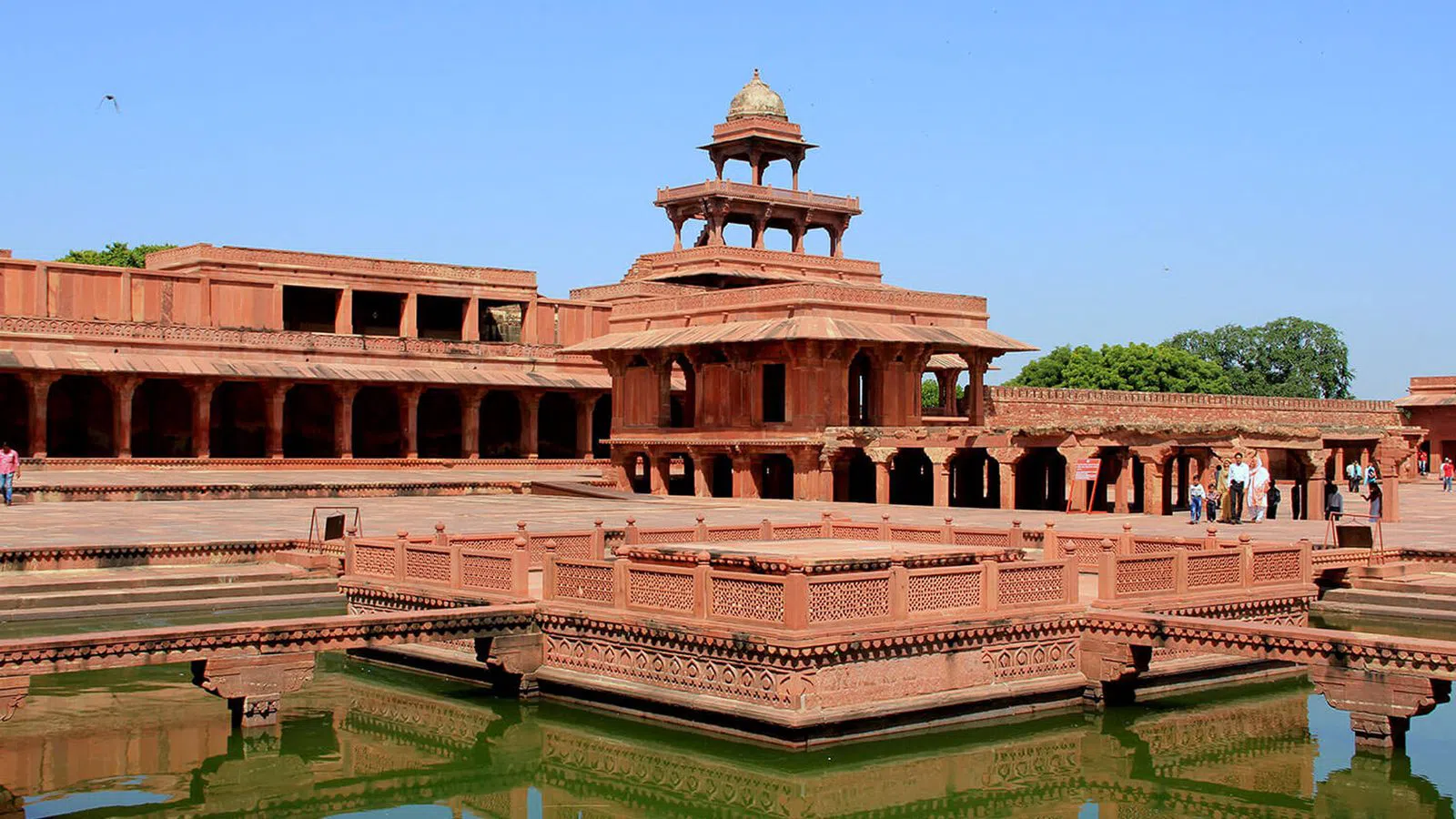
Akbar's capital at Fatehpur Sikri covers 93 protected monuments on a low ridge, and the ticketed palace enclosure is open from sunrise to sunset, daily. Foreign visitors pay ₹550 for the online e-ticket plus a ₹10 toll, or ₹610 at the counter. Indian, SAARC and BIMSTEC visitors pay ₹35 to ₹45, and children under 15 go free.
Inside the ASI enclosure
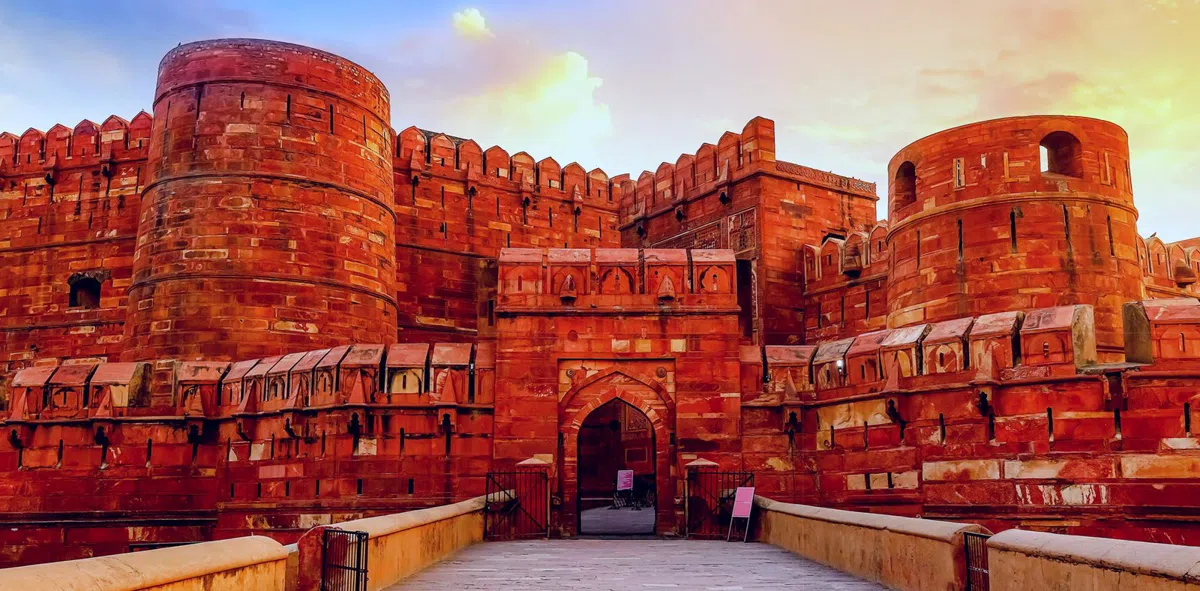
The Fatehpur Sikri Royal Palace Complex is the core of the visit, a red sandstone courtyard city of flat paved quadrangles laid out along the ridge, with no trees on it. Deep shadow collects under the carved brackets, and that is where you stand between stops. Walk the enclosure in one loop, and keep the open quadrangles for the start and end of the day.
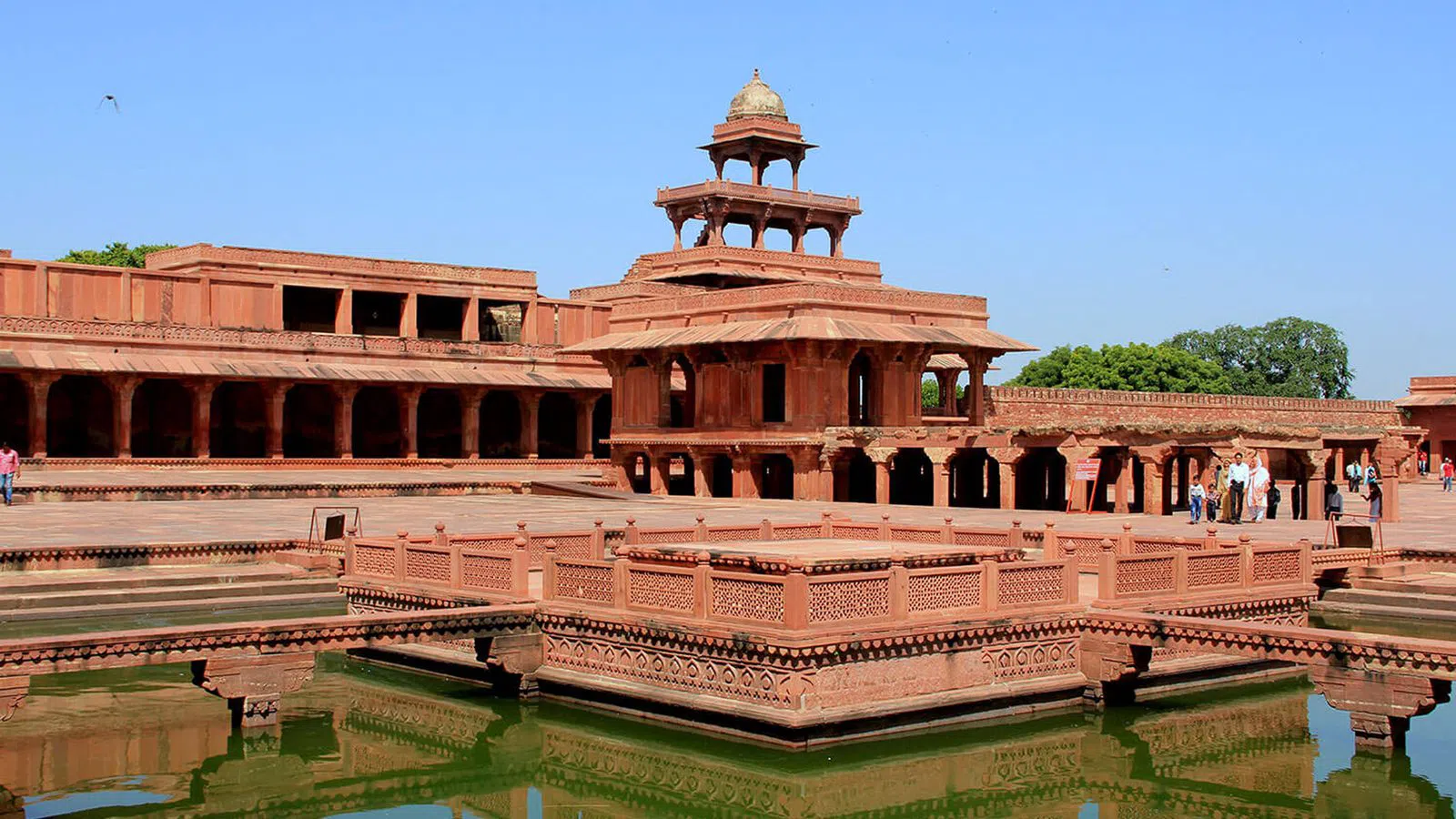
Panch Mahal is the building most photographs of the site show: five open storeys of diminishing columned terraces, 84 carved pillars on the ground floor, a single domed kiosk on top, and no walls anywhere. The upper levels are usually roped off, so plan to look and shoot from the base. Guides bring parties here late in the afternoon, when the sandstone turns red.
Diwan-i-Khas, the hall of private audience, is a square red sandstone chamber built around one colossal carved central pillar that blossoms into a huge bracketed capital, with four narrow stone catwalks radiating from the top of it to the upper corners. Whether that platform was a throne or a debating seat is the most argued-over question in Mughal India. The interior is small and parties rotate through, which is why guides brief outside before taking you in. This is the one room on the ridge where a guide changes what you see.
Khwabgah and Anup Talao sit together: Akbar's own sleeping chamber, with carved stone bookshelf niches on the terrace, beside a square stone tank. Four narrow causeways reach a central island platform, where Tansen reputedly sang. Wait at the edge if the island is occupied, then cross. The tank water is often stagnant and unlovely, so come for the stonework.
The Palace of Jodha Bai (Shahi Mahal) is the largest residential block on the site, fortress-plain from outside, with high blank outer walls and one guarded gate. Inside, the courtyard is ringed by rooms whose roofs carry blue-glazed tile ridges. It housed the imperial women. The Jodha Bai name comes from popular tradition; no document records it, and a good guide says that out loud.
The Turkish Sultana's House (Rumi Sultana), at the corner of Anup Talao, is the smallest building on the ridge and carries the finest stone carving at Fatehpur Sikri, worked on every surface. Dado panels carry trees, birds and animals, and the sandstone ceiling is cut in geometric patterns that read as wood. You look in from the verandah. Unguided visitors walk straight past it to the Panch Mahal, so give it five minutes on your way round the tank.
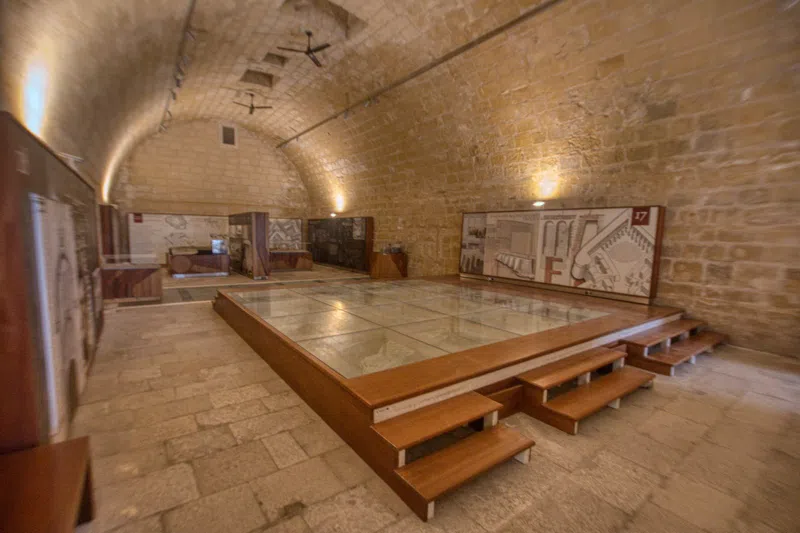
The Archaeological Museum, Fatehpur Sikri (Treasury Building) stands about 100 m from Diwan-i-Am in a restored Akbar-era treasury block of red sandstone. Four small galleries hold stone sculpture and prehistoric tools in glass cases, pre-Mughal and Mughal finds excavated on the ridge. Entry is free, the rooms are air-cooled and almost empty, and it opens 9 a.m. to 5 p.m. daily except Friday, when it closes. Use it as the cool stop in the middle of the walk.
Planlæg din rejse til Agra
Aktuelle priser fra vores bookingpartnere.
Gratis afbestilling på mange værelser. Vi kan modtage provision, når du booker.
The free monuments above the village
Buland Darwaza is the tallest gateway in Asia, 54 metres of red and buff sandstone with white and black marble inlay framing a vast half-dome, reached up a steep flight of broad stone steps from the village below. Entry is free. Shoes come off at the threshold, and the shoe-minders at the top expect ₹10 to ₹20. The steps are congested mid-morning, when parties gather on them for photographs, so climb them before or after that.
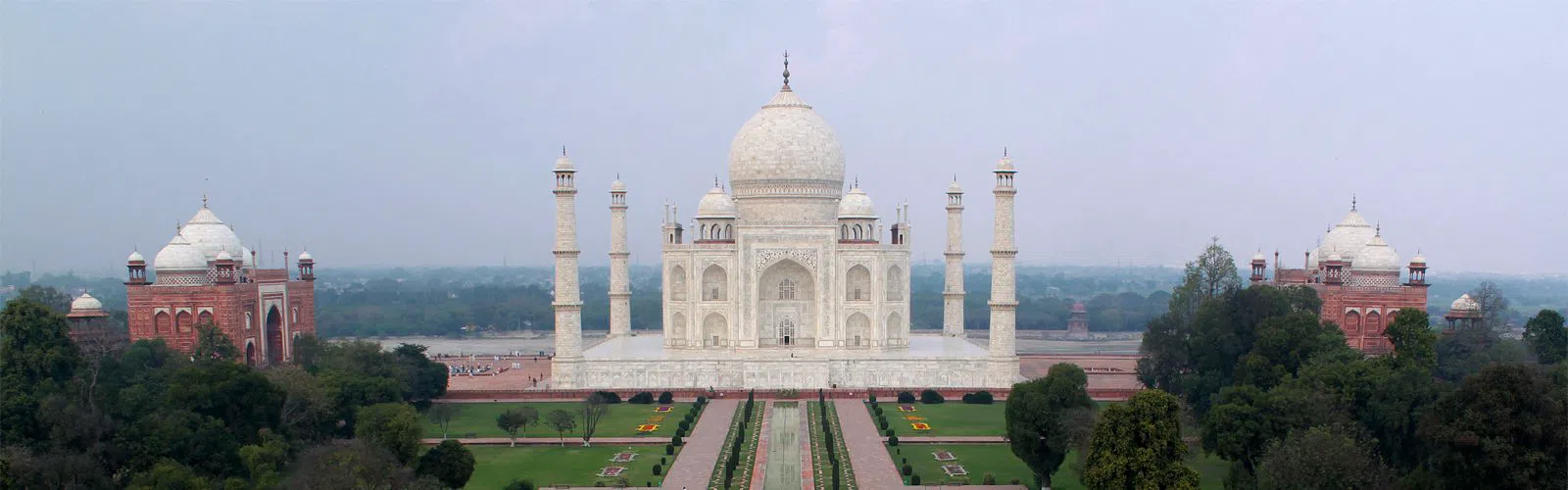
Through the gate, Jama Masjid, Fatehpur Sikri opens as an enormous white-and-red marble-paved courtyard with arcaded cloisters on all four sides, the pale marble tomb standing in one corner against the red sandstone. This is a working Friday mosque and it is free, outside the ASI ticket. Dress modestly, women cover their heads, and everyone goes barefoot. No ticket controls this door, so unofficial guides and sheet-and-flower sellers work the courtyard hardest here, and a booked private guide settles that in one sentence.

The Dargah (Tomb) of Shaikh Salim Chishti fills that corner, a small white marble mausoleum with lace-fine pierced jali screens and serpentine carved marble brackets propping the eaves. Red thread is knotted across the lattice, because the thread-tying wish ritual is still live. Akbar credited the saint for his heir, and the city exists for that reason. Visitors go inside the screen in small batches, shoes off and heads covered. Nobody pressures you to take the cloth or flowers offered at the door, and a voluntary offering of ₹50 to ₹100 is plenty.
The Stone Cutters' Mosque (Masjid Sangtarashan) is the oldest place of worship on the hill, on the rocky ridge to the left of the Jama Masjid. The masons built it for the saint before the imperial city existed: a small rough-hewn sandstone mosque with heavy sloping brackets, beside the cave-like hermitage cell and an old water tank. It is free and open, and quiet enough that a small party has it to itself. Coach routes leave it out. Starting here puts the rest of the ridge in order.
Beyond the Elephant Gate
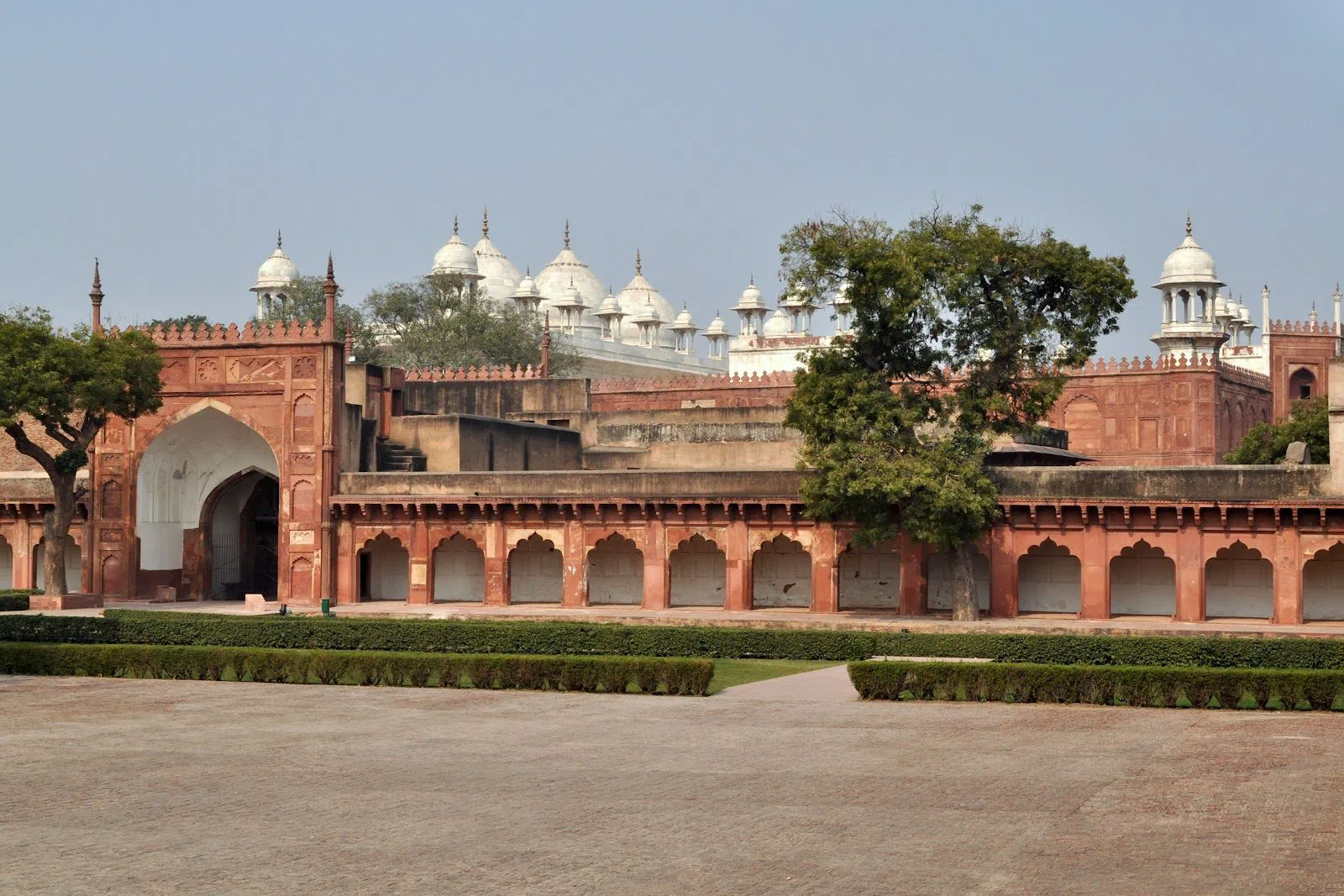
Hiran Minar and Hathi Pol sit a 10-minute walk downhill from the Elephant Gate, past the caravanserai. You pass a gateway with two mutilated stone elephants, then the tower stands alone on scrubby ground, a squat circular drum studded all over with projecting carved elephant tusks. The ground is unstaffed, open and free, and climbing the tower is normally barred. Only visitors with their own car and their own clock get down here, which is most of the appeal.
Tickets, guides and the gate
One ticket covers the palace enclosure, including Panch Mahal, Diwan-i-Khas, the Khwabgah, Anup Talao, the Jodha Bai palace and the Turkish Sultana's House. Buy the QR e-ticket on the ASI portal before you arrive and you walk past the counter queue and avoid the counter surcharge. ASI and ADA-licensed guides pick up parties at the gate. A private group walks in on individual tickets, with no cap on numbers. Private day tours that take in Fatehpur Sikri run six days a week, Monday to Thursday and on Saturday and Sunday.
Best time to go
Start at the Stone Cutters' Mosque and the gateway early in the day. Bare feet are compulsory at the gateway, in the mosque courtyard and at the dargah, and a sunny afternoon means crossing hot flagstones in socks. Save the Panch Mahal for late afternoon and the red light. Friday changes two things on the ridge: the museum is shut, and the Jama Masjid is in use for Friday prayers.
Lunch, chai and the bazaar
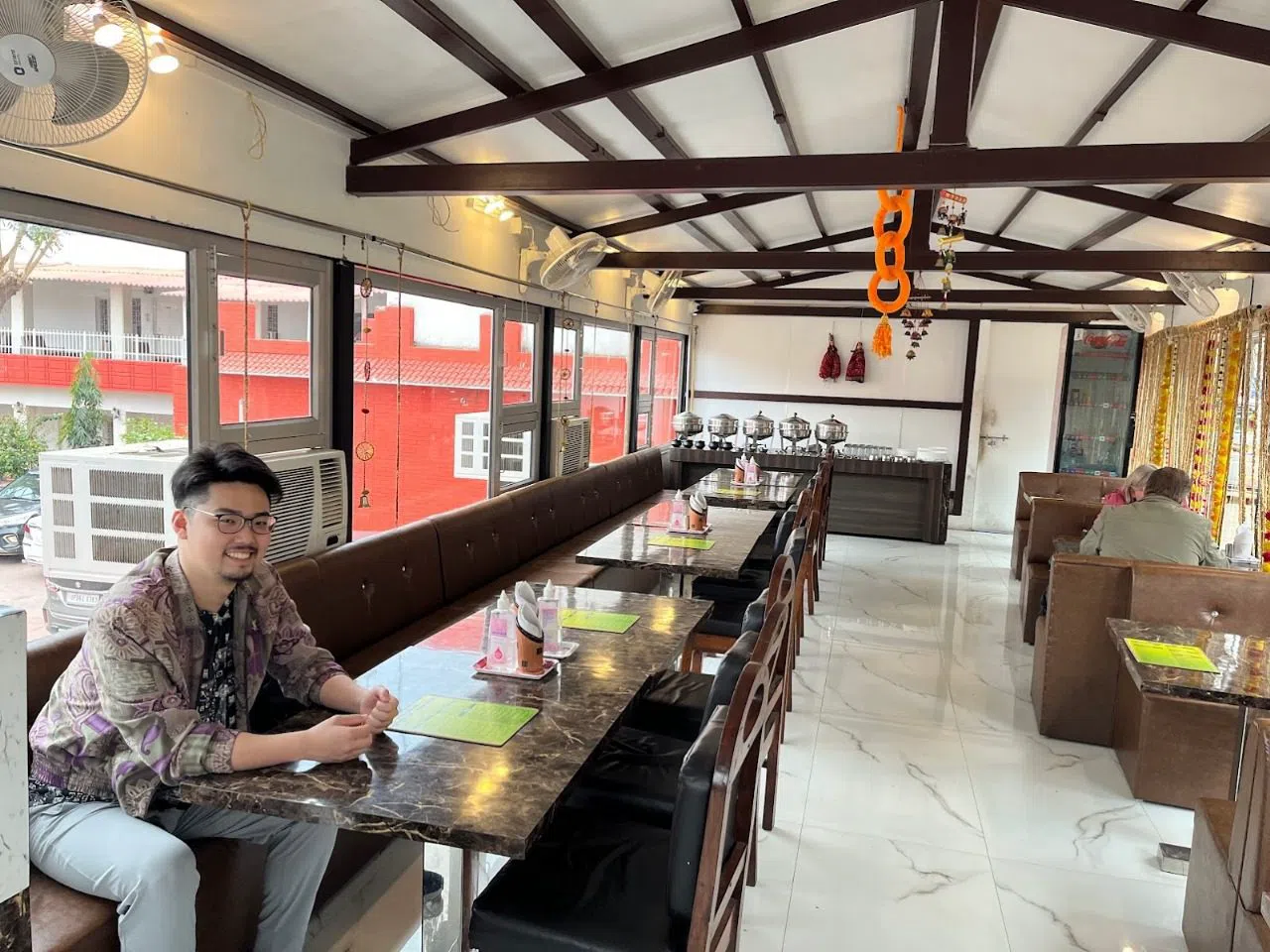
Jodha Restaurant at Hotel Goverdhan Tourist Complex, a low garden hotel near Buland Gate, is the standard sit-down lunch on a Fatehpur Sikri day, and reports through 2026 are still good. The food is vegetarian and vegan North Indian, and it arrives as steel thalis, fast enough to leave your afternoon intact. Seating is on a shaded terrace with bougainvillea over the courtyard wall. Expect ₹200 to ₹500 a head.
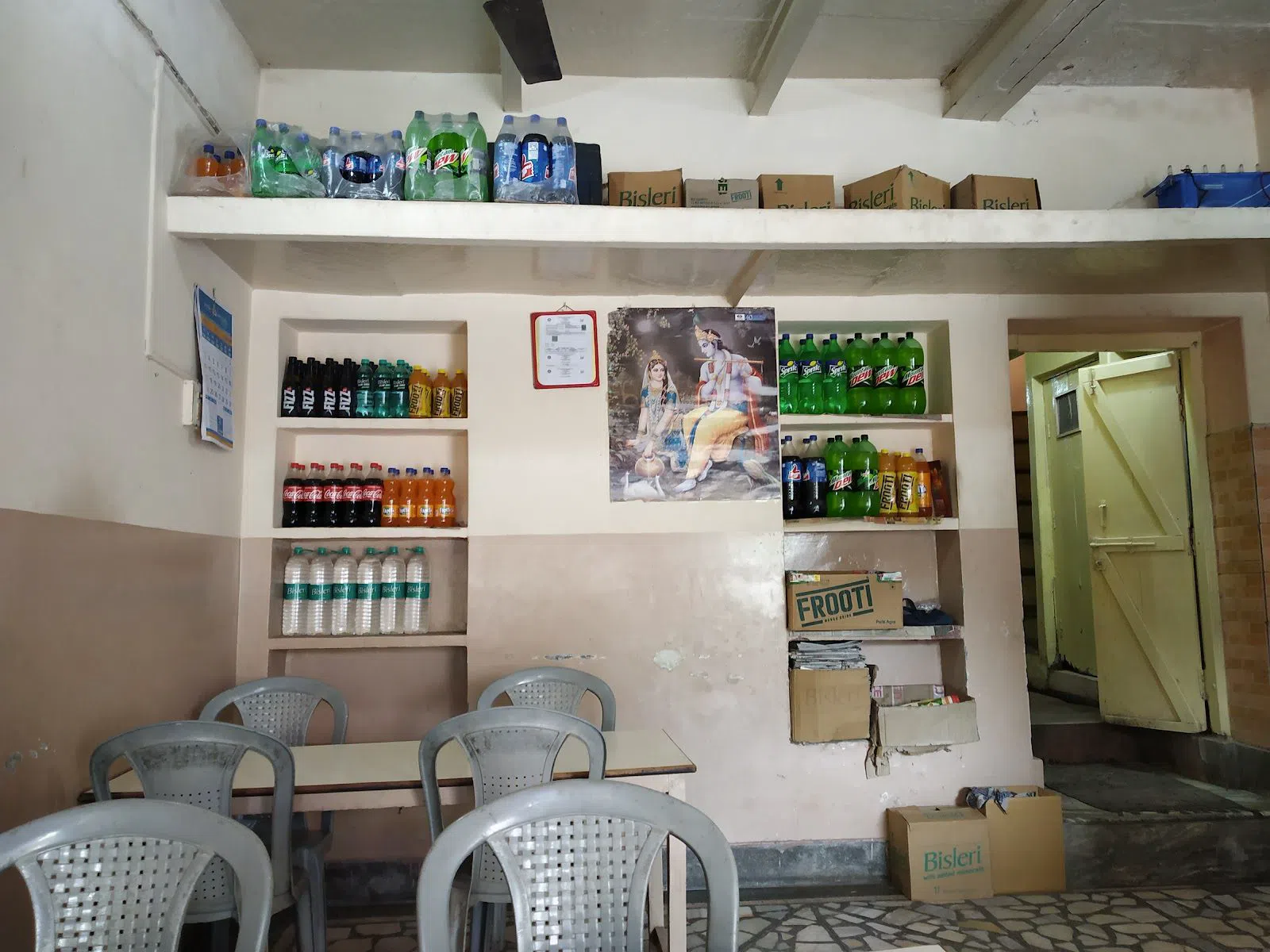
The Hotel Ajay Palace rooftop terrace is the chai-with-a-view stop, a plain concrete roof with plastic chairs and a water tank, looking straight across village roofs at the gate and the mosque dome. Chai, lassi and simple plates run ₹50 to ₹350, brought out on a steel tray. It opens 8 a.m. to 11 p.m. daily. The terrace is small and takes a private group of up to 10, so a larger party should split or skip it. It is a guesthouse roof, so judge it on the view and the price.
The Fatehpur Sikri bazaar runs down the approach to Buland Darwaza, a narrow sloping lane of open-fronted stalls in the gate's shadow with cycle rickshaws squeezing past. Soapstone and marble elephants, inlay coasters and miniature paintings are stacked on cloth. Local stone-carving and inlay work costs ₹100 to ₹1,500 for most pieces after bargaining, a fraction of Agra's showroom prices. Every price opens at three times its real level, and what is sold to you as marble is often soapstone, so check the weight and the edges before you pay. If you stop walking, the hawking starts.

Adding Keoladeo Ghana National Park
Keoladeo Ghana National Park is a second UNESCO site 23 km on from Fatehpur Sikri, and it fills the second half of a private day with a car. The park is flat shallow marsh cut by raised dirt causeways, with bare dead trees crowded with painted storks, and more than 370 bird species have been recorded. Vehicles go only as far as Shanti Kutir. Past that you walk, cycle, or hire one of the park's trained rickshaw-guides from the cycle rickshaws parked on the embankment. Entry is ₹1,300 for foreign visitors, ₹140 for Indian visitors and ₹40 for Indian students, plus ₹100 per vehicle. October to March is the window, when the migrants are in.
Is it worth it
It suits a visitor with a full day and a car, because the monuments that reward the walk stand outside the ticketed enclosure as well as inside it. The ridge asks for bare feet, patience with the sellers in the free courtyard, and a guide if you want the Diwan-i-Khas argument explained rather than pointed at.
Before you go
The palace enclosure runs every day of the week, while the museum shuts on Friday and the mosque is at prayer that day. Book the e-ticket before you travel and arrange a licensed guide in advance if you want the free courtyard left alone. See the Agra guide and the Agra hotel search.
Før du rejser
How much does it cost to get into Fatehpur Sikri in 2026?
The ASI palace enclosure is ₹550 for the online e-ticket plus a ₹10 toll for foreign visitors, or ₹610 at the counter. Indian, SAARC and BIMSTEC visitors pay ₹35 to ₹45, and children under 15 go free. Buland Darwaza, the Jama Masjid, the Dargah of Shaikh Salim Chishti, the Stone Cutters' Mosque, Hiran Minar and the site museum are all free.
Can I avoid the ticket queue?
Yes. Book the QR e-ticket on the ASI portal before you arrive and you walk past the counter queue. The counter price is higher than the online one.
Is Fatehpur Sikri open on a Friday?
The palace enclosure is open sunrise to sunset daily. The Archaeological Museum closes on Fridays, and the Jama Masjid is a working Friday mosque, so expect prayers in the courtyard. Private day tours that include Fatehpur Sikri run six days a week, Monday to Thursday and on Saturday and Sunday.
Do I need a guide, and can I book one at the gate?
ASI and ADA-licensed guides pick up parties at the gate. A guide earns the money in the Diwan-i-Khas, where the throne-or-debating-seat question is still open, and at the Jodha Bai palace, whose popular name no document supports. A booked private guide also keeps off the unofficial guides and the sheet-and-flower sellers in the free mosque courtyard.
What are the dress and shoe rules?
Shoes come off at the threshold of Buland Darwaza, in the Jama Masjid courtyard and at the dargah. Dress modestly, and women cover their heads inside the mosque and the shrine. On a sunny afternoon that means walking hot flagstones in socks, which is a reason to climb the gateway early. Shoe-minders at the top of the steps expect ₹10 to ₹20.